
-
Supplier: Shelco Filters - Division of Tinny Corp.
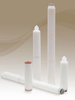
Description: PTFE Absolute Rated Membrane Filter Cartridges Polytetrafluoroethylene (PTFE) membrane filter cartridges constructed in polypropylene hardware for a wide range of industrial applications Absolute retention from 0.1 to 1.0 microns Outstanding hydrophobicity and water intrusion
- Filtration Grade (Micron Rating): 0.1 to 1 µm
- Type: Cartridge
- Filtration Product: Chemicals
- Additional Features: FDA Compliant
-
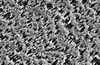
Description: Outstanding Performance in Plasma Separation for Over 20 Years PLASMAPHAN® capillary membranes are produced in a TIPS process (thermally induced phase separation) from Polypropylene (PP) and are hydrophobic by nature, but can be hydrophilized easily prior to use. PLASMAPHAN®
- Geometry: Hollow Fiber
-
Description: Outstanding Performance in Plasma Separation for Over 20 Years PLASMAPHAN® capillary membranes are produced in a TIPS process (thermally induced phase separation) from Polypropylene (PP) and are hydrophobic by nature, but can be hydrophilized easily prior to use. PLASMAPHAN®
- Geometry: Hollow Fiber
-
-
Supplier: Sartorius Lab Instruments GmbH & Co. KG
Description: Hydrophobic interaction chromatography (HIC) separates and purifies biomolecules based on differences in their hydrophobicity. The phenyl membrane adsorber follows the same rules known from the conventional hydrophobic interaction chromatography. Due to the large pore size,
- Pore Size: 3 to 5 µm
- Filtration Area: 550,000 mm²
- Pressure: 58.01508 psi
- Filter Shape: Disc (Circular)
-
Supplier: Eaton
Description: for purging storage tanks after steam sterilization. BECO MEMBRAN H Mini filter cartridges with 0.2 &mu,m hydrophobic membranes are ideal for sterilizing applications that remove particles and micro-organisms from gases and solvents. BECO MEMBRAN H Mini filter cartridges are made with
- Filtration Grade (Micron Rating): 0.2 µm
- Maximum Pressure: 80 psi
- Type: Cartridge
- Filter Medium Material: Polypropylene (PP)
-
Description: Outstanding Performance in Plasma Separation for Over 20 Years PLASMAPHAN® capillary membranes are produced in a TIPS process (thermally induced phase separation) from Polypropylene (PP) and are hydrophobic by nature, but can be hydrophilized easily prior to use. PLASMAPHAN®
-
Supplier: Cole-Parmer
Description: • Housings are specifically designed to minimize sample holdup and maximize recovery • Non-pigmented acrylic or polypropylene (PP) housings feature integral filter sealing to avoid the risk of contamination from pigments and adhesives • Each filter is clearly marked with membrane pore
- Operating Temperature: 140 F
- Housing Material: Polypropylene (PP)
- Filter Medium Material: Polytetrafluoroethelene (PTFE)
-
Supplier: Cole-Parmer
Description: • Housings are specifically designed to minimize sample holdup and maximize recovery • Non-pigmented acrylic or polypropylene (PP) housings feature integral filter sealing to avoid the risk of contamination from pigments and adhesives • Each filter is clearly marked with membrane pore
- Operating Temperature: 140 F
- Housing Material: Polypropylene (PP)
- Filter Medium Material: Polytetrafluoroethelene (PTFE)
-
Supplier: Cole-Parmer
Description: • Housings are specifically designed to minimize sample holdup and maximize recovery • Non-pigmented acrylic or polypropylene (PP) housings feature integral filter sealing to avoid the risk of contamination from pigments and adhesives • Each filter is clearly marked with membrane pore
- Operating Temperature: 140 F
- Housing Material: Polypropylene (PP)
- Filter Medium Material: Polytetrafluoroethelene (PTFE)
-
Supplier: Cole-Parmer
Description: • Housings are specifically designed to minimize sample holdup and maximize recovery • Non-pigmented acrylic or polypropylene (PP) housings feature integral filter sealing to avoid the risk of contamination from pigments and adhesives • Each filter is clearly marked with membrane pore
- Operating Temperature: 140 F
- Housing Material: Polypropylene (PP)
- Filter Medium Material: Polytetrafluoroethelene (PTFE)
-
Supplier: SAE International
Description: porous hydrophobic polypropylene, (2) porous hydrophobic polysulfone, and (3) ion exchange through nonporous hydrophilic-modified Nafion 2x. Contamination tests were performed to probe for sensitivities of the candidate SWME elements to the organic and non-volatile inorganic
-
Supplier: diaago
Description: These Polypropylene Bottle Top Filters from CELLTREAT come in a nylon or PTFE membrane. Hydrophilic nylon membrane has excellent chemical compatibility with esters, bases and alcohols, and does not require pre-wetting. The Hydrophobic PTFE membrane has excellent
- Pore Size: 0.2 µm
- Operating Temperature: 39.2 to 98.6 F
- Filter Shape: Disc (Circular)
- Configuration: Filter Element & Housing Assembly
-
Supplier: diaago
Description: These Polypropylene Bottle Top Filters from CELLTREAT come in a nylon or PTFE membrane. Hydrophilic nylon membrane has excellent chemical compatibility with esters, bases and alcohols, and does not require pre-wetting. The Hydrophobic PTFE membrane has excellent
- Pore Size: 0.2 µm
- Operating Temperature: 39.2 to 98.6 F
- Filter Shape: Disc (Circular)
- Configuration: Filter Element & Housing Assembly
-
Supplier: diaago
Description: These Polypropylene Bottle Top Filters from CELLTREAT come in a nylon or PTFE membrane. Hydrophilic nylon membrane has excellent chemical compatibility with esters, bases and alcohols, and does not require pre-wetting. The Hydrophobic PTFE membrane has excellent
- Pore Size: 0.45 µm
- Operating Temperature: 39.2 to 98.6 F
- Filter Shape: Disc (Circular)
- Configuration: Filter Element & Housing Assembly
-
Supplier: diaago
Description: These Polypropylene Bottle Top Filters from CELLTREAT come in a nylon or PTFE membrane. Hydrophilic nylon membrane has excellent chemical compatibility with esters, bases and alcohols, and does not require pre-wetting. The Hydrophobic PTFE membrane has excellent
- Pore Size: 0.45 µm
- Operating Temperature: 39.2 to 98.6 F
- Filter Shape: Disc (Circular)
- Configuration: Filter Element & Housing Assembly
-
Description: membranes provide superior filtration performance when compared to other membranes based on polyarylsulfone. 3M manufactures a dedicated membrane portfolio based on polypropylene to provide the required performance in the various beverage clarification processes. With
- Filtration Grade (Micron Rating): 0.2 µm
- Maximum Pressure: 29.00754 psi
- Type: Cartridge
- Application / Industry: Food and Beverage
-
Supplier: Mar Cor Purification
Description: Quick rinse-up in ultrapure water In-situ integrity testable Hydrophilic membranes and hydrophobic membranes Biocompatible for medical applications
- Filtration Grade (Micron Rating): 0.03 to 0.45 µm
- Application / Industry: Biopharmaceutical, Food and Beverage, Medical, Semiconductor Processing
- Filtration Product: Chemicals, Water
- Features: Filter Element / Cartridge, Other
-
Supplier: Kitz Micro Filter Corporation
Description: Our filters use the hollow fiber membrane made of the polypropylene of hydrophobic. So they can remove not only bacteria and particle but also drop of water. Pore size of filter has high filtration precision in 0.01um. They have longer life with the compact which is the good
- Filtration Grade (Micron Rating): 0.01 µm
- Maximum Pressure: 116.029471485758 psi
- Application / Industry: Electronics, Semiconductor Processing
- Features: Other
-
Supplier: Kitz Micro Filter Corporation
Description: Our filters use the hollow fiber membrane made of the polypropylene of hydrophobic. So they can remove not only bacteria and particle but also drop of water. Pore size of filter has high filtration precision in 0.01um. They have longer life with the compact which is the good
- Filtration Grade (Micron Rating): 0.01 µm
- Maximum Pressure: 145.036839357197 psi
- Application / Industry: Electronics, Semiconductor Processing
- Type: Gas Dryer, In-line
-
Supplier: Harbory Filtration
Description: OPTMC series pleated filter cartridge is made of imported modified hydrophobic polytetrafluoroethylene filter membrane through advanced hot melt sealing technology under the associated controlled clean environment without any adhesives or surfactants. The modified hydrophobic
- Filtration Grade (Micron Rating): 0.1 to 0.45 µm
- Maximum Pressure: 29.0073678714394 to 58.0147357428788 psi
- Maximum Temperature: 176 F
- Application / Industry: Biopharmaceutical, Electronics, Food and Beverage
-
Supplier: Sartorius Lab Instruments GmbH & Co. KG
Description: comes individually packaged and presterilized, so it is ready to connect! 2. Extra reliability and safety: Midisart® 2000 is integrity testable and delivers reproducible results.– The membrane is reinforced with polypropylene gauze, giving the Midisart® 2000 unit added stability and
- Filtration Grade (Micron Rating): 0.2 µm
- Application / Industry: Biopharmaceutical
- Configuration: In-line
- Range: Micro Filtration



Find Suppliers by Category Top
Featured Products Top
-
 a high-performance polytetrafluoroethylene (PTFE) membrane supported by durable polypropylene components, it delivers absolute particle retention, outstanding chemical compatibility, and exceptional thermal stability. The pleated membrane design (read more)
Browse Filter Elements Datasheets for Harbory Filtration -
Hydrophobic-Oleophilic Polymers: Materials like polypropylene (PP) or modified polyurethane (PU) repel water while selectively absorbing oil, making them ideal for oil-water separation. (read more)
Browse Filter Media Datasheets for Harbory Filtration -
. Efficiency: Look for cartridges with >99.98% particle retention, such as SoluGET’s APP/NPP series or PES membranes. Material Compatibility Polypropylene (PP): Ideal for chemical resistance, FDA compliance, and (read more)
Browse Filter Elements Datasheets for Harbory Filtration -
solvents, fuels, oils), good temperature resistance (~135°C/275°F dry). Most common. Polypropylene (PP): Excellent chemical resistance (especially strong acids/bases), lower temperature limit (~80°C/175°F). Hydrophobic, good for aqueous solutions and aggressive chemicals. Often (read more)
Browse Filter Elements Datasheets for Harbory Filtration
More Information Top
 Indicates content that may require registration and/or purchase.

-
Advanced Membrane Technology and Applications Complete Document
Gableman et al. (2005) have maintained the aqueous solution at a higher pressure when using dense CO2 gas and porous hydro- phobic polypropylene membrane to prevent leakage of CO2 from the membrane pores into the aqueous liquid solution.
-
Micro/nanoporous membrane based gas–water separation in microchannel
Based on Table 1, both the hydrophilic Polycarbonate membrane with 0.6 lm pore and the hydrophobic Poly- propylene membrane with 0.2 lm 9 0.05 lm present the highest threshold among the all tested membranes, and thus they are selected …
-
Bioreactor Development for Production of Viral Pesticides or Heterologous Proteins in Insect Cell Cultures
The top of the reactor is covered with hydrophobic polypropylene membrane .
-
Hollow fiber liquid-phase microextraction of cadmium(II) using an ionic liquid as the extractant
The complex was extracted by IL which is transferred through the hydrophobic polypro- pylene membrane to the acceptor phase in the lumen of the hollow membrane where the complex is broken down and the Cd(II) released.
-
A study on separation and extraction of four main alkaloids in Macleaya cordata (Willd) R. Br. with strip dispersion hybrid liquid membrane
A LM was combined with ion-exchange membranes or microporous hydrophobic polypropylene membrane in series to form a hybrid LM system for separation and recovery of metal ions [29–33].
-
Integrated Microanalytical System Coupling Permeation Liquid Membrane and Voltammetry for Trace Metal Speciation. Technical Description and Optimization
The PLM consists of a carrier (0.1 M 22DD+0.1 M lauric acid) dissolved in 1 : 1 mixture of toluene/phenylhexane held in the small pores (30 nm) of a hydrophobic polypropylene membrane (Celgard 2500).
-
Factors affecting microporous membrane liquid‐liquid extraction
Probably this is because of hydrophobic interactions of the PAHs with the hydrophobic polypropyl- ene membrane material, although the adsorption can be observed to decrease significantly when the temperature is raised.
-
https://dspace.lib.cranfield.ac.uk/bitstream/1826/7248/1/IvPetya_Ivanova-Mitseva_Thesis_2012.pdf
To obtain poly (NDDEAEA) films by chemical oxidative polymerisation over hydrophobic polypropylene membranes and on glass surfaces (or any suitable substrate), the first step was to optimise the various deposition parameters within polystyrene cuvettes and microtitre plates by measuring .
-
Animal Cell Culture
As an alternative concept with improved oxygen transfer, Heidemann et al. (1994) developed the “Superspinner”, a standard laboratory flask equipped with a microporous, hydrophobic polypropylene membrane tube for bubble-free aeration (see below).
-
Removal of Dissolved Organic Matter by Magnetic Ion Exchange Resin
Characterisation of organic matter in IX and PACl treated waste- water in relation to the fouling of a hydrophobic polypropylene membrane .