
-
Supplier: Portescap
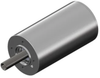
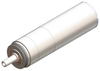
Description: B1210N1021 Autoclavable Cannulated Slotted Brushless DC Motor Cannulated Large Bone Orthopedic Surgical Motor (B1210N1021) The Size 12 brushless DC motor is perfectly suited for large bone orthopedic drills. This high torque cannulated surgical motor
- Other DC Voltage: 9.6 VDC
- Torque Constant: 0.766056 in-oz/amp
- Continuous Torque: 0.7353982300884953 In-lbs
- Shaft Speed: 16,800 rpm
-
Supplier: Portescap
Description: run on 14.4V battery. Product Highlights High continuous torque Better thermal characteristics Cannulated and non-cannulated options Applications Orthopedic Surgical Reamers Surgical Drills Surgical Robots Surgical Saws
- Other DC Voltage: 14.4 VDC
- Torque Constant: 1.257408 in-oz/amp
- Continuous Torque: 0.8486725663716811 In-lbs
- Shaft Speed: 15,700 rpm
-
Supplier: Portescap
Description: feel High efficiency to optimize thermal performance at high speeds Small size allowing smaller surgical hand tool designs and improved ergonomics Withstands high current draw . Applications Orthopedic Surgical Reamers Surgical Drills Surgical Robots
- Other DC Voltage: 14.4 VDC
- Torque Constant: 16.80792 in-oz/amp
- Continuous Torque: 8.292920353982296 In-lbs
- Gearbox Ratio: 16 : 1
-
-
Supplier: Portescap
Description: powered surgical hand tools that are used for joint replacement surgeries of the knee, hip and shoulder. Product Highlights Able to withstand 500+ autoclave cycles Optimized for use in surgical powered devices Cannulated shaft version for surgical power drills



Find Suppliers by Category Top
More Information Top
 Indicates content that may require registration and/or purchase.

-
Comparison of heat generation between internally guided (cannulated) single drill and traditional sequential drilling with and without a drill guide for dental...
The six study groups included standard sequential drilling protocols for 3.5-mm and 4.2-mm final drills with and without the use of a surgical guide, and cannulated single drill technique for 3.5-mm and 4.2-mm drills.
-
An In Vitro Biomechanical Comparison of the Insertion Variables and Pullout Mechanical Properties of AO 6.5‐mm Standard Cancellous and 7.3‐mm Self‐Tapping, Can...
2.8-mm diameter guide wires (9-mm threaded trocar tip, 300-mm long [Synthes]) in- serted with a cannulated pneumatic drill (Hall Series 4 Drill/ Reamer; Hall Surgical , Carpinteria, CA) using 90-psi com- pressed N2 gas were placed bicortically and…
-
Advanced Techniques in Limb Reconstruction Surgery
…16 nail insertion, 19, 20, 28–30 neurovascular status, 16 osteotomy, 18 positioning, 17 postoperative care, 30–32 radiographic assessment, 16 rotational deformities, 13 soft tissues, 16, 17 stable knee and ankle, 12 surgical sequence, 13–15, 20–25 “wire/ cannulated drill ” technique, 20 Transformation…
-
Minimal curettage, multiple drilling, and continuous decompression through a cannulated screw for treatment of calcaneal simple bone cysts in children.
This report concerns a series of 12 patients with simple bone cysts of the calcaneus, who were treated between 1988 and 2000 by a minimal surgical intervention of curettage, multiple drilling and continuous decompression through insertion of a cannulated screw.
-
Robotic-assisted internal fixation of hip fractures: a fluoroscopy-based intraoperative registration technique.
A cannulated component of the hip screw is then inserted over the guide wire ( surgical drill bit), which is used to drill the pilot hole.
-
Scientific Presentation Abstracts
We choose self- drilling , self-tapping cannulated screws because their use may limit the number of the surgical steps, and can be less technically demanding and time consuming.
-
CT- and MR-Guided Interventions in Radiology
These procedures therefore rely on standard surgical tools (e.g. Schanz screws, external fixators, guide wires, cannulated screws, screwdriver, drill ) (Fig. 15.16).
-
Principles of Cartilage Repair
] Surgical procedure – Insertion of a K-wire which matches small fragment cannulated screw system – Pre- drilling using cannulated drill bits guided by K-wires – Insertion of screw and tightening – Levelling of the screw’s head with sur- rounding cartilage.
-
Simultaneous surgery for chronic lateral ankle instability accompanied by only subchondral bone lesion of talus
Taranow et al. [30] reported the surgical outcome of 16 patients who underwent retrograde drilling for osteochondral lesions of the medial talar dome with a cannulated drill (diameter 3.5 or 4.5 mm).
-
CT- and MR-Guided Interventions in Radiology
These proce- dures therefore rely on standard surgical tools (e.g., Schanz screws, external fixators, guide wires, cannulated screws, screwdriver, drill ) (Fig. 15.19).