
Products & Services
See also: Categories | Featured Products | Technical Articles | More Information-
Supplier: AMETEK Brookfield
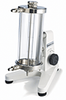
Description: The Höppler principle is used to measure the viscosity of Newtonian liquid by measuring the time required for a ball to fall under gravity through a sample-filled tube that is inclined at an angle. The average time of three tests is taken; the result is converted into a viscosity value using
- Dynamic Viscosity Range: 0.5 to 70,000 cps
- Accuracy: 2 ±% Full Scale
- Industry / Application: Chemical Processing, Coatings / Paints, Cosmetics, Food and Beverage, Non-Newtonian Liquid, Petroleum / Oil & Gas, Pharmaceutical, Plastics / Polymers
- Display & Special Features: Laboratory / Benchtop (Batch)
-
Supplier: AMETEK Spectro Scientific
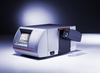
Description: Highlights The MiniVisc 3000 series (formerly the SpectroVisc Q3000 Series) viscometers are the first truly portable, solvent-free, temperature-controlled kinematic viscometers, providing high-accuracy measurements for easy detection of viscosity variations caused by contamination,
- Kinematic Viscosity Range: 1 to 700 cSt
- Accuracy: 3 ±% Full Scale
- Display & Special Features: Graphic / Video Display, Handheld / Field
- Industry / Application: Lube Condition Monitoring (Oil Analysis)
-
Supplier: AMETEK Brookfield
Description: The Wells-Brookfield Cone/Plate Viscometer/Rheometer gives researchers a sophisticated instrument for routinely determining absolute viscosity of fluids in small sample volumes. Its cone and plate geometry provides the precision necessary for development of complete rheological data.
- Dynamic Viscosity Range: 0.3 to 30,000 cps
- Accuracy: 1 ±% Full Scale
- Display & Special Features: Computer Interface / Networkable, Laboratory / Benchtop (Batch), Measures Temperature, SPC / Application Software
- Features: Specialty / Other
-
-
Supplier: Anton Paar
Description: from 1 to 50,000 mPa.s Longstanding experience in rheometry and viscometry For more insight into material properties, L-Vis 510 can be used in combination with an MCR rheometer, SVM 3000 viscometer or AMVn viscometer Installation directly in the pipe or stirring tank No bypass
- Dynamic Viscosity Range: 1 to 50 cps
- Industry / Application: Chemical Processing, Cosmetics, Food and Beverage, Petroleum / Oil & Gas, Pharmaceutical
- Display & Special Features: Computer Interface / Networkable, Graphic / Video Display, Laboratory / Benchtop (Batch), Measures Temperature, SPC / Application Software
-
Supplier: ASTM International
Description: is similar in principle to the falling-rod viscometer described in Test Method D 4040 except that the collar is motor driven and the range of available shear stresses is considerably greater. This instrument is capable of measured and extrapolated viscosity and yield values provided
-
Supplier: ASTM International
Description: method is similar in principle to the falling-rod viscometer described in Test Method D4040 except that the collar is motor driven and the range of available shear stresses is considerably greater. This instrument is capable of measured and extrapolated viscosity and yield values
-
Supplier: Automation Products, Inc.
Description: Dynatrol® Viscosity Systems provide fast, precise viscosity measurement for use on a wide variety of process industry applications: plastics, chemicals, inks, paper, oils, paints, shampoos, adhesives, coatings, foods, etc. The Dynatrol viscometer utilizes a unique vibratory principle
- Dynamic Viscosity Range: 1 to 100,000 cps
- Industry / Application: Adhesives, Chemical Processing, Coatings / Paints, Cosmetics, Food and Beverage, Non-Newtonian Liquid, Petroleum / Oil & Gas, Plastics / Polymers
- Display & Special Features: Computer Interface / Networkable, In-Line / In-Tank (Process / Continuous), Laboratory / Benchtop (Batch), Measures Temperature, SPC / Application Software
- Features: Specialty / Other
-
Supplier: Anton Paar
Description: Lovis 2000 M/ME is a rolling-ball viscometer which measures the rolling time of a ball through transparent and opaque liquids according to Hoeppler's falling ball principle. Measurement requires only 400 µL sample volume. Results are given as relative, kinematic or dynamic viscosity.
- Dynamic Viscosity Range: 0.3 to 10,000 cps
- Accuracy: 0.5 ±% Full Scale
- Industry / Application: Biotechnology, Chemical Processing, Cosmetics, Food and Beverage, Pharmaceutical
- Display & Special Features: Graphic / Video Display, Laboratory / Benchtop (Batch), Measures Temperature
-
Supplier: Saint Clair Systems, Inc.
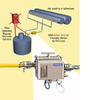
Description: The Norcross M50 Viscosity Sensor installs directly in the main feed line and operates on the piston "time-of-fall" principle to detect changes in the viscosity of liquids such as adhesives, coatings, and inks. Eliminating bypass installation, it can hold viscosity within 0.1 cps, is not
- Dynamic Viscosity Range: 0.1 to 2,000 cps
- Industry / Application: Adhesives, Coatings / Paints
- Display & Special Features: In-Line / In-Tank (Process / Continuous)
- Technology / Test Method: Piston / Ball


Find Suppliers by Category Top
Featured Products Top
-
 . Principle of Operation MiniVisc 3000 viscometers use a patented split cell design that enables measurement of kinematic viscosity using only a few drops (60µL) of oil. When closed, the center pieces of the split cell form a funnel with 100 micron gap allowing oil (read more)
Browse Viscometers Datasheets for AMETEK Spectro Scientific
Conduct Research Top
-
Viscosity Measurment Application Notes
Most laboratory viscometers employ the well-known principle of rotational viscometers to measure viscosity by sensing the torque required to rotate a spindle at a constant speed while it is immersed in the sample fluid. This is because the torque, generally measured using the reaction torque
-
Mixer Viscometry
precision measurements of torque and impeller rotational speed for a given geometry can determine apparent viscosity in the mixing vessel, is well documented at laboratory scale. The trials reported are based upon scale down mixing geometries, relying on traditional off-line rheometer/viscometer
More Information Top
 Indicates content that may require registration and/or purchase.

-
A New Apparatus for Combined Measurements of the Viscosity and Density of Fluids for Temperatures from 233 To 523 K at Pressures up to 30 Mpa
A new viscometer principle has been developed.
-
Orbiting sphere viscometer operated in resonant orbiting mode
For smaller amplitudes, the interaction is more comparable to other oscillating viscometer principles .
-
Advances and new applications using the acousto-optic effect in optical fibers
For testing the viscometer principle , the measurement has been performed in anhydrous D(+)-glucose (C6H12O6) in de-ionised, distilled water.
-
MEASUREMENT AND PREDICTION OF THE PRESSURE DROP INSIDE A PIPE: THE CASE OF A MODEL FOOD SUSPENSION WITH A NEWTONIAN PHASE
that the symmetric distributed concentrationcan be observed; therefore, the use of tube viscometer principles is not recommended.
-
Viscosity of nitrogen gas at low temperatures up to high pressures: A new appraisal
The main advantage of the two capil- lary viscometer principle is that the Hagenbach and Couette corrections to the Poiseuille equation are ba- sically eliminated from the working equation.
-
EFFECT OF TEMPERATURE UPON RELATIVE VISCOSITY OF NORMAL AND MYELOMA SERUM
A study at the Nufield Department of Clinical Medicine, Oxford, of 66 patients with IgA myeloma and of 19patients with IgG myeloma has shown that the relative viscosity (measured by a technique based upon the Ostwald viscometer principle ) increasesby a consistent amount…
-
Influence of turbulent motion on structural degradation of fruit purees.
Purees from apples, apricots, pears and nectarines (undiluted or diluted with 55% by vol. of water) were subjected to laminar and turbulent motion in an experimental system based on the rectilinear pipe viscometer principle .
-
A simple pore-viscometer and Stalagmometer for measurement of the molecular-Rottung and separation in solutions and uniform liquids
The viscometer principle is recently the capillary viscometer rnit namely of Staudinger and its employees for measurement of the ,,spezifischen Viskosit ~ it " and the Molektllkomplexgewichte largely developed.
-
1986 Index IEEE Transactions on Biomedical Engineering Vol. BME-33
Christiansen, TorbenFalch, T-BMEFeb8679-82 microprocessor-based two-channel thromboelastograph based on couette viscometer principle .