Mailboxes Information
Mailboxes are used to receive incoming mail, with some being used to send mail. Full-service mailboxes are able to secure both outgoing and incoming mail while limited-service mailboxes are only designed to hold incoming mail. Mailboxes may also be called letter boxes or post boxes. They are able to enclose, safely store, and separate mail.
Types of Mailboxes
Mail has been a part of human history since as early as Ancient Persia in 550 BCE. Many aspects of the mail system have changed since that time, and there are many types of mailboxes available for both commercial and residential use.
Mailboxes come in a variety of sizes. Small mailboxes or those with small compartments are only designed for small parcels and letter delivery. Parcel drop mailboxes are bigger and can contain larger packages and add the convenience of extra security for parcel storage.
The most iconic mailboxes consist of a container that is mounted to a post. Other configurations of mailboxes include:
Cluster Mailboxes
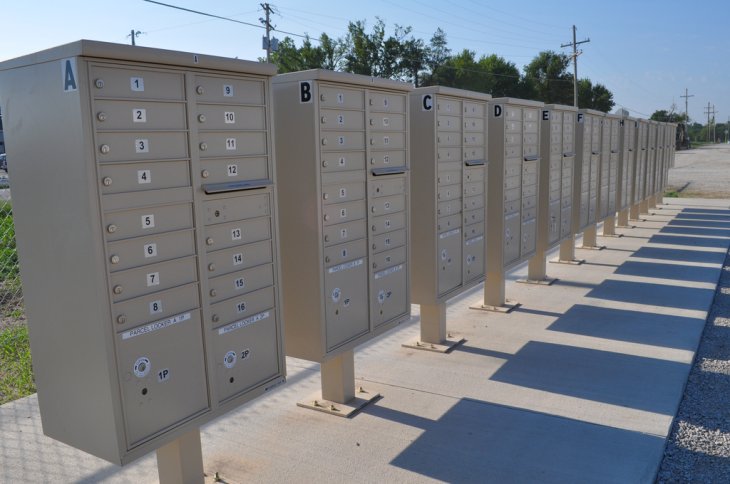
Figure 1: Cluster mailboxes situated outdoors with parcel lockers. Source: Public domain
These types of mailboxes are centralized units with individually locked compartments that separate delivered mail. They are often referred to as cluster box units (CBU). Some cluster mailboxes also have spaces for outgoing mail. The main benefit of cluster mailboxes is reducing delivery costs as carriers can deliver mail to multiple customers per location. However, each customer will have to check for mail at the cluster mailbox separately.
Parcel lockers have larger spaces for parcel delivery that can be included in cluster mailboxes or in separate units. Parcel lockers are used for items that are too large to fit in the individual compartments within the cluster box. The carrier will leave a key in an individual compartment that corresponds to the parcel locker space. A tag indicates which locker the key corresponds to.
Postal services are increasing the use of centralized delivery as part of green initiatives and may limit delivery to individual locations. Cluster mailboxes can be used for private delivery as well.
High-security mailboxes
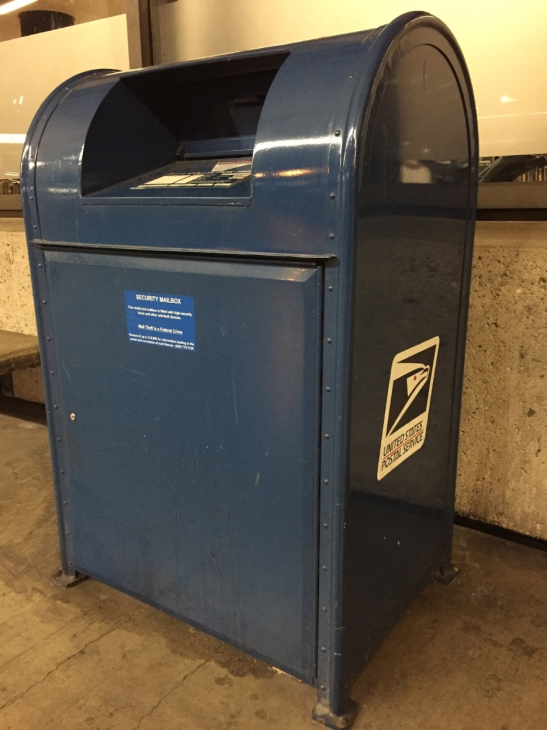
Figure 2: A U.S. mailbox at Seattle-Tacoma International Airport with security systems.
Source: Subhashish Panigrahi/CC BY-SA 4.0
High-security mailboxes are specially designed to prevent unwanted individuals from tampering with mail or packages. They are often made of more sturdy material, such as heavy gauge steel, and have a secure locking mechanism. The lock is often a type that is more difficult to pick or pry open.
Many high-security mailboxes are also designed to prevent fishing and will have a protective flap to separate the contents when storing outgoing mail that has been passed through a slot. These types of mailboxes are often used in both commercial and residential applications.
Rotary Mail Centers
These mailboxes enable efficient and secure mail distribution. They often include parcel lockers and drop boxes. These mailboxes have an inner cabinet that can rotate 180 degrees so that the back of the mailbox compartments face the front for mail distribution. This style of mailbox is convenient when space is limited and a professional system is desired.
Various mailbox configurations can be put inside the rotating cabinet to achieve the desired number of compartments. Rotary mail centers are optimal choices for data distribution boxes that hold sensitive information in tight spaces.
Horizontal Mailboxes
This mailbox configuration has horizontal compartments, where the horizontal width is greater than the vertical height. There are some common standard USPS approved configurations such as 4C or 4B horizontal mailboxes. However, 4B horizontal mailboxes have been phased out for 4C models instead. Private delivery horizontal mailboxes can have a variety of dimensions. Horizontal mailboxes may be front or rear loading.
Vertical Mailboxes
This mailbox configuration has vertical compartments, where the vertical height exceeds the horizontal width. USPS transitioned from 4B mailboxes to 4C vertical mailboxes in October 2006 as 4B did not provide enough space or security. Multi-unit buildings constructed after October 2006 are required to use the newer vertical mailbox model instead of the older version to comply with USPS standards. Mailboxes for private use can have varied dimensions. Vertical mailboxes can be front or rear loading.
Mail Slots
Mail slots are holes in doors or the walls of a building where letters and parcels can be delivered. A slot is covered with a hinged flap and may have a mail catcher on the other side. Mail slots are typically made from metal. As mail is delivered directly into the building, mail slots add security in ways that post and wall mount mailboxes cannot.
Materials
There are a variety of materials that mailboxes are made from. Each material has advantages and disadvantages. When choosing a mailbox material, consider where the mailbox will be located. If it will be installed outdoors, it may need to be weather resistant. As climates vary widely, some materials fair better under certain weather conditions.
Metal
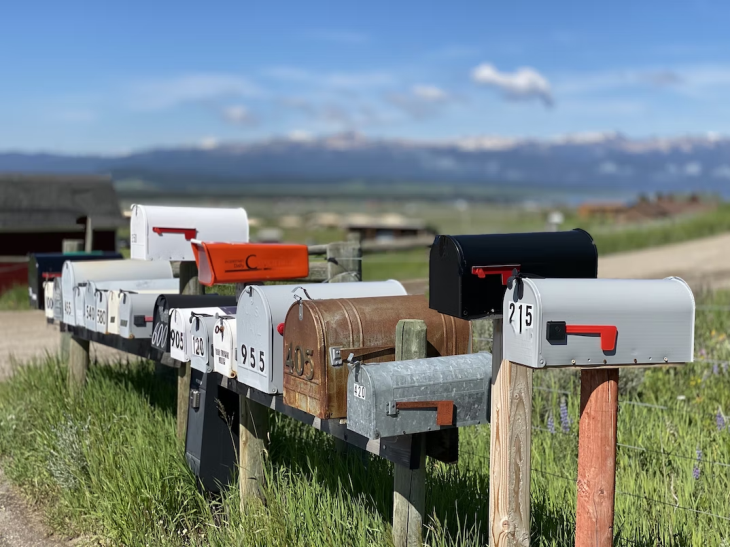
Figure 3: Metal residential mailboxes. Source: Paula Hayes/Unsplash
A variety of metals can be used in mailboxes. Some types of metal commonly used include:
Aluminum — This material is lightweight but durable. It is most suited for milder climates and short-term use. It will rust if the material is not treated.
Cast aluminum — Heavier and more durable than traditional aluminum, cast aluminum is resistant to rust so it is an ideal choice in damper climates. This material is low maintenance and can withstand rain, snow, and heat without damage.
Brass — This material is high maintenance when compared to other metals, it requires care to keep the material looking its best. It develops patina from exposure to outdoor elements and needs to be polished and shined to maintain its original color. This material is stylish and often chosen due to its aesthetic value.
Zinc iron — Iron can be coated in a protective zinc coating to prevent rust and corrosion. Iron has a tendency to rust when exposed to rain or humidity.
Brushed stainless steel — This material rusts at a slower rate than many other metals. It is durable but heavy. This material is a good choice for oceanfront locations. Salty water can rust many metals but brushed stainless steel is highly rust-resistant.
Galvanized steel — Steel can be coated with a layer of zinc to increase resistance to corrosion. This material can withstand moisture effectively. Galvanized steel is one of the most durable material choices for mailboxes. However, it cannot withstand salt water without rusting.
Plastic
Plastic mailboxes may not be as aesthetically pleasing as other material choices. However, plastic is rot-, insect-, and rust-resistant, unlike other materials. It is also low maintenance. Plastic is often an inexpensive option for mailboxes but some cheaper forms of plastic can crack and fade quickly. In addition, plastic does not fare as well in high-heat areas. Consequently, for hotter climates, plastic is likely not the best option for an outdoor mailbox.
Plastic mailboxes can come in a variety of colors and is often cheaper than their metal counterparts. Many models also boast high-security options. UV protection will help prevent color fading due to UV exposure. Plastic can be relatively easily formed into many shapes, so some plastic mailboxes have intricate and interesting designs.
Polypropylene is often used for plastic mailboxes. This material is sturdy and durable and is low maintenance. It has high flex strength, which makes it a resilient material option. This material has good impact strength. Plastic is more often used in residential rather than commercial applications and is not commonly used for cluster mailboxes.
Wood
Wood mailboxes are a stylish choice for commercial and residential operations. Wood is strong and durable but is more prone to rot and insects. Depending on the type of wood and finish, wood may not be weather resistant. Wood is a natural and porous material that can swell and shrink depending on humidity. There are many types of wood available and types of finishes with different properties.
Wood may be preferred in indoor applications due to its aesthetic nature. When a wood mailbox is not subject to outdoor elements, it can more easily preserve its appearance. Wood mail organizers and sorters are common in offices and classrooms. Some indoor wood mailboxes can be used as cubby hole storage.
Features and Accessories
Mailboxes come in many different sizes. Mailboxes may have large compartments for parcels or smaller compartments for regular mail.
Mailboxes are functional devices. They are built to resist wear and tear while some mailboxes are designed to incorporate style and enhance aesthetics. Some mailboxes have a locking feature for added security. Locks can be changed as needed. Lock mounting plates can be added to mailboxes so a lock can be affixed to the mailbox to add security.
Hinges for mailbox doors and flaps can have a variety of features and accessories. Springs can be affixed to pull compartment doors closed so they cannot be left open. Magnetic catches can be used as a latching mechanism in mailboxes.
Mailboxes may have a number or a name label as available accessories. A flag mail indicator is commonly added to residential mailboxes.
Replacement parts are usually available for mailboxes and most models use standard pieces that can be purchased from many different vendors.
Mounting Options
Mailboxes can be installed in a few configurations. Mailboxes may be mounted on walls and can be affixed to the wall in a variety of ways. There are also column-mount mailboxes and collection and drop boxes.
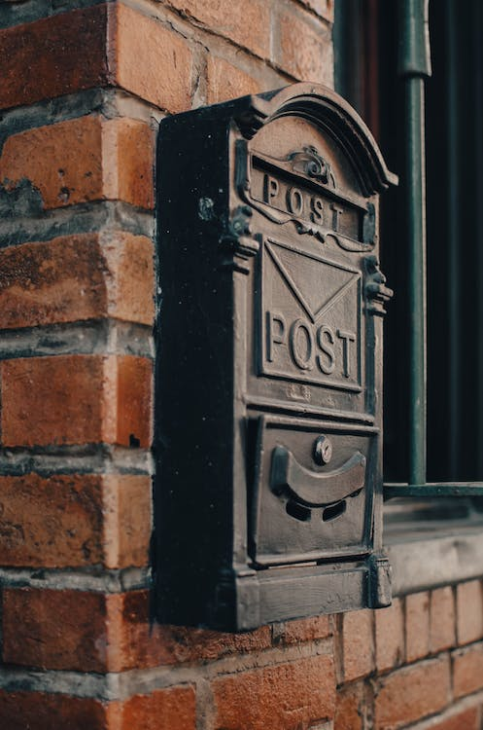
Figure 4: Vintage mailbox mounted to a brick wall. Source: Ekrulila/Pexels
Mailboxes can also be mounted on posts, which is standard for many mailboxes for residential use. These mailboxes are called post-mounted mailboxes and require posts or stands. The posts can be made from a variety of materials such as metal, plastic, or wood. Mounting boards may be required for some mailbox posts. Typically, a mounting bracket will make installation easier.
Choosing a mailbox
When choosing a mailbox, consider what type of mail will be delivered. To keep larger packages secure, larger compartments will be needed. The material of the mailbox depends on the location and whether the mailbox is situated indoors or outdoors. When purchasing commercial mailboxes, check the approved standards concerning mailbox dimensions.