
Air Switches Information
Air-actuated switches are devices activated by air that often do not rely on electricity for their operation. Air-actuated switches may also be called air switches and are electromechanical devices that use air pressure supplied by an actuator to activate a mechanical switch.
An air switch can be used to turn devices on or off. A push button is used to instigate a puff of air that will travel along tubing to a control box and activate the air switch. Buttons are available in a variety of different styles and finishes to suit the project.
Configurations
Momentary air switches allow current to flow through the system when the button is compressed. Alternate latching air switches need to sense a pulse of air to turn the switch to the ON position and a pulse of air to turn the switch to the OFF position.
The number of poles describes the number of circuits that the air switch controls, typically there are single and double pole configurations available. A throw is related to the number of outputs each pole can have, there are typically single and double throw configurations available.

Figure 1. Relay symbols for switches. Source: Public domain
SPST
The simplest switch form is a single pole single throw (SPST) switch. In this type of switch, there is a simple ON/OFF configuration in a single circuit. There are two terminals that are the electrical connection points. When the switch is ON, there is a connection between the two terminals and power can flow through to complete the circuit. When the switch is OFF there is no connection between the terminals.
SPDT
A single pole double throw (SPDT) switch has a total of three terminals. It connects the single source terminal to either of two output terminals. This type of switch allows for an ON/ON configuration. As a result, the switch's input terminal can complete one of two possible circuits at any given time. The ON-1 position means that the connection is established with the first output while the ON-2 position means that a connection is established with the second output.
DPST
A double pole single throw (DPST) switch has a total of four different terminals. Two source terminals connect to a single output terminal each, but are not connected to each other. For example, the terminals can be labelled 1, 2, 3, and 4. Terminals 1 and 3 are connected and terminals 2 and 4 are connected. Each combination is isolated from the other pair.
When the switch is in the ON position, terminals 1 and 3 form one circuit that is completed and terminals 2 and 4 form another completed circuit. This configuration is beneficial in applications with different voltages since both of the circuits are isolated from each other.
DPDT
Double pole double throw (DPDT) switches consist of a total of six terminals. Two are independent input terminals that can complete two different circuits. All four output terminals are separated and each input terminal connects to two output terminals.
Applications
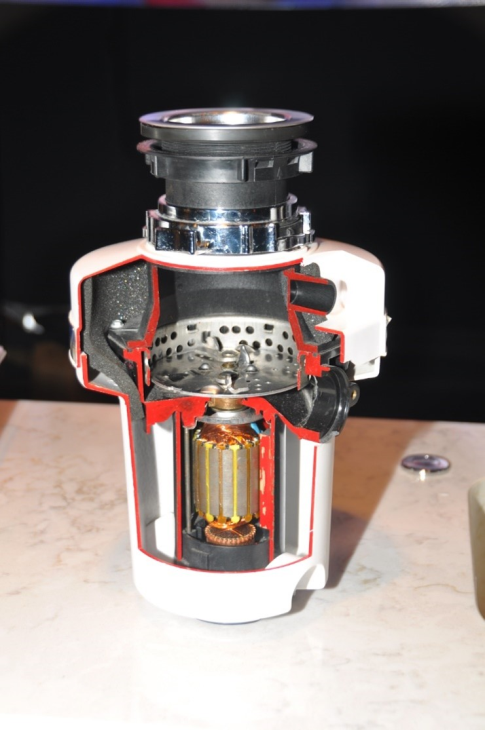
Figure 2. Kitchen disposal unit. Source: S.J. de Waard/CC-BY-SA-4.0
These devices are common in sink disposals and hot tubs. Air switches are typically used in applications where water is present but needs to be kept separate from electronic components. As the switch is activated by air instead of an electrical signal, users activating the push button can be safe from electric shock.
Air Pressure Switches
Air pressure switches are passive devices that function either in the presence or absence of pressure. In a normally open (NO) switch, there is no current flowing through unless the pressure point is reached, if tension exceeds a set point, the contacts will be closed allowing current to flow. Whereas in a normally closed (NC) switch, current is allowed to flow through in the normal state of the switch, the contacts will open if tension exceeds or meets the set point stopping current flow. Air pressure switches can be mechanical or electronic.
Mechanical Pressure Switch
Mechanical pressure switches are simple but robust and they are often used for less complex tasks. They are activated by a spring and piston working in conjunction. The spring offers opposing pressure on the inlet, with a variety of tensions available depending on the tension in the spring. Consequently, the spring tension is directly related to the pressure required to activate the switch. Mechanical pressure switches are more suited to high voltages and amperages when compared to electrical pressure switches.
Electronic Pressure Switch
Electronic pressure switches consist of a pressure transducer, a strain gauge, and additional electronics. An electronic pressure switch allows for greater accuracy, less contact wear, and long-term stability. They are simple to operate and perform thousands of switching cycles.
Differential Air Pressure Switch
This switch uses differential air pressure to operate an electrical switch at a predetermined actuation point. They are designed to measure the difference in pressure between two pressure sources.
Differential air pressure switches control the differential pressure of air for filters, air ducts, fans, air-conditioning, and ventilation systems.
Pressure Transducer
Pressure transducers differ from pressure switches. A pressure transducer converts pressure readings to analogue electrical signals, while a pressure switch activates at a specific pressure. Pressure transducers have continuous outputs that are often connected to a controller that adjusts processes. Pressure switches do not provide continuous output and only have an on/off function.
Pressure transducers are optimal in areas in industrial applications that require a higher degree of precision, feedback, and control. They are often used in more sophisticated applications such as monitoring, process control, and predictive analysis.
Selection for Air Pressure Switches
Many industrial plants have pressure switches. The deciding factor when choosing a pressure switch will lie in the requirements of the application.
Number of set points
Use a fixed differential pressure switch with one set point; if there are two set points, an adjustable differential pressure switch is the best choice.
Fluid to be controlled
The wetted part of the switch must be compatible with the system fluid. Pressure switches can be used to measure hydraulic oils, air, water, salt water, corrosive fluids, viscous fluids, and chemicals.
Pressure range
When choosing an air pressure switch, it is important to select pressure settings that are in the middle 80% of the pressure range of the switch.
The type of pressure should also be considered. Pressure can be positive or it can be negative in vacuum applications.
Surges
Choose a pressure switch that can accommodate likely surges in the designated system.
Output
There are various output configurations. Some popular configurations include:
- SPDT contacts
- Two SPDT contacts
- Dual stage
Connections
Choose a pressure switch with the appropriate electrical connections and pressure connections.
Drift
Air pressure switches are susceptible to drift. Drift is the gradual degradation in the accuracy of readings. This can occur for a variety of reasons, but the main contributor is wear due to use over time. Consider the number of switching cycles that are needed when choosing an air pressure switch.
Applications
There is a broad range of commercial and domestic applications for air switches. Air switches and air pressure switches can be used to monitor the system air pressure in HVAC, gas cylinders and air pumps. They are also widely used in water pumps use pressure switches to regulate the flow