Tank Monitoring Systems Information
Tank monitoring systems allow remote tracking of tank fill levels to maximize efficiency and minimize downtime. Monitoring of tanks on a 24-hour basis eliminates overfills and empty tanks improving asset yield. The units work well with both underground and above-ground tanks.
Such methods offer advantages over the traditional process of sending personnel to storage tanks and using manual techniques to gather data. Remote tracking enables automatic input of tank levels into a database. The process facilitates effective deployment of resources to monitor numerous tanks.
Types of Tank Monitoring Systems
Numerous products with many additional features assist in monitoring activities. The technology depends on the type of sensor integrated to determine the fluid levels, and the manner in which detected measurements are transmitted to a central system or support personnel. Some approaches offer means of controlling the levels and associated equipment in addition to tracking.
Moreover, the systems differ in the alerting function's configuration. Select models allow alerts based on one or two preset indicators while others offer multiple alerts based on distinct criteria.
The mechanisms engage a diverse set of sensors, including:
- Float switch: The devices determine a liquid's level in a tank. They provide information related to liquids only. Such products are featured in float sensors activated magnetically. Instruments detecting float indicators are influenced by factors such as chemical compatibility, density, buoyancy, temperature, and viscosity. These sensors present insufficient accuracy.
- Ultrasonic sensors: The units determine the level of viscous liquids or solids. An alternative function is water treatment operations. They emit high-frequency acoustic waves that are reflected back in the direction of the transducer where it detects them. Readings are subject to certain conditions. The elements offer point indicator control and/or continuous monitoring.
- Radar sensors: These tools are employed for measuring non-contact fluid level. They operate well in situations where dust, vapor, or foam hinders ultrasonic measurements. The approach involves microwave pulses to track the material from the antenna's top to the tank's bottom. The pulses emitted by the components are unaffected by environmental changes. These devices fall under the high-cost category.
- Pneumatic sensors: This technology is present in applications that cover hazardous areas without electricity or with heavy sludge. These instruments are best suited for dealing with high viscosity liquids. They support a low-cost method for point indicator monitoring. The readings are altered by the liquid's temperature, and accuracy degrades if the gravity of liquids fluctuates.
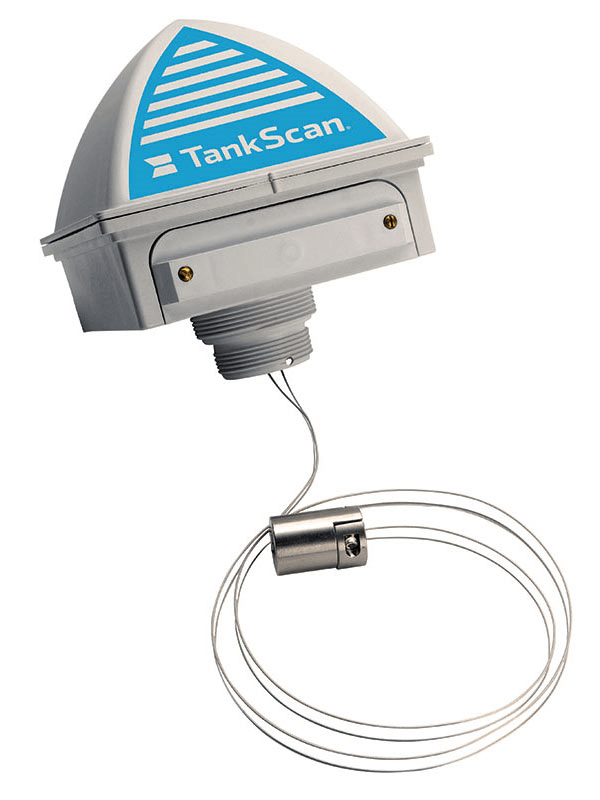
- Magnetostrictive sensors: These sensors are suitable for accurate and continuous measurement of liquids located inside storage and shipping containers. The components charge a magnetostrictive wire. When the electric field intersects the magnetic field of the float, it generates a pulse, which then moves back across the wire. These tools are popular in commercial transactions.
How Tank Monitoring Systems Work
Monitoring methods rely on a myriad of equipment. The starting point for a structure is a sensor that is designed to operate in particular environments or substances. The elements provide readings that are transmitted via the system's communication backbone. Adding data management and alert functionality to the sensor and communication equipment comprises a complete setup.
Tanks are available in several shapes and sizes. Tracking processes employ sensors configured for an individual reservoir. Once the sensor obtains data, an onsite piece of communication equipment or intelligent controller relays it to a human operator or messaging system for evaluation. Select models allow site controllers to fill or drain a tank.
The structures perform tank and line tests mandated by regulatory agencies for compliance. With containment tanks, this includes inspection at the top of the tank as well as beneath the dispensers. Transmission of measurements is accomplished via satellite or cellular networks. It is delivered to desktop or laptop computers as well as to tablets or cell phones through the internet.
Intelligent controllers permit manual and automated adjustments. By enabling remote control of tank levels, it is easier for a company to mobilize resources to maintain a location and avoid costly spills or downtime. When tanks are linked together at a site, achieving accurate monitoring is a complex task that necessitates integration of multiple sensor setups.
The tracking system's most critical function is to send an alert in the event of an error. Standard alerts are triggered when a container approaches empty or full levels, and remote monitoring from a PC or a smartphone is an option. This reduces the need for frequent visits to remote locations. Most methods allow a range of alert thresholds, including series of events requiring evaluation.
Applications
Industries that rely on monitoring systems, including:
- Water
- Petroleum
- Marine
- Sewage
- Industrial
- Aerospace
- Chemical
- Agriculture
- Energy
- Storage
Selecting Tank Monitoring Systems
Researching performance characteristics of a particular version is advisable before selecting one. A method using multiple sensors or sophisticated alerting capabilities may involve higher costs. A cost-benefit analysis of available options is therefore recommended prior to the purchase.
Manufacturer's specifications should be checked to ensure a system meets the criteria for the planned activities. If usability is expected to change over time, opting for a model with the flexibility to adjust functionality is advisable.
Image Credits: