
Mechanical Control Levers Information
Last revised: January 15, 2025
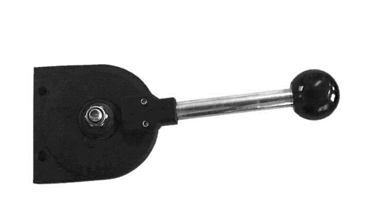
Mechanical control levers use a mechanical lever and mechanical cables as control devices. Uses might include throttle, shift , brake and others. These are devices that allow an operator to move the lever with a mechanical linkage that moves the corresponding control in relation to the lever movement. These type of devices are often used where fly by wire electronic type controls are less desirable for various reasons. Specific applications includes remote valve actuation, drive engagement and automatic pick-up hitch systems.
Types of Mechanical Control Levers
There are two main types of mechanical control levers.
Handle/knob—Handle knob, wheel or other grip fitting for attachment to the end of a control cable or wire rope.
Lever/control—A lever or lever fitting is attached to the end of a control cable and mechanically enhancing the applied force used to actuate a control cable, adjust the tension in a cable or multiply the force delivered by the cable. Control head may consist of hand operated, foot pedal controls, panel mounted units (knob or Venire controls), and multilever (multiple cable) control units. Levers or control heads may or may not include handles, pedals and mounting brackets.
Mechanical Control Levers FAQs
What are the key factors to consider when selecting a mechanical control lever for a specific application?
When selecting a mechanical control lever for a specific application, several key factors should be considered to ensure optimal performance and suitability. Here are some important considerations.
Application Requirements
Determine the specific function the lever needs to perform, such as actuating a control cable, adjusting tension, or multiplying force.
Type of Lever
Consider the type of lever that best suits the application. For example, rotary lever actuators are often preferred for applications where the cam moves perpendicular to the lever’s rotational shaft due to their long life and versatility.
Material and Construction
The material of the lever can affect its durability and suitability for the environment in which it will be used. For instance, ball bearing rollers are recommended in environments with abrasive dust.
Ergonomics and User Interaction
Evaluate the ergonomics of the lever, including the actuation force required and the accessibility of the control. This is particularly important for hand-operated or foot pedal controls.
Environmental Conditions
Consider the environmental conditions the lever will be exposed to, such as temperature, humidity, and potential exposure to dust or chemicals. This can influence the choice of materials and design features.
Mounting and Installation
Assess the mounting options and installation requirements, ensuring that the lever can be securely and conveniently installed in the intended location.
Cost and Budget
Factor in the cost of the lever, balancing the budget constraints with the need for quality and durability.
These considerations will help in selecting a mechanical control lever that is well-suited to the specific needs of the application.
What are the best practices for maintaining mechanical control levers?
When it comes to maintaining mechanical control levers, best practices are essential to ensure their longevity and optimal performance. Here are some general guidelines.
Regular Inspection
Conduct routine inspections to check for wear and tear, especially on moving parts and connections. This helps in identifying potential issues before they become significant problems.
Lubrication
Ensure that all moving parts are adequately lubricated to reduce friction and wear. This is crucial for maintaining smooth operation and extending the lifespan of the lever components.
Cleaning
Keep the levers clean from dust, dirt, and debris, which can cause abrasion and affect performance. Regular cleaning helps in maintaining the lever's functionality and appearance.
Component Replacement
Replace worn-out or damaged components promptly to prevent further damage to the lever system. This includes seals, bearings, and any other parts that show signs of deterioration.
Environmental Considerations
Consider the environmental conditions in which the levers operate. For example, in dusty or abrasive environments, additional protective measures may be necessary to prevent damage.
Training and Safety
Ensure that personnel responsible for maintenance are adequately trained and follow safety protocols to prevent accidents during maintenance activities.
What materials are commonly used in the construction of mechanical control levers?
When it comes to the construction of mechanical control levers, the choice of materials is crucial for ensuring durability and performance. Based on the information available:
Roller Materials
Nylatron: This material is commonly used for rollers in rotary lever actuators due to its smooth operation and long wear characteristics. It is suitable for most rotary lever applications.
Ball Bearing Rollers: These are used in environments where abrasive dust could cause undue wear on standard nylatron rollers. They are also suitable for high-speed cam applications.
What are the environmental considerations for selecting materials for mechanical control levers?
When selecting materials for mechanical control levers, environmental considerations are crucial to ensure the lever's durability and performance in specific conditions. Here are some key environmental factors to consider.
Abrasive Environments
In environments with abrasive dust, materials like ball bearing rollers are recommended over standard nylatron rollers to prevent undue wear and ensure longevity.
Temperature and Humidity
The materials should be chosen based on their ability to withstand the temperature and humidity levels of the operating environment. This can influence the choice of materials and design features.
Chemical Exposure
If the levers will be exposed to chemicals, selecting materials that are resistant to corrosion and chemical degradation is important to maintain functionality and safety.
Noise and Vibration
Consideration of noise and vibration levels is important, as these factors can affect the choice of materials and the design of the lever system.
What are the ergonomic considerations for mechanical control levers?
When considering the ergonomics of mechanical control levers, several factors are important to ensure user comfort and efficiency. Here are some key ergonomic considerations.
Pedal Height
The height at which a user must lift their foot to actuate a pedal is crucial. It should be designed to minimize strain and allow for comfortable operation.
Actuation Force
The force required to press down on a pedal or lever should be appropriate for the user, ensuring that it is neither too strenuous nor too light, which could lead to accidental activation.
Accessibility
The design should consider the accessibility of additional pedals and/or push buttons, ensuring that they are within easy reach and can be operated without excessive movement.
Foot Rest Area
Providing an area for a foot rest can enhance comfort, especially in applications where the user needs to operate the control for extended periods.
Hinge Actuation
The choice between front hinge and back hinge actuation can affect the ergonomics, depending on the specific application and user preference.
Weight Considerations
The weight of the control lever or pedal is important. A design that is too heavy can be difficult to maneuver, while one that is too light may lack stability. The balance between weight and stability is crucial for ergonomic design.
These considerations help in designing mechanical control levers that are comfortable and efficient for users, reducing the risk of fatigue and improving overall usability.
What are the specific applications for different types of rotary lever actuators?
Standard Roller Rotary Lever Actuators
These are used for most rotary lever applications. They are versatile and available in various lengths. The rollers are typically made of nylatron, which provides smooth operation and long wear. This makes them suitable for general applications where the cam moves perpendicular to the lever’s rotational shaft.
Ball Bearing Roller Rotary Lever Actuators
These are preferred in environments where abrasive dust could cause undue wear on standard nylatron rollers. They are also suitable for high-speed cam applications, providing durability and reliability in challenging conditions.
Adjustable Length Rotary Lever Actuators
These are used in applications where the length of the lever needs to be adjusted to suit specific requirements. This flexibility makes them ideal for customized applications where precise control and adaptability are necessary.
Mechanical Control Levers Media Gallery
References
GlobalSpec—Ergonomics, Weight Considerations, Measurements
Image credit:
Magura