
Push-in Rivets Information
Last revised: February 13, 2025
Push-in rivets are cylindrical, headed fasteners that are pushed or pressed into place to secure two or more items together. Applications for push-in rivets include the automotive, electronics, furniture, appliance, and the construction industries. Push-in rivets are also known as push-in fasteners, push rivets or Christmas tree fasteners.
The primary function of a push-in rivet is to secure two items together. This is a light-duty fastener which provides a tight and secure fasten. Many are reusable and removable, offering a way of fastening objects without permanently securing them. Since these fasteners are versatile, they are designed for many different applications, including uniquely designed push-in rivets for the specific application.
Push-in rivets are commonly made of plastic; some are made of metal. These fasteners are generally less than in a half inch or a few millimeters in diameter and are available in many different colors.
Rivet Types
There are many styles of push-in rivets that cover a variety of applications. Below is a list of some of the popular types of push-in rivets.
|
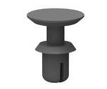
· Beveled Head is a quick installation with a beveled head for a clean finish. |
 |
|
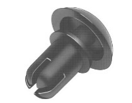
· Button has a clean finished look in the shape of a button. |
 |
|
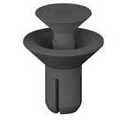
· Countersunk is an easily installed, flush-mounted, tamper-resistant rivet. |
 |
|
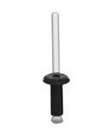
· Expansion has a pin that breaks off leaving a finished appearance with a secure fasten. |
 |
|
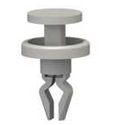
· Folding Leg is pushed into place and the legs of the pin get pushed out to lock into place. |
 |
|
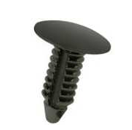
· Fir Tree has ribs that deflect and then go back into place to lock in position. |
 |
|
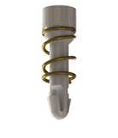
· Heat Sink has a spring that is used to keep constant pressure on the heat sink and the processor for continuous thermal transfer. |
 |
|
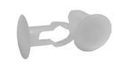
· Key Hole has a key-shaped locking mechanism that creates a tight fit. |
 |
|
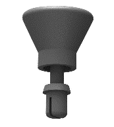
· Knob-Head is easily placed and removed by a push-pull motion. |
 |
|
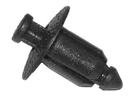
· Push Release has a pin that is pushed into place to lock and then pushed again to release. |
 |
|
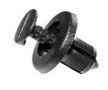
· Quarter Turn is pushed into place but is released with a quarter turn. |
 |
|
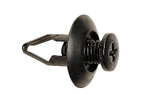
· Screw Type One-Piece is pushed into place and to remove the pin it must be unscrewed. |
 |
|
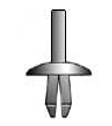
· Three and Four Prong, Non-Pre-Driven has tapered prongs with a round head and is non-removable. |
 |
|
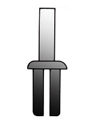
· Two Prong Pre-Driven has a round head with two prongs and is non-removable. |
|
Push-in Rivets FAQs
How do the different types of push-in rivets affect their performance in various materials?
The performance of different types of push-in rivets in various materials can be influenced by several factors, including the design and material of the rivet itself. Here are some insights based on the information available:
Types of Push-in Rivets
Barbed Rivets (Fir Tree Rivets): These are designed for fast and easy installation and can securely hold different materials such as metal, foam, rubber, and plastic. Their barbed design allows them to grip the material effectively, making them suitable for applications where a strong hold is required.
Countersunk Rivets: These are designed to provide a flush surface when installed, which can be important for aesthetic or functional reasons. They are easy to install by hand and are suitable for applications where a smooth surface is needed.
Removable Plastic Rivets: These can be removed by pulling the pin's side taps, making them ideal for applications where disassembly might be necessary. They allow for blind side fastening and are easy to install by hand.
Snap Rivets: These rivets snap into place by hand and are designed for fast and easy installation. They are suitable for applications where quick assembly is needed.
Material Considerations
Rivets can be made from various materials, including steel, copper, plastic, and other metal alloys. The choice of material depends on factors such as the materials being secured, weight restrictions, and potential for corrosion. For example, plastic rivets are useful in applications where materials need to be non-conductive or where corrosion is a concern.
Specific Applications
Drive Rivets: These have a short mandrel and are installed using a hammer. They are specifically used to secure panels and architectural features to masonry walls, providing a secure, load-spreading fix.
Each type of rivet has its own advantages and is suited to specific applications and materials. The choice of rivet type should be based on the specific requirements of the application, including the materials involved, the need for removability, and the desired aesthetic or functional outcome.
What are the advantages of using plastic rivets over metal rivets?
The advantages of using plastic rivets over metal rivets can be summarized as follows:
Weight Considerations
Plastic rivets are lighter than metal rivets, which can be beneficial in applications where weight is a critical factor.
Corrosion Resistance
Plastic rivets offer better resistance to corrosion compared to metal rivets. This makes them suitable for environments where exposure to moisture or chemicals is a concern.
Non-Conductivity
Plastic rivets are non-conductive, making them ideal for applications where electrical insulation is required.
Removability and Reusability
Some plastic rivets, such as removable plastic rivets, can be easily removed and reused, which is advantageous in applications where disassembly might be necessary.
What are the materials used for push-in rivets?
The materials used for push-in rivets can vary, and the choice of material depends on several factors such as the materials being secured, weight restrictions, and potential for corrosion.
Common Materials
Steel: Known for its strength and durability, steel is often used in applications where high load-bearing capacity is required.
Copper: Offers good corrosion resistance and is often used in applications where electrical conductivity is important.
Plastic: Provides advantages such as being lightweight, corrosion-resistant, and non-conductive, making it suitable for applications where these properties are beneficial.
Other Metal Alloys: Various alloys may be used to provide specific properties such as enhanced strength or corrosion resistance.
Material Considerations
When weight is a concern, materials like aluminum or plastic may be preferred due to their lighter weight compared to steel.
In environments prone to corrosion, materials like copper or plastic are advantageous due to their resistance to corrosion.
Specific Applications
Plastic rivets are particularly useful in applications where non-conductivity is required, such as in electronic enclosures and circuit boards.
The choice of material can also be influenced by the need for removability and reusability, as seen with some plastic rivets that can be easily removed and reused.
What are the advantages of using metal alloys in rivets?
The advantages of using metal alloys in rivets can be summarized as follows:
Strength and Durability
Metal alloys, such as steel, provide high strength and durability, making them suitable for applications requiring a strong hold and high load-bearing capacity.
Corrosion Resistance
Certain metal alloys, like those containing copper, offer good corrosion resistance. This makes them ideal for environments where exposure to moisture or chemicals is a concern.
Specific Properties
Different metal alloys can be chosen to provide specific properties. For example, aluminum alloys are often used when weight is a concern due to their lighter weight compared to steel.
What are the specific applications of push-in rivets?
Push-in rivets are versatile fasteners used in a variety of applications due to their ease of installation and specific design features.
Push-in blind rivets are particularly useful in situations where only one side of the assembly is accessible. This makes them ideal for applications where the rear side cannot be accessed, such as in certain automotive and construction scenarios.
The design of push-in rivets allows for fast and easy installation, making them suitable for applications that require quick assembly. This is beneficial in manufacturing processes where time efficiency is crucial.
Barbed rivets, also known as fir tree rivets, are designed to securely hold different materials, including metal, foam, rubber, and plastic. This makes them versatile for use in industries like automotive, electronics, and consumer goods.
Some push-in rivets, such as removable plastic rivets, can be easily removed and reused. This feature is advantageous in applications where disassembly might be necessary, such as in consumer electronics and temporary fixtures.
Drive rivets, a type of push-in rivet, are used to secure panels and architectural features to masonry walls. They provide a secure, load-spreading fix, making them suitable for construction and architectural applications.
What is the installation process of different types of push-in rivets?
The installation process of different types of push-in rivets varies based on their design and intended application. Here are some insights into the installation processes for various types of push-in rivets:
Push-in Blind Rivets
These rivets can be installed without access to the rear side of the assembly, making them ideal for blind side fastening. A pop rivet installation tool is typically used for this process.
Drive Rivets
Drive rivets have a short mandrel that protrudes from the head. They are placed into a pre-drilled hole, and a hammer is used to drive the mandrel in, which flares out inside the hole to provide a secure, load-spreading fix. This type of rivet is often used to secure panels and architectural features to masonry walls.
Barbed Rivets (Fir Tree Rivets)
These rivets are designed for fast and easy installation. They securely hold different materials such as metal, foam, rubber, and plastic. The barbed design allows them to grip the material effectively.
Countersunk Rivets
Countersunk rivets are designed to provide a flush surface when installed. They are easy to install by hand, making them suitable for applications where a smooth surface is needed.
Removable Plastic Rivets
These rivets can be removed by pulling the pin's side taps, allowing for disassembly if needed. They are installed by pushing the rivet into a pre-drilled hole, where they snap into place.
Snap Rivets
Snap rivets are designed for quick and easy installation by hand. They snap into place when pushed into a pre-drilled hole, making them suitable for applications requiring fast assembly.
How do push-in rivets compare to other types of fasteners in terms of performance and application?
Push-in rivets offer distinct advantages and applications compared to other types of fasteners. Here's a comparison based on performance and application:
Push-in rivets are designed for quick and easy installation, often without the need for specialized tools. This makes them suitable for applications requiring fast assembly, such as in manufacturing processes where time efficiency is crucial.
Push-in blind rivets can be installed without access to the rear side of the assembly, making them ideal for applications where only one side is accessible, such as in certain automotive and construction scenarios.
Push-in rivets, especially barbed rivets, can securely hold various materials, including metal, foam, rubber, and plastic. This versatility makes them useful across different industries like automotive, electronics, and consumer goods.
Some push-in rivets, such as removable plastic rivets, can be easily removed and reused. This feature is advantageous in applications where disassembly might be necessary, such as in consumer electronics and temporary fixtures.
Drive rivets, a type of push-in rivet, are used to secure panels and architectural features to masonry walls, providing a secure, load-spreading fix. This makes them suitable for construction and architectural applications.
Push-in rivets can be made from various materials, including plastic, which offers advantages like being lightweight, corrosion-resistant, and non-conductive. These properties are beneficial in applications where these factors are important, such as in environments prone to corrosion or where electrical insulation is required.
What are the material considerations when choosing push-in rivets for specific applications?
When choosing push-in rivets for specific applications, several material considerations come into play. Here are some key factors to consider:
The choice of rivet material should be compatible with the materials being joined. For example, using a plastic rivet for non-conductive applications or a steel rivet for high-strength requirements.
In applications where weight is a concern, lighter materials such as aluminum or plastic may be preferred over heavier materials like steel.
For environments prone to corrosion, materials like copper or plastic are advantageous due to their resistance to moisture and chemicals. This is particularly important in marine or outdoor applications.
Plastic rivets are non-conductive, making them ideal for applications requiring electrical insulation, such as in electronic enclosures and circuit boards.
Some applications may require the rivets to be removable and reusable. Plastic button rivets, for example, can be removed and reused, which is beneficial in applications where disassembly might be necessary
Push-in Rivets Media Gallery
References
GlobalSpec—The Ultimate Guide to Fasteners
Image credits:
Essentra Components | Grainger