
Microphone Chips Information
Last revised: November 21, 2024
Reviewed by: Scott Orlosky, consulting engineer
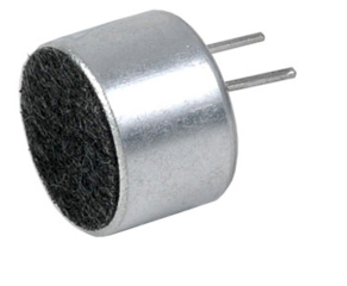
Microphone chips are integrated circuits (IC) microphones and are usually mounted directly to a circuit board. A pressure-sensitive diaphragm is etched directly into a silicon chip by Micro-Electrical-Mechanical System (MEMS) techniques, and is usually accompanied with an integrated preamplifier. There are two common designs that are prevalent. These use either a piezoelectric effect, or a capacitive design.
Most MEMS microphones are variants of the condenser microphone design. Often MEMS microphones have built in analog-to-digital converter (ADC) circuits on the same CMOS chip making the chip a digital microphone and so more readily integrated with modern digital products.
Applications
Common applications include smart phones, tablets, headsets, cell phones and other handheld electronic devices.
Microphone Chips FAQs
How do different types of microphone chips vary in terms of sensitivity and frequency response?
MEMS Microphones
Sensitivity: MEMS microphones are known for their stable sensitivity over time. They exhibit very little change in sensitivity due to temperature changes and are less sensitive to vibrations compared to electrostatic microphones. This stability means they usually do not require recalibration to maintain their performance within specified limits.
Frequency Response: MEMS microphones have a very linear frequency response with total harmonic distortion of 0.1% or better at 1 kHz/94 dB SPL. They also have a wide dynamic range, typically from 30 dBA to 120 dBA.
Water resistance: Some manufacturers of MEMs microphones for industrial environments have high IP (Ingress Protection) values up as high as IP67. This rating guarantees that the device can be submerged for up to 30 minutes into one meter of fresh water without any harm to the device.
Frequency Response: These microphones have an operating frequency range of 100 Hz to 20 kHz, which makes them suitable for applications where components need to withstand harsh environments.
Piezoelectric MEMS Microphones
Sensitivity: These microphones are designed to be immune to contaminants such as water, oil, particles, and dust, which can affect sensitivity in other types of microphones. They also have a high signal-to-noise ratio (SNR).
General Considerations
Signal-to-Noise Ratio (SNR): A higher SNR is desirable for capturing clearer audio signals, especially in noisy environments. For instance, MEMS microphones have a 70 dB SNR. A higher SNR helps in achieving better acoustic echo cancellation (AEC) performance
Acoustic Overload Point (AOP): A high AOP is important for capturing loud sounds without distortion. This is relevant for applications like noise-cancelling headsets where loud noise levels are expected, ensuring that the captured audio remains clear and undistorted
Immunity to Contaminants
Piezoelectric MEMS microphones are designed to be immune to contaminants such as water, oil, particles, and dust. This makes them suitable for deployment in environments like kitchens, where they can withstand exposure to greasy fingers, flour dust, splattering oil, and smoke without fear of failure due to contamination.
How do piezoelectric MEMS microphones compare to other types of MEMS microphones?
When comparing piezoelectric MEMS microphones to other types of MEMS microphones, several key differences and advantages can be highlighted.
Piezoelectric MEMS microphones are specifically designed to be immune to contaminants. This makes them particularly suitable for environments where such contaminants are prevalent, like kitchens or industrial settings, without the risk of failure due to contamination.
Piezoelectric MEMS microphones have a high SNR, which is beneficial for capturing clearer audio signals, especially in noisy environments. This high SNR supports better acoustic echo cancellation (AEC) performance.
These microphones also feature a high AOP, allowing them to capture loud sounds without distortion.
The design of piezoelectric MEMS microphones provides them with enhanced durability and robustness in challenging environments compared to other MEMS microphones, which may not have the same level of immunity to environmental factors.
In contrast, other MEMS microphones, while also offering benefits such as stable sensitivity over time, low sensitivity to temperature changes, and a wide dynamic range, may not have the same level of environmental robustness as piezoelectric MEMS microphones.
What are the typical use cases for MEMS microphones in consumer electronics?
MEMS microphones are widely used in consumer electronics due to their consistent performance, durability, and cost-effectiveness.
MEMS microphones are commonly used in smartphones and tablets. Their small size and low power consumption make them ideal for these compact devices. They provide high-quality audio capture for voice calls, video recording, and voice-activated applications.
Devices such as smartwatches and fitness trackers often incorporate MEMS microphones. These microphones enable voice commands and audio recording features while maintaining a compact form factor.
MEMS microphones are used in laptops and desktop computers for applications like video conferencing, voice recognition, and audio recording. Their stable sensitivity and wide dynamic range contribute to clear audio capture.
Smart speakers and home assistants, such as those used with digital assistants, like Siri or Alexa, often utilize MEMS microphones. Their high signal-to-noise ratio (SNR) and acoustic overload point (AOP) support effective voice recognition and noise cancellation in various environments.
MEMS microphones are found in headphones and earbuds, particularly those with noise-cancelling features. Their ability to capture clear audio signals enhances the performance of noise-cancellation algorithms.
These microphones are used in digital cameras and camcorders to capture high-quality audio alongside video recording. Their linear frequency response and low distortion are beneficial for accurate sound reproduction.
How do MEMS microphones contribute to noise cancellation in headphones?
MEMS microphones have a high SNR, which means that the microphone can capture clearer audio signals. This makes it easier to distinguish between the desired audio and background noise. This clarity supports the effectiveness of noise cancellation algorithms.
The AOP of MEMS microphones is high, allowing them to handle loud noise levels without distortion. This capability ensures that even in noisy environments, the microphones can capture audio signals accurately, which is essential for effective noise cancellation.
MEMS microphones are manufactured with consistent characteristics due to tightly controlled micro-etching processes. Their stable sensitivity over time and low sensitivity to temperature changes contribute to reliable performance in noise cancellation applications.
The design of MEMS microphones, particularly piezoelectric MEMS microphones, provides enhanced durability and robustness. This makes them suitable for use in various environments without degradation in performance, which is beneficial for maintaining effective noise cancellation over time.
What are the manufacturing processes involved in creating MEMS microphones?
The manufacturing processes involved in creating MEMS (Micro-Electro-Mechanical Systems) microphones are quite sophisticated and leverage techniques similar to those used in integrated circuit fabrication.
MEMS microphones are typically manufactured using silicon, which is also used in micro-circuit production. The process involves silicon etching techniques that allow for the creation of micron-scale structures with high precision and repeatability.
The manufacturing involves tightly controlled micro-etching processes. This ensures that the characteristics of MEMS microphones are extremely consistent from one unit to another, crucial for maintaining performance standards.
Many MEMS microphones integrate amplification and digital sampling electronics directly at the chip level. This integration helps in providing a digital signal directly, reducing the cost and complexity of the rest of the system.
Modern MEMS microphones are manufactured using a silicon wafer process. This involves etching a flexible membrane and a perforated fixed backplate with a cavity between them on top of a silicon substrate. Changes in air pressure cause the membrane to flex, creating a change in capacitance, which is then converted into an electrical signal by an ASIC (Application-Specific Integrated Circuit).
These processes highlight the advanced manufacturing techniques that enable MEMS microphones to be small, cost-effective, and highly reliable, making them suitable for a wide range of applications in consumer electronics and beyond.
Microphone Chips Media Gallery
References
Electronics360—Vesper Teams with Synaptics to Bring its Piezoelectric MEMS to Amazon Alexa
Electronics360—Using MEMS microphones in sound level meters
Electronics360—Water-Resistant Microphones and Audible Indicators for Wet Applications
Electronics360—MEMS Microphones Have a 70 dB Signal-to-Noise Ratio
Image Credits: