Technical Journals Information
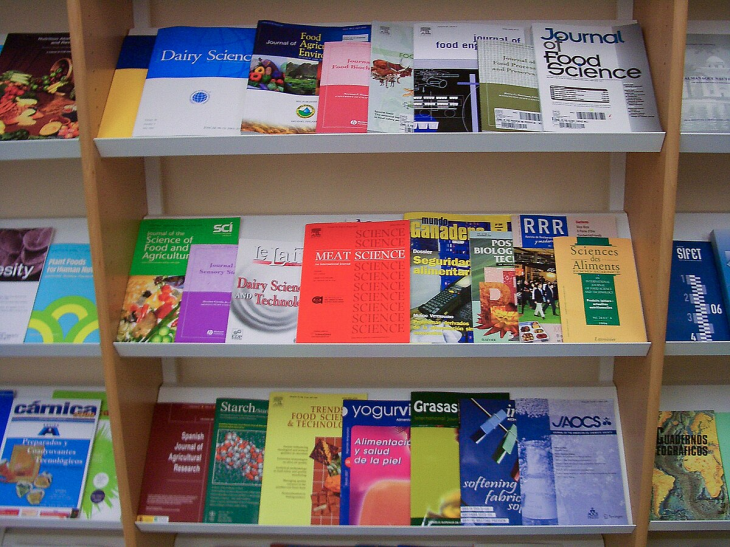
Figure 1: Technical journals are essential in distributing knowledge in scientific and industrial fields. Source: Vmenkov/CC BY-SA 3.0 DEED
Technical journals are essential in distributing knowledge in scientific and industrial fields. They are divided into trade journals, which provide industry-specific news and insights, and scholarly journals, focusing on peer-reviewed scientific research. These journals are incredibly important in professional and academic circles. They play a critical role in driving innovation and informing best practices.
Theory of Operation
Technical journals are designed to effectively communicate specialized knowledge and advancements within a specific field. The primary purpose of these journals is to disseminate information that is both accurate and relevant to their target audience, which includes professionals, academics, and researchers. In technical journals, information is typically presented in a structured format, emphasizing clarity, precision, and detail.
For trade journals, the information is shared by focusing on practical and industry-specific knowledge. These journals aim to provide information that is immediately applicable in a professional context, such as industry trends, business strategies, and technological advancements. The language is more accessible to professionals within the industry, avoiding overly technical jargon that might be more common in scholarly articles.
In contrast, scholarly journals prioritize rigorously researched and peer-reviewed content. These journals are the conduits for academic discourse, sharing detailed reports of experiments, studies, and theoretical analyses. The information is densely packed with technical details, data, and references to prior work, reflecting the depth and breadth of research. The expectation is that the reader has a background or a strong interest in the specific field, allowing for a deeper level of engagement with the content.
Overall, technical journals tailor the communication of complex ideas and findings to the needs and understanding of the intended audience, whether they are industry professionals or academic researchers. This tailored approach ensures that the information is not only disseminated widely but also understood and applied effectively in the relevant field.

Figure 2: In technical journals, information is typically presented in a structured format. Source: Pixabay
Specifications
Technical journals often have specifications that ensure the content they publish is of high quality, relevant, and credible. These specifications vary depending on whether the journal is a trade journal or a scholarly journal, but there are some common elements:
Content Relevance and Quality
Articles must be highly relevant to the specific field or industry the journal caters to. The quality of content is paramount, with a focus on accuracy, depth of analysis, and contribution to the field. Journals tend to be highly focused with content to match.
Peer Review
Scholarly journals usually employ a rigorous peer-review process, where submitted articles are evaluated by experts in the field. This process helps in maintaining the scientific integrity and credibility of the published material.
Author Expertise
Authors contributing to technical journals are typically experts or professionals in the relevant field. In scholarly journals, they are often researchers or academics, while in trade journals, they may be industry professionals or seasoned journalists with expertise in the field.
Citation and Referencing
Scholarly journals require detailed citations and references for sources and previous research. This is a critical aspect that supports the verification of information and acknowledges prior work in the field.
Editorial Standards
High editorial standards are maintained, including clarity, organization, and style of presentation. This is crucial for ensuring that complex information is communicated effectively.
Ethical Standards
Ethical considerations, such as conflict of interest disclosures, data accuracy, and research ethics, are strictly adhered to, particularly in scholarly journals.
Format and Structure
Both types of journals often have specific formatting guidelines. Scholarly articles, for instance, typically include an abstract, introduction, methodology, results, discussion, and conclusion sections.
Accessibility and Distribution
The mode of distribution (online, print, or both) and accessibility (open access, subscription-based, etc.) are also important specifications. This affects how the journal's content reaches its target audience.
Advertising and Content Balance
While trade journals may contain advertisements and sponsored content, there's a balance to maintain content integrity and avoid bias.
Regular Publication
Technical journals are usually published on a regular schedule (monthly, quarterly, etc.), ensuring a consistent flow of current information to their audience.
Meeting these specifications is crucial for technical journals to maintain their reputation, credibility, and usefulness to their respective audiences.
Types
Technical journals can be categorized into several types based on their focus, audience, and content. The primary types include:
Trade Journals
These journals are aimed at professionals in a specific industry. They provide insights into industry trends, new products, techniques, and business strategies. Trade journals are practical in nature, often including case studies, product reviews, and industry news.
Scholarly or Academic Journals
These focus on academic research and are intended for scholars, researchers, and students. Articles are often peer-reviewed and include detailed reports of original research, literature reviews, and theoretical analyses.
Professional Journals
Targeting practicing professionals, these journals offer articles that apply research findings to practical situations in a professional field. They bridge the gap between theory and practice and are less technical than scholarly journals but more scholarly than trade journals.
Technical Magazines
While similar to trade journals, technical magazines are often more general in scope, covering a broader range of topics within a field. They are more accessible to a wider audience, including enthusiasts and general readers interested in the field.
Conference Proceedings
These are collections of papers presented at professional conferences. They include cutting-edge research and are often more specialized and focused on very specific topics within a field.
Government or Institutional Publications
Published by government agencies or major institutions, these journals report on research funded or conducted by the organization. They often focus on policy implications, regulatory issues, and societal impacts of technical advancements.
Open Access Journals
These are a modern type of scholarly journal where all articles are available online to the reader without financial, legal, or technical barriers. Open access can apply to all types of technical journals but is especially prevalent in academic and scholarly publishing.
Each type of technical journal serves a different purpose and audience, ranging from highly technical, peer-reviewed academic research to more practical, industry-specific insights and updates.

Figure 3: The content of technical journals is specialized and focused on specific fields or industries. Source: Pixabay
Features
Technical journals, irrespective of their specific type, share several key features that define their structure, purpose, and audience engagement. These features include:
Specialized Content
The content of technical journals is specialized and focused on specific fields or industries. This includes research findings, industry trends, technical methodologies, and case studies.
Expert Authors
Articles are usually written by experts in the field, such as researchers, academics, and industry professionals. This ensures that the information is authoritative and credible.
Targeted Audience
The content is tailored for a specific audience, which could be professionals, academics, researchers, or students in a particular field.
Digital Accessibility
Many technical journals are available in digital formats, either in addition to or instead of print versions. This broadens their accessibility and allows for the inclusion of digital enhancements like multimedia content.
Editorial Oversight
An editorial board or team oversees the content, ensuring that it aligns with the journal’s scope and standards. This oversight includes selecting articles for publication and guiding the overall direction of the journal.
These features collectively ensure that technical journals effectively serve their role as conduits for disseminating specialized knowledge and keeping professionals, academics, and researchers updated with the latest developments in their respective fields.

Figure 4: Source: Pixabay
Production
The production of technical journals involves a multi-step process that combines editorial, peer review, and publishing activities. This process ensures the accuracy, relevance, and quality of the content published. Here's an overview of the major steps of how technical journals are typically made:
- Call for papers and submissions
- Submission of manuscripts
- Initial review
- Peer review
- Author revisions
- Final approval
- Copy-editing and typesetting
- Proofreading
- Publication
The process often starts with a call for papers, inviting authors to submit articles relevant to the journal's focus. This call is disseminated through various channels such as the journal's website, academic networks, and professional communities. Authors then submit their manuscripts to the journal. These submissions usually have to adhere to specific guidelines set by the journal regarding format, length, style, and content.
The editorial team conducts an initial review to check if the submission meets the basic requirements and fits the scope of the journal. Manuscripts that don't meet the criteria are rejected at this stage. For scholarly journals, submissions that pass the initial review are sent for peer review. This involves experts in the field reviewing the manuscript for its scientific accuracy, originality, and significance. The peer review process can be single-blind, double-blind, or open, depending on the journal's policy.
Based on feedback from the peer review, authors may be asked to revise their manuscript. This process can involve multiple rounds of review and revision until the manuscript meets the journal’s standards. Once the manuscript passes the peer review and revisions are satisfactorily made, the editorial team gives final approval for publication.
The accepted manuscript undergoes copy-editing to ensure language clarity and adherence to the journal's style. Typesetting involves arranging the text and graphics into the final layout. The author and editorial team review the typeset proofs for any errors. Corrections are made if necessary.
After final approval of the proofs, the article is ready for publication. It is either published in the next issue of the print journal or made available online, depending on the publication model of the journal. The journal is then distributed to subscribers and libraries. Online journals may also offer access to individual articles for purchase or through open-access models.
This process ensures a high standard of quality and credibility in the content that technical journals publish, which is crucial for their role in disseminating specialized knowledge and information.

Figure 5: Technical journals serve a variety of applications in academic, professional, and industrial settings. Alextredz/CC BY-SA 4.0 DEED
Applications
Technical journals serve a variety of applications in academic, professional, and industrial settings. Their uses are as diverse as the fields they cover. Here are some of the key applications:
Research Dissemination
One of the primary applications of technical journals, especially scholarly ones, is to disseminate new research findings. They provide a platform for researchers to share their work with the academic community and beyond.
Professional Development
For professionals in various industries, technical journals are a resource for continuous learning and keeping up-to-date with the latest trends, technologies, and best practices in their field.
Educational Resource
In educational settings, particularly in higher education, technical journals are used as teaching resources, providing students with current information and examples of how theoretical concepts are applied in practice.
Reference Material
Technical journals serve as a valuable reference for researchers, academics, and professionals. They provide detailed information, data, and case studies that can be cited in future research and projects.
Policy and Decision Making
In fields like healthcare, engineering, and environmental science, the findings and discussions in technical journals can inform policy-making and organizational decision-making processes.
Innovation and Inspiration
By showcasing the latest developments and research, technical journals can inspire innovation. Entrepreneurs, scientists, and technologists often use these journals to generate new ideas and identify potential areas for development.
Networking and Community Building
They provide a platform for professionals and academics to connect and engage with others in their field, fostering a sense of community and collaboration.
Benchmarking and Standards Setting
Technical journals often discuss and establish industry benchmarks and standards. They play a crucial role in setting norms and guidelines that shape professional practices.
Peer Recognition and Career Advancement
Publishing in respected technical journals is a means for individuals to gain recognition in their field. For academics and researchers, this is often a key component of career advancement.
Market and Industry Analysis
In business and industry-specific journals, the content can provide insights into market trends, industry analysis, and competitive intelligence, which are crucial for strategic planning.
These applications highlight the significance of technical journals as vital tools for knowledge dissemination, professional growth, and advancement in various fields.
Standards
Technical journals are subject to several standards and best practices, especially those that publish scholarly articles. These standards are designed to ensure the integrity, quality, and reliability of the published content. Some of the key standards include:
- Peer review process
- Ethical guidelines
- Editorial oversight
- Citation standards
One of the most important standards for scholarly technical journals is the peer review process. This involves having experts in the field review submitted articles for accuracy, relevance, and contribution to the field before they are published. Ethical standards are also crucial. These standards include policies on plagiarism, data falsification, and conflict of interest. Journals often require authors to disclose any potential conflicts of interest and adhere to ethical research practices.
Quality control in technical journals is maintained through editorial oversight. An editorial board, typically comprising respected figures in the relevant field, oversees the journal's content and ensures that it maintains a high standard. Accurate and consistent citation of sources is vital to maintaining a journal’s integrity. This not only gives credit to original sources but also allows readers to verify sources and further explore the topic.
Adherence to these standards is crucial for maintaining the trust and credibility of technical journals in the academic and professional communities. These standards help ensure that the information disseminated through these journals is of high quality and can be relied upon for further research and professional application.