Automatic Identification Systems (AIS) Information
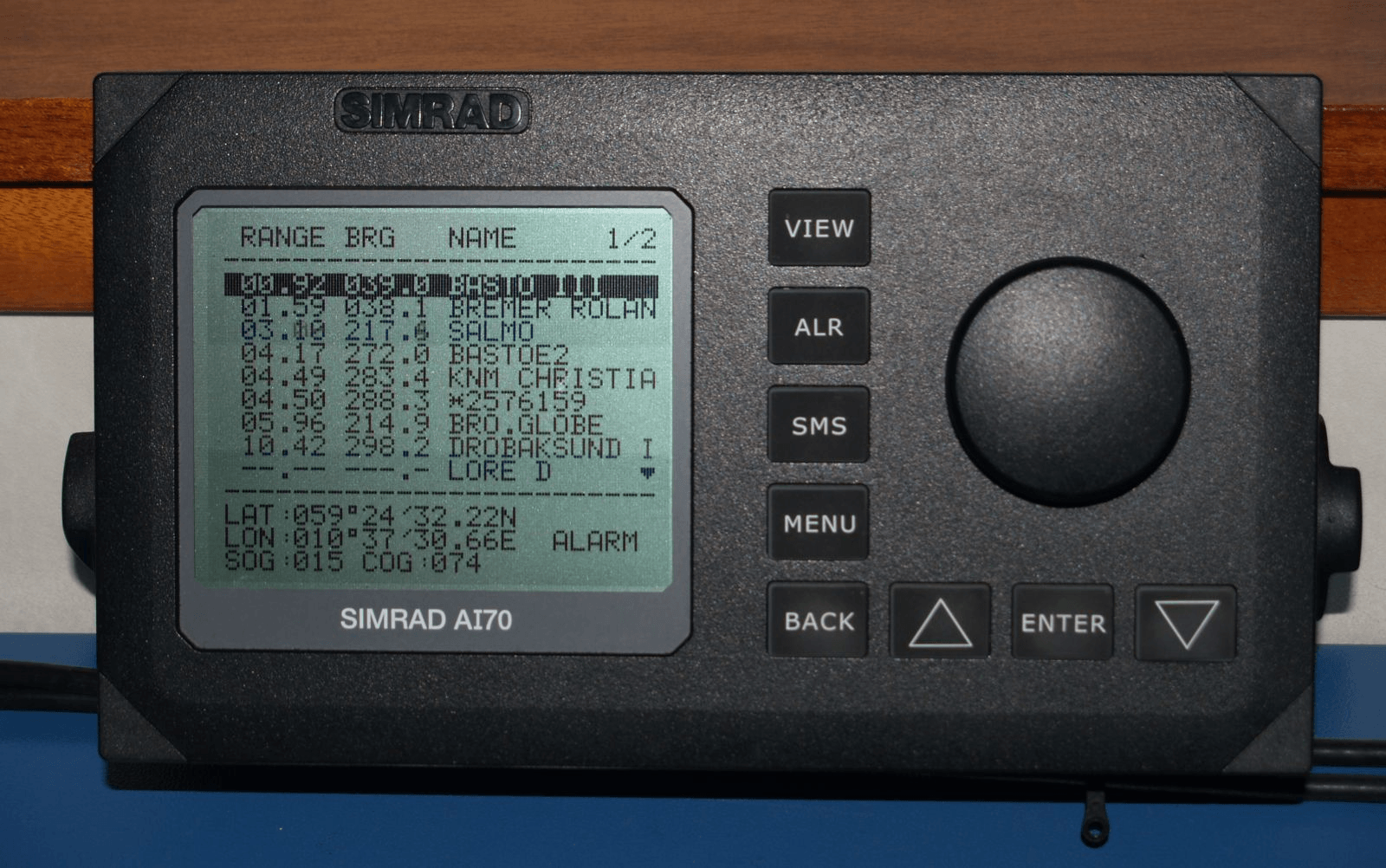 Automatic identification systems (AIS) are automated vessel tracking and earth station identification and messaging systems. The system communicates vessel location while underway to other vessels and coastal monitoring stations. This helps with many navigational issues, such as collision avoidance, traffic configuration, maritime security, search and rescue, and accident investigation.
Operation
AISs transmit the vessel’s Maritime Mobile Service Identity (MMSI) number. It is a nine-digit number that is sent over a VHF radio frequency channel to identify a vessel, earth station, or coast station. The signal can then be plotted on a standalone AIS unit or an existing navigation/radar display. The display shows the AIS target as a long triangular symbol representing the vessel. The triangle points in the direction that the target vessel is moving. This allows vessel crew to monitor ocean traffic and know what ships are around them at all times.
These vehicles are required to be outfitted with an AIS.
International vessels that are:
- Tankers
- Passenger vessels greater than 150 gross tons
- All Vessels greater than 300 gross tons
Vessels within vessel traffic services (VTS) areas that are:
- Self-propelled vessels longer than 65 feet, excluding fishing and small passenger vessels
- Towing vessels longer than 26 feet and more than 600 hp
- Passenger vessels greater than 150 Gross Tons
AIS transponders are divided into two classes: class A and class B. AIS information from a class A transponder will always be prioritized and shown to other ships in the area. AIS information from a class B transponder will not be shown unless there is room on the AIS channel. Class B devices are for vessels such as fishing and small passenger vessels that operate outside VTS areas. Class B devices are compatible with other AIS stations but operate at a lower power and reporting interval than Class A devices.
Types
Class A
Broadcasts the following information every 2–10 seconds while underway and every 3 minutes while at anchor.
- Longitude
- Latitude
- Course over ground
- True heading
- Time stamp
- MMSI number
- Navigation status
- Rate of turn
- Speed over ground
- Position accuracy
It also broadcasts the following information every 6 minutes.
- MMSI number
- Radio call sign
- Name of vessel
- Type of vessel
- Dimensions of vessel
- Location of reference point
- Type of position fixing device
- Draught of vessel
- Destination
- Estimated time of arrival
Class B
Class B transponders broadcast the following information every 30 seconds if traveling in excess of 2 knots and every 3 minutes slower than 2 knots.
- Longitude
- Latitude
- True heading
- Time stamp
- DSC receiver installed
- MMSI number
- Speed over ground
- Position accuracy
- Course of ground
It broadcasts the following information every 6 minutes.
- MMSI number
- Radio call sign
- Name of vessel
- Vendor ID number
- Type of ship
- Dimensions of vessel
- Location of reference point
Standards
The International Maritime Organization (IMO), a United Nations agency, identifies methods to improve shipping safety and security. Through the International Telecommunications Union (ITU) and the International Electrotechnical Commission (IEC), the IMO promulgates standards for AIS, including performance standards, vessel types required to use AIS, and how the system is to be used.
Reference
Navigation Center—U.S. Department of Homeland Security
Image credit:
Wikimedia