RFID Strategic Implementation and ROI: A Practical Roadmap to Success

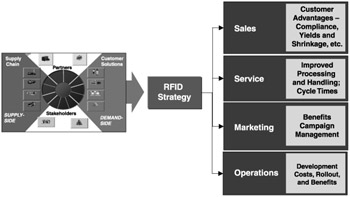
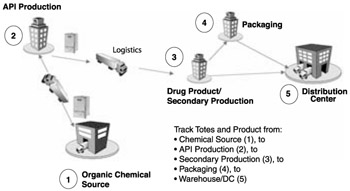
With a rough cut on the costs and benefits, Figure 4.1 can be used as a beginning point in the strategy development we are espousing. A company embarks with the understanding that the first step in developing a strategy that impacts supply chain should define, confirm, and refine the common set of business requirements that the firm must satisfy. The second step is to develop a conceptual framework depicting a possible improved future state. Figure 4.2 was drawn for a pharmaceutical manufacturer seeking an improved delivery system and used as the firm developed its RFID/supply chain strategy. The improved state, of course, can be far more detailed, but it should identify the product flows and inventories to be positively affected by the RFID technology.
From this information, again using Figure 4.1, the company should identify the key stakeholders to be impacted by adoption of the RFID technology and decide how success will be defined and measured. In many cases, these constituents will be similar to those previously affected by bar coding or other autoID systems. Starting on the demand side of the illustration, but eventually expanding to the supply side, the firm creates a list of the key areas to be considered, like those in the figure.