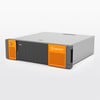
Disaster Survival Guide for Business Communications Networks

A handy reference to ensuring protection of your organization's telephone, Internet, network and storage systems.
 TABLE OF CONTENTS
 Since September 11, 2001, it appears that disasters fabricated by the equivalent of B-movie evil masterminds have joined accidental, technical and natural disasters on the list of calamities that could befall both public and private communications systems. Everyone needs assurance that communications networks and the services that run over them will continue to function flawlessly, despite the worst efforts of Osama bin Laden, Lex Luthor, or Dr. No.
Service providers, call center operators, large and small enterprises and even the individual customer wouldn't have it any other way. Indeed, makers of high-end telco equipment must offer proof of tested compliance with the super-strict comprehensive electrical and mechanical criteria for telephone-related equipment, referred to as the NEBS (Network Equipment-Build System) standards, before any such computer equipment can be installed in the PSTN as an adjunct applications processor. Because many telecommunications companies use NEBS-compliance as a prerequisite for product deployment, the certification strengthens a products reputation. For example, any enterprise using mission-critical applications also like NEBs equipment, since NEBS certified machines can take shock, earthquakes, fire, electrostatic discharge (lightning strikes) you name it. The "NEBS Criteria" were originally formulated by Bell Labs in the 1970s, further developed by Bellcore (now called Telcordia) and were made public documents in 1985. Central office equipment manufacturers were the prime target audience back then, but today NEBS compliance has also become the benchmark of excellence for "next-gen" service providers (such as CLECs and ISPs), ASPs, data centers...