Designing Data-Intensive Web Applications

| WebML element | Database query | Implementation notes |
|---|---|---|
| AND pages | None | Each sub-page may be implemented as an independent file, representing a frame. A master file assembles all the page frames. |
| Areas/landmarks | None | All the non-contextual links represented by landmarks are made explicit and implemented as HTML anchors. |
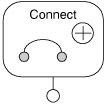
| Connect unit | One-to-many relationship: UPDATE TargetEntity SET RelationshipColumn=NewValue [WHERE Selector] Many-to-many relationship: INSERT INTO BridgeTable(EntityAttributes) VALUES (ValuesList) | The operation is tentatively executed (e.g., inside a Java try-catch block) to trap possible execution errors. Based on operation result, control is forwarded to the destination page of the OK or KO link, passing also the possible output parameters (the OIDs of the connected objects, for the OK link, of the non-connected objects, for the KO link). |
| Contextual links | None | An anchor tag is created. Its href attribute contains a URL built from the name of the template implementing the page containing the destination unit (fixed part) and from the output parameters of the source unit (variable part). When the destination of the link is an operation some extra parameters may be carried by the link according to the rules explained in Section 12.4.7. |
| Contextual links from entry units | None | HTML form with an action attribute and a submit button. The action points to the destination page or operation. The form contains an INPUT tag for each field of the entry unit. When the destination of the link is an operation some extra hidden fields may be carried by the link according to the rules explained in... |