1. Introduction
Typically, at the higher organizational layers of a corporation information gets distilled and reported in summary and/or by exception. Emphasis is on accuracy rather than on precision. By contrast, great detail and precision characterize the information requirements of the middle layer. The advent of on-line real-time response to management information requirements means that this process is about to change.
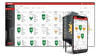
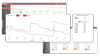
Whether we talk of budgets, balance sheets, P&L, or any other type of financial information, a basic characteristic of interactive information technology, at both the top and middle layer, is that database access should be ad hoc. Response must be given in real time with fully updated information:
-
Using visualization, by turning numbers into figures
-
Having built-in intelligence to identify exceptions and outliers
-
Detecting evolving features and patterns, such as trends, spikes, heads, shoulders, and confidence intervals.
Knowledge artifacts are necessary to sort, combine, and prove transactions, as well as validate general ledger account numbers, and pinpoint personal responsibilities. Filters should be used in connection to all entries, including accounting, financial, statistical, and other issues. Data input should be on-line under the 'one entry, many uses' principle.
A great deal of attention must be paid to system design. Parametric solutions permit flexible transfer of information from and to various applications. High technology should be used as a competitive weapon, to promote the automation of accounting operations. A modern organization cannot afford the luxury of mediocre technology or of obsolete solutions.
By emphasizing the benefits to be obtained from fully...


 TABLE OF CONTENTS