The Diversity Scorecard: Evaluating the Impact of Diversity on Organizational Performance

Interest in diversity and the return-on-investment associated with it is increasing. Several issues are driving this increased interest and its application to a wide range of diversity-related issues. Pressures from senior managers and clients to show the return on their diversity investment is probably the most influential driver. Competitive economic pressures are causing intense scrutiny of all expenditures, including all diversity costs. In addition, diversity professionals know they must begin to show how diversity is linked to the bottom line in hard numbers. In short, they must calculate and report their diversity ROI.
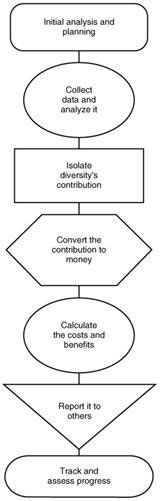
Calculating DROI requires asking key questions and performing key tasks along the way. To achieve a successful result, measuring DROI requires a systematic approach that takes into account both costs and benefits. The Hubbard Diversity ROI Analysis Model, as shown in Figure 3-1, provides a step-by-step approach that keeps the process manageable so users can tackle one issue at a time (Hubbard, 1999).
The model also emphasizes that this logical, systematic process flows from one step to another. Applying the model provides consistency from one DROI calculation to another. In essence, it suggests that the major aspects of diversity measurement you need to address include the following:
Initial analysis and planning
Collecting and analyzing data
Isolating diversity's...