Clustering Windows Servers: A Road Map for Enterprise Solutions
A unique approach to creating scalable Windows clustered systems.
 TABLE OF CONTENTS
 In our simplified illustration of a cluster, shown in Figure 5.6, you will see the four major components of Microsoft's Cluster Server software. The first and the most important is the Cluster Service. The Cluster Service is a collection of software modules that Microsoft refers to as "managers." Cluster Service consists of 10 managers that together are responsible for implementing Cluster Service. The Cluster Service uses another independent software module call a Resource Monitor to keep track of the status of the many resources in the cluster. The Resource Monitors in turn rely on custom software modules, known as Resource DLLs, that are written by software application developers to monitor the health of their specific application. Finally, at the bottom is the actual Resource which can be either a physical device, a software application, or a logical resource.
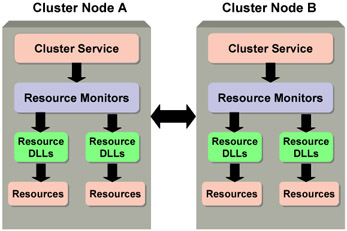
The term Cluster Service refers to the collection of software modules that actually implement clustering functionality on Windows NT/2000 Server. In Figure 5.7, you can see the software modules that Microsoft uses to provide and manage services on a cluster. This collection of modules is a rather complicated bit of software that Microsoft has layered on top of the standard Windows NT/2000 operating system. The Cluster Service not only has to keep track of all the events on the server on which it is running, but it must also stay in constant communication with the other nodes in the...