Medical Imaging Systems Technology: Modalities, Volume 2

The sources that we ultimately seek to image arise from various ionic currents that control the activity of the cells within the excitable tissues. These ionic currents result from the transfer of ions through the cell membrane between the intra-cellular and extra-cellular fluid.
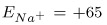
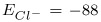
In general the cell-membrane will be permeable only to certain ions in certain directions. Typically the intra-cellular concentration for an ion will be different from the extra-cellular concentration for the ion. The concentrations of common ions in the different cell spaces for different tissues is given in Tables 1 and 2.
| Intra-cellular concentration (mM) | Extra-cellular concentration (mM) | Equilibrium potential (mV) | |
|---|---|---|---|
| Na + | 12 | 145 | |
| K + | 155 | 4 | |
| Ca 2+ | <10 -7 | 1.5 | |
| Cl - | 4.2 | 123 | |
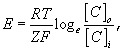
The different concentrations set up an electro-chemical potential across the cell membrane. This potential is given by the Nernst equation
| (1) | |
where R is the gas constant, T the absolute temperature, Z the valency of the ion involved and F is Faraday's constant. At 37 C
is approximately 26 mV so a 10 fold change in ion concentration corresponds to approximately a 60 mV change in potential.
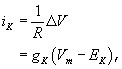
Now from Ohm's law the ionic current through a membrane for say, potassium, will be given by
| Intra-cellular concentration... |
|---|