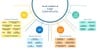
In the first chapter we present background information for the book. There is a discussion of the development of brownfields, and information about the Superfund law. The liability provisions of the law caused a halt in brownfields redevelopment. Changes in the regulatory laws will be discussed in subsequent chapters.
One of the significant issues is the recognition of environmental remediation liabilities on corporate financial statements. As Gary Ballesteros comments in Sec. 1.3 , there are sleeping dogs that are being awakened.
There follows an overview of the various stakeholders who are impacted by the brownfield situation. This is discussed in further detail by Donna Ducharme in Sec. 1.5.
1.1 Historical Perspectives
Harold J. Rafson
Progress is not a straight line. It has its dips and turns, and even its retrogressions. Looking at the historical background to a discussion of brownfields, there are many simultaneous tracks: the development of cities, the growth of and changes in industry, major changes in transportation, historical changes of the economy, the depression and the two world wars; the growth and changes of the environmental movement, and the changing perspectives and attitudes toward risk.
Let us begin the retrospective review at the beginning of the twentieth century, both because that scope would encompass virtually all the buildings that would fall into the brownfield category and because we write this at the end of the century.
The beginning of this century was a period of great optimism. The 1890s had seen the completion of westward...
Copyright The McGraw-Hill Companies, Inc. 1999 under license agreement with Books24x7


 TABLE OF CONTENTS