Design-Build: Planning Through Development
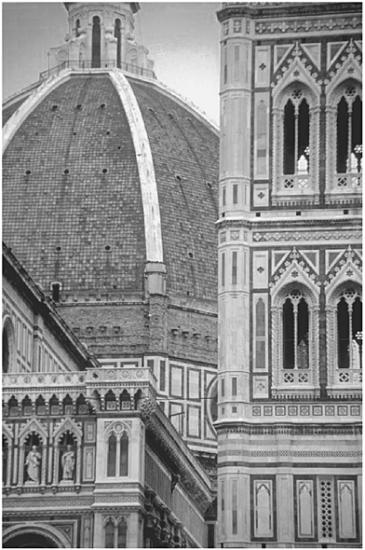
As students of architectural history, we recall the ancient master builders or master masons: Ictinus and Callicrates, builders of the Parthenon in Athens; Abb Suger for his twelfth century Gothic Royal Abbey Church of Saint Denis, outside Paris; and Filippo Brunelleschi for the Dome of the Florence Cathedral (Fig. 2.1) in the early fifteenth century. They each provided a seamless service that included what we now refer to as design and construction, or more recently as design-build. It never occurred to these masters to consider one without the other. Such specialization would have been foreign to these design-builders. The Greeks had a word for the role of master builder. It was arkhitekt?n, which literally translated means first or principal builder or craftsperson, and from which we have derived the modern word architect.
But even before these master builders, there was reference to the singular responsibility for design and construction in the Code of Hammurabi. Hammurabi (1795 1750 B.C.) was the ruler who established the greatness of Babylon, the world s first metropolis. By far the most remarkable of the Hammurabi records is his code of laws, the earliest known example of a ruler proclaiming publicly to his people an entire body of laws. The code regulates in clear and definite terms the organization of society. The judge who blunders in a law case is to be expelled from his...