Food Chemical Composition: Dietary Significance in Food Manufacturing
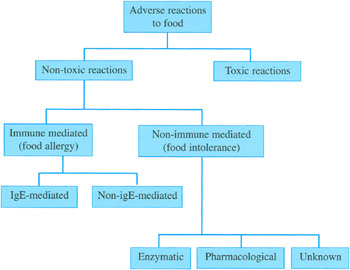
There are many dietary problems that individuals may suffer from as a result of a genetic or immunological sensitivity or intolerance to individual chemicals in foods. This is different to most of the antinutrients or toxicants described in the previous chapter, which affect all people to a greater or lesser extent. Box 32 depicts the hierarchical classification of adverse reactions to food.

From Deam, T. (2000) Food intolerance and the food industry. Woodhead Publishing. Reproduced with permission.
However, in both cases it is naturally occurring chemicals in the food which give rise to the problem . Most people will be able to deal with the chemicals involved as part of their normal metabolism and with no indication of ill-effect. However, to those with genetic or immunological sensitivities, it is essential that they know from food labels which foods are suitable for them, and that the industry takes all reasonable precautions to ensure that what is indicated on the label is in fact a true reflection of the product.
The main areas where industry can help in such matters is in product reformulation to replace the component causing the reaction, clear labelling to indicate suitable foods where confusion might otherwise arise, and the prevention of cross-contamination at all points of the food supply chain using audit trails and quality assurance systems.
Some of the major dietary problems are explained below, with some examples of the industry response to them.
Coeliac diease,...