Image Processing and Analysis: Variational, PDE, Wavelet, and Stochastic Methods
7.4: The Mumford Shah Free-Boundary Segmentation Model

7.4 The Mumford Shah Free-Boundary Segmentation Model

In this section, we explore the theory, computation, and some recent extensions of the celebrated segmentation model of Mumford and Shah [226]. In particular, we have paid special attention to the asymptotic limits of the Mumford Shah model, which were carefully developed in the original paper [226] but have somehow been overshadowed by the existence theories and computational methods in the literature.

7.4.1 The Mumford Shah Segmentation Model

The Mumford Shah segmentation model (M. S. model) could be considered as the deterministic refinement of Geman and Geman s image restoration model (7.63).

Assume that the image domain ? is a bounded Lipschitz domain in , instead of a discrete graph. Let u 0 L ?( ?) (or L 2( ?)) be the observed image sample. In the deterministic setting, an edge set ? is a relatively closed subset of ?, with finite 1-D Hausdorff measure. The Gibbs energy in Geman and Geman s model (7.63),


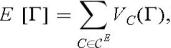
is naturally replaced by the length energy:


On the other hand, the ?-regulated intensity model in (7.63) is also revised to


Notice that in the continuum limit, a lattice ? and its graph edge set E are treated identical.

Therefore, keeping the same data model as in Geman and Geman s model, one formally derives the following image recovery model:


where K is a linear or nonlinear image distortion operator (e.g., optical blur). As in Mumford and Shah s original paper [226], in this section...

UNLIMITED FREE
ACCESS
TO THE WORLD'S BEST IDEAS

SUBMIT
Already a GlobalSpec user? Log in.

This is embarrasing...

An error occurred while processing the form. Please try again in a few minutes.

Customize Your GlobalSpec Experience

Category: Machine Vision Software
Finish!
Privacy Policy

This is embarrasing...

An error occurred while processing the form. Please try again in a few minutes.