Lean Assembly: The Nuts and Bolts of Making Assembly Operations Flow

With examples drawn from aerospace, electronics, household appliance, personal products, and automotive industries, this text covers the engineering of assembly operations.
 TABLE OF CONTENTS
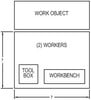
 For small products, assemblers work only on one side of the station and pick parts across the product from the other side. Part replenishment from the back does not interfere with assembly. The stations do not have to be wider than operators and can be arranged into U-shaped cells with the assembler work area inside. The products are often light enough to be passed between assemblers by hand, without conveyors.
Large products move on conveyors or carts and are usually worked on from both sides of the station, with parts delivered behind or to the side of the assemblers. Presenting the point of assembly to the assembler is a challenge with large products, which is sometimes met through fixtures, as described in chapter 10, and sometimes through cantilevered "raku-raku" seats.
The norm is for assembly work to be performed standing, and moving or rotating between stations as needed. Green corners are provided near the line for assembly teams to sit during breaks and hold meetings. The work height needs to be uniform among stations, and platforms cannot be used, as they restrict assembler mobility. This makes providing the work at an ergonomically appropriate height a challenge when the workforce includes both short and tall people. The height of kitchen counters in the local area of the plant is a starting point, and some limited adjustability can be provided in the fixtures.
Stations at which glue must dry or sealant cure hold products for much longer than the takt time.