Lean Enterprise Value: Insights from MIT's Lean Aerospace Initiative
Programs are core building blocks of an extended enterprise, providing value in the form of capabilities, revenue streams, jobs, supplier contracts, and in numerous other forms. A program delivers a particular product, system, or service within the constraints of a cost and schedule, and can itself be thought of as an enterprise that cuts across many entities, including the prime contractor and its supplier network, partners, and customers (such as the program office if a government program).
A program can also be thought of as a value stream that encompasses the full spectrum of lifecycle processes, from the development of new business to requirements definition, design and development, manufacturing and sustainment with supply chain integration throughout as introduced in Figure 6.2. [1] The three-phase value framework we developed in Chapter 7 applies across this full spectrum.
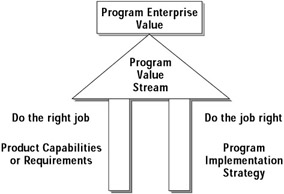
Figure 8.1 illustrates how the three phases in our value-creation model apply to a program. The primary challenge in creating program value is to do the right job and do the job right . Even a well-structured program will have difficulty generating value from doing the wrong job that is, making the wrong product. And even the best product will fall far short of its potential if its value stream is poorly managed or not well integrated that is, if the job is not done right .
The figure shows the right product, and a set of stakeholders with the...