ABRASIVES.
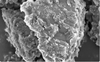
Materials used for surfacing and finishing metals, stone, wood, glass, and other materials by abrasive action. The natural abrasives include the diamond, emery, corundum, sand, crushed garnet and quartz, tripoli, and pumice. Artificial abrasives, or manufactured abrasives, are generally superior in uniformity to natural abrasives, and are mostly silicon carbide, aluminum oxide, boron carbide, or boron nitride, marketed under trade names. Artificial diamonds are also now being produced. The massive natural abrasives, such as sandstone, are cut into grinding wheels from the natural block, but most abrasive material is used as grains or built into artificial shapes.
For industrial grinding, artificial abrasives are preferred to natural abrasives because of their greater uniformity. Grading is important because uniform grinding requires grains of the same size. The abrasive grains are used as a grinding powder; are made into wheels, blocks, or stones; or are bonded to paper or cloth. Abrasive cloth is made of cotton jean or drills to close tolerances of yarns and weaves, and the grains are attached with glue or resin. But the Fabricut cloth of 3M is an open-weave fabric with alumina or silicon-carbide grains of 100 to 400 mesh. The open weave permits easy cleaning of the cloth in an air blast. Abrasive paper has the grains, usually aluminum oxide or silicon carbide, glued to one side of 40- to 130-lb kraft paper. The usual grain sizes are No. 16 to No. 500.
Abrasive powder is usually graded in...

 TABLE OF CONTENTS