Nano/Microscale Heat Transfer

Binary equation:
Geometric series:
Using the Taylor expansion, we can write
Integrate
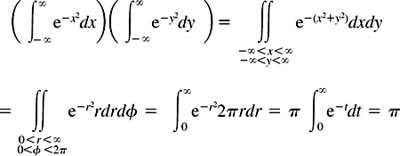
. This integral may be evaluated by a transformation from Cartesian coordinates to polar coordinates:

Therefore,
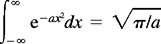
It can be seen that
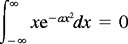
It should be noticed that
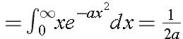
but
Furthermore,
Another type of important integral equation is the following:
where
Here, ?( n) is the Riemann zeta function defined as
The values of ?( n) are given in the following table for several n values:
| n | 1 | 2 | 3 | 4 | 5 | 6 | 7 | 8 |
| ?( n) | ? | | 1.202 | | 1.037 | | 1.008 | |
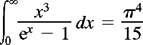
Examples are
, and ![]()
The error function is defined as
The complementary error function is erfc( x) = 1 erfc( x). The error function can only be evaluated numerically. As shown in the following table, erf( x) changes with x almost linearly for x < 0.5 but approaches to unity rapidly as x increases.
| x | 0 | 0.01 | 0.1 | 0.2 | 0.5 | 1 | 2 | 3 | ? |
| erf( x) | 0 | 0.0113 | 0.1125 | 0.2227 | 0.5205 | 0.8427 | 0.9953 | 0.99998 | 1 |
Stirling's formula is an approximation of the logarithm of a factorial for large numbers. Note that
More complicated analysis results in the same approximation for large x. Stirling's formula is then
The relative error of this approximation is 13.8% for x = 10 and less than 1% for