Hamilton Precision Metals rolls metal strip and foil in nearly any alloy and specialty metal to the tightest tolerances and thinnest gauges in the industry — down to 1.5 microns (.000060") in thickness — for customers worldwide. Find out how our unique engineering capabilities and manufacturing flexibility allow us to consistently meet your most critical application requirements. You'll find HPM metal strip and foil in applications wherever quality, precision and consistency are critical design and performance requirements.
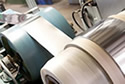
Central to our reputation for precision are our engineering and manufacturing capabilities, including: Z-high mill and Sendzimir mills for production of strip and foil from .0005" to .075" in thickness and in widths up to 15" maximum. We also roll ultra-thin foils as thin as .000060" and in widths up to 4"; Computer-controlled gauging systems to ensure consistency within a coil and from process lot to process lot; Precision strip slitters, with a thickness range of .0004" to .075", to slit strip to a minimum width of .029", with excellent control of camber and burr, foil slitters, built in-house, to slit foil as thin as .000060" to widths as narrow as .010"; Strand-annealing furnaces for in-process and final annealing to obtain optimum mechanical properties — hydrogen, nitrogen and argon protective atmospheres are available in temperatures up to 2200°F — temperature, speed and dewpoint are closely monitored to provide superior process control; In-house grinding and/or lapping of the mill work rolls to produce desired surface finishes — flash pickling to remove stains and tenacious oxides — and ongoing tensile and hardness testing during production for superior quality control.
Whether used for medical instrumentation, aerospace technology, computers and electronics, automotive or countless other industries and markets, HPM is the world's premier source for rolled metal strip and foil. HPM products are in the scales at your supermarket, aboard the satellites that circle our globe, and designed into automotive sensors. Our alloys are surgically implanted in the form of medical cans and integrated into the CRTs of PCs and televisions. They are ultimately made into diaphragms, strain gages, membrane switches, metal stampings, electronic connectors, and more.