

About
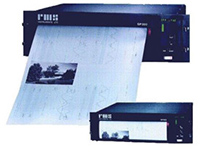
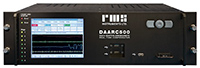
RMS Instruments is a Canadian designer and manufacturer of industry-leading adaptive aeromagnetic real-time compensators, data acquisition systems, VLF EM receivers, and chart recorders, renowned worldwide for their outstanding performance and reliability. It provides complete airborne systems for geophysical exploration, environmental monitoring, and ordnance detection, and offers comprehensive systems integration and training programs.
Through our stringent manufacturing procedures involving high quality aerospace design, electronic components, machined parts, and tightly controlled assembly and testing procedures, the equipment we produce provides many years of trouble-free operation with minimum maintenance, even when under constant use in harsh environments. Evidence of this proud statement is the fact that the first GR33 Graphic Recorder produced for the geophysical survey industry is still intact and operational.
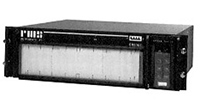
Chart Recorders
RMS Instruments manufactures a variety of chart recorders and graphic printers using advanced thermal array technology. Based on sophisticated multi-processor architectures and firmware, these instruments can operate in stand-alone mode accepting signals directly from sensors, as peripheral devices under control of a computer or data acquisition system, or in a mode that combines the functionality of the two above.
Data Acquisition
In essence, the objective of our data acquisition and recording systems is to reliably and accurately acquire and record data from a variety of sensors and external devices. The data acquisition system constitutes the central point in complex systems in which numerous signals must be sampled, monitored and recorded, in real-time, with accurate correlation to an absolute time and position reference provided by GPS receivers. The systems are designed to offer a balance of flexibility and ease of use. Configuration is through a simple, intuitive user interface. From the operator's perspective, only a few mouse clicks are required to run the system.
Aeromagnetic Compensation
The quality of the data collected in aeromagnetic surveys is largely dependent on the quality of compensation. In the absence of good compensation, the anomaly signals detected by high- sensitivity modern magnetometers can be completely masked out by the interference of the nearby magnetics of the aircraft. The aircraft's magnetic interference is related to its motions about its principal axes. A mathematical model may be built to accurately represent the aircraft's magnetic signature. Careful optimization and implementation of this model, within the framework of sophisticated hardware and firmware technologies, can lead to real-time compensation that effectively eliminates the aircraft's magnetic interference.
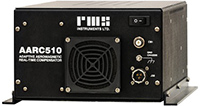
The RMS Instruments' family of Adaptive Aeromagnetic Real-Time Compensators provides real-time compensation of local magnetic interference from the aircraft, to the point where the full resolution of modern high-sensitivity magnetometers can be utilized. The various models available have been designed for optimal support of a broad range of applications.
VLF Electromagnetic Receiver
Airborne VLF data are mainly used for the interpretation of large scale geological features such as faults and conducting rock units, although under favorable circumstances, smaller conductors such as due to sulphide mineralization may be revealed. VLF data are regarded as an excellent, cost-effective complement to airborne magnetic data.