Nuclear Power
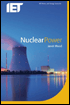
Aimed at industry professionals rather than academics, this book explains in detail how nuclear power works, its costs and benefits as part of the electricity supply system, and examines its record.
 TABLE OF CONTENTS
 At the time of the Three Mile Island accident in 1979 the nuclear industry had a lot to learn about the safe operation of its plants, as the accident revealed.
It was equally important to improve the plants economic performance. One measure of performance is the unit capability factor, which is the percentage of its maximum energy generation that a plant is capable of supplying to the electrical grid, and it is limited by factors within the plant management control, including unplanned shutdowns.
In 1980, the year following the Three Mile accident, the US industry s median capability factor was just 62.7 per cent slightly higher for the US s PWRs than for BWRs indicating that the plants were unavailable to generate power for nearly 40 per cent of the time. The situation was similar in other countries. Industry magazine Nuclear Engineering International, which has tracked load factors for many years, placed the UK at the bottom of its load factor league table in 1981, with an average of 43 per cent, while the US did slightly better at 54 per cent (NEI s load figures are slightly lower than other measures as it measures against the design rating, whereas some plants were started up with a slightly lower stated rating). Germany averaged 57 per cent, Japan 60 per cent, France and Switzerland 65 per cent, Canada (expected to be the best performer on this measure, as its plants refuel online so no refuelling outages are required) at 69...