Flight Control Systems: Practical Issues in Design and Implementation
[1]
This chapter introduces a number of the issues which must be addressed during the design and development of an automatic flight control system, (AFCS). It does not make a comparison of potential system architectures nor does it suggest an optimum approach because each AFCS is different, depending upon the airframe and application. However, there is a common theme associated with an AFCS development programme that can be introduced and used to familiarise the reader with some of the concepts which must be addressed during the design evolution.
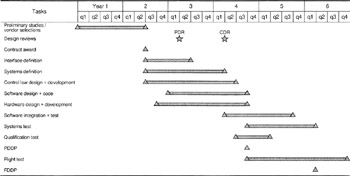
Figure 5.1 depicts a typical AFCS development programme with the associated activities provided in months of elapsed time for indicative purposes. The duration of any particular activity is dependent on the complexity of the system being designed and developed together with the associated contractual requirements for the data items or documentation. The figure illustrates the main activities undertaken in the development programme and identifies the basic systems considerations which must be accommodated within the AFCS design.
The AFCS development programme will commence with a study period, during which the high-level aircraft requirements will be established and a preliminary AFCS design proposed to allow selection of the successful vendor. The design proposal will take the form of a number of bound volumes of design data which will address each of the high-level requirements and explain the manner in which compliance will be achieved. This proposal...