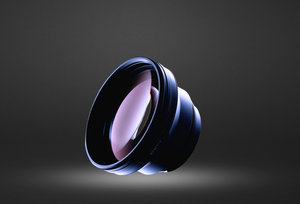
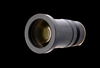
Custom F-Theta Lenses at Avantier
Avantier designs and manufactures custom and stock F-theta lenses built to order for clients in industry, research, and medicine. Our optical engineers and designers have years of experience crafting high-performance optical components, and every component and assembly that leaves the factory undergoes rigorous testing to meet the highest standards. Contact us today to place a custom order or set up an initial consultation to talk about your F-theta lens application.
F-Theta Lens Custom Manufacturing Specifications
| Lens Design |
Compact design with 3 to 4 elements |
| Transmittance |
>90% |
| Distortion (Max.) |
<0.25% |
| Focal Length |
Available from 63mm to 635mm |
| Custom Optical Coating |
Working wavelength ranges from UV to visible to infrared |
| Lens Performance |
Customized to fit specific application needs |
Scanning Applications
Scan mirrors or a galvanometer typically move the laser beam linearly across a scanning system, guiding it for drilling, cutting, or engraving. An ordinary lens focusing that beam introduces a curved image surface, causing the beam profile to shift with distance from the optical axis — a source of inconsistent optical power and manufacturing defects.
Traditional flat-field scanning lenses partially address this issue by focusing light on a flat image plane but, they introduce other aberrations and errors due to the non-linear movement of the image as the angle changes.
F-theta lenses eliminate these manufacturing errors, including pincushion or barrel distortion, enabling consistent and reliable laser-powered materials processing.
Key Parameters of an F-Theta Lens and Scanning System:
Operating wavelength: the laser wavelength the lens must be corrected for
Spot size: focused beam width at the image plane
Scan field diameter (SFD): diagonal length of the square field the lens can focus across
Output scan angle (OSA): angle between the image plane normal and the output beam; zero for telecentric lenses, otherwise varies slightly across the field
Working distance: distance from lens housing to paraxial focus point
Field curvature: deviation from a flat image plane; F-theta design minimizes but does not eliminate it, and placing the zero-curvature point at midrange scan reduces impact
Diffraction-limited performance: critical where beam quality must be preserved across the field
Related Content
Avantier’s Custom F-theta Objective Lens Powers Breakthrough in Ultraviolet Photoacoustic Microscopy
Case Study: Distortion Correction with F-theta Lens
Optimized Optical Design for Precision 3D Imaging
Case study: F-Theta Lens
Mastering the F-theta Scanning Lens – Part 2
Unveiling the F-theta Scanning Lens – Part 1