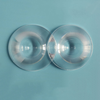
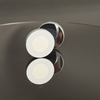
Half-Rod Lens
Featured Product from Changchun Yutai Optics Co., Ltd.
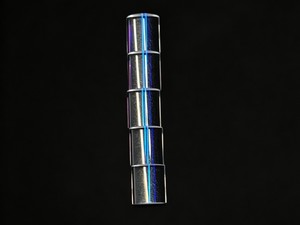
Since this half-rod lens features an anti-reflective (AR) coating at a specific wavelength (637 nm) and is coated on one end (S1) but uncoated on the other (S2), it is typically used in miniature optical paths requiring directional light guiding, coupling, or beam splitting:
1. Laser & Optoelectronic Sensing Systems
Application Scenarios: 637 nm is typically the wavelength of a red laser diode (LD) or certain helium-neon lasers. This half-rod lens can be used in red laser rangefinders, laser sights, barcode scanners, or LiDAR systems as a component for optical path folding (redirection), beam collimation, or focusing.
2. Fiber Optic Communication & Coupling Devices
Application Scenarios: Leveraging its cylindrical (rod-shaped) structure, it can be used as a micro-lens in fiber arrays, for beam shaping inside optical isolators, or for optical coupling in micro optical transceiver modules (the AR coating on the S1 surface reduces return loss, while the S2 surface can provide total reflection or refraction depending on the design).
3. Medical & Life Science Instruments
Application Scenarios: Suitable for use in endoscope illumination optical paths, miniature spectrometers, PCR analyzers, or flow cytometers. It serves as a micro light-guide rod or beam-shaping element to direct light of a specific wavelength into the detection area.
4. Industrial Machine Vision & Inspection
Application Scenarios: In machine vision light sources (such as bar lights or coaxial lights), it can function as a micro cylindrical lens for light homogenization or guiding. It is used in the optical path setup of systems for precision part dimension measurement and surface defect inspection (e.g., scratch or flatness detection).
5. R&D and Educational Experiments
Application Scenarios: Due to its relatively wide parameter ranges (6–8 mm diameter, 7–9 mm length), it is highly suitable as a versatile basic optical component for building miniature interferometers, optical path alignment, or proof-of-principle experiments in university physics optics laboratories and optoelectronics research institutes.