Understanding Tubing Dimension
Featured Product from Eagle Stainless Tube & Fabrication, Inc.

STAINLESS STEEL TUBING DIMENSIONS PURCHASING GUIDE
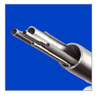
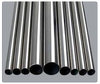
There are 3 measurements for calculating stainless steel tubing dimensions: outside diameter, inside diameter, and wall thickness. A comprehensive grasp of these dimensions ensures precise selection and utilization of stainless steel tubing in diverse sectors, ranging from aerospace and automotive to medical and manufacturing industries.
Outside Diameter – (OD) The outside diameter refers to the measurement of the width across the outer surface of the tubing
Inside Diameter (ID) -The inside diameter refers to the measurement of the width across the inner surface of the tubing.
Wall Thickness – Wall thickness refers to the distance between the inner and outer diameters of the tubing
Outside Diameter
The outside diameter is typically measured using a caliper or micrometer. It’s crucial to ensure accuracy in this measurement as it directly influences the tubing’s fit and function in various applications.
Why is it important?
The outside diameter is crucial as it determines compatibility with connectors, couplings, or other components used in the application. Choosing the right OD ensures a proper fit and functionality within the intended system or equipment.
Can the outside diameter be customized?
Many manufacturers offer custom fabrication services to meet specific OD requirements for precision tubing. Customization allows tailoring the OD to suit unique applications or specialized needs.
How does the OD impact the strength and performance?
The OD along with wall thickness, influences the tubing’s structural integrity and strength. Choosing the appropriate OD ensures the tubing can withstand pressure, load, or environmental conditions as per the application’s demands.
Wall Thickness
Wall thickness is measured using specialized tools like gauges or micrometers. This measurement ensures accuracy and consistency, vital for meeting specific application requirements.
Why is wall thickness important?
The wall thickness directly impacts the tubing’s mechanical properties, such as strength, durability, and ability to withstand pressure, corrosion, or temperature variations.
How does wall thickness affect the weight?
Generally, thicker walls increase the weight of the tubing. Understanding the relation between wall thickness and weight is essential for applications where weight considerations are critical.
What factors should be considered when determining the appropriate wall thickness for stainless steel tubing?
Factors include the working pressure, environmental conditions, intended use, installation method, and structural requirements. Balancing these factors ensures the chosen wall thickness meets the demands of the application.
How does wall thickness selection impact the bending and forming of stainless steel tubing?
Thicker walls offer more rigidity and resistance to deformation during bending or forming processes. However, thinner walls may allow for more flexibility but might be susceptible to deformation under certain conditions.
Why would an application specify a thin-walled tube?
Thin-walled tubing is often requested for applications requiring lightweight construction, increased flexibility, and improved heat transfer, or where space constraints and fluid flow efficiency are crucial
Why would an application call for heavy wall tubing?
An application might require a heavy-walled tube for increased strength, durability, high-pressure environments, or structural support.
Inside Diameter
Manufacturers strive to produce tubing as close to the specified inside diameter (ID) as possible, but variations within accepted tolerance levels are common. This is why the focus is often on the outside diameter and wall thickness, as they have a more direct impact on how the tubing fits into systems or components.
How is the ID measured?
The ID is typically measured using specialized tools like bore gauges, calipers, or micrometers. These tools ensure accuracy in determining the internal dimensions of the tubing.
Why is the inside diameter important when selecting stainless steel tubing?
The ID directly affects the flow rate, compatibility with fittings, and the ability to accommodate other components within the tubing. It’s crucial for applications where precise fluid flow, instrumentation, or specific tooling requirements are necessary.
Additionally, other factors that should be considered are alloy, temper or hardness, welded or seamless tubing, desired lengths, surface finish, straightness, and cleanliness.
DOWNLOAD OUR CATALOG
Your Primary Source for Stainless Steel Products
Download or request a hard copy of our updated design and manufacturing guidebook, offering valuable technical information to help you select the proper size and material composition for your unique needs. As a top stainless steel tube manufacturer we offer machining, welding, cutting, assemblies and bending while meeting or exceeding GMP and ASTM standards.
DOWNLOAD OUR CATALOG
Your Primary Source for Stainless Steel Products
Download or request a hard copy of our updated design and manufacturing guidebook, offering valuable technical information to help you select the proper size and material composition for your unique needs. As a top stainless steel tube manufacturer we offer machining, welding, cutting, assemblies and bending while meeting or exceeding GMP and ASTM standards.
Follow us on:
Watch>>Eagle Stainless Overview
For an overview of our fabrication services please see this pdf download.
Custom Tubing Designed for Your Needs
Making a difference in your design… from simple tubing to complex designs.
At Eagle, there’s nothing more important than producing a customized solution which exceeds our clients’ expectations and satisfies the unique specifications of their application. Our expertise with stainless steel custom tubing gives us the ability to help you design the product that will fit your project.
Complex designs need more than just stainless steel custom tubing. Secondary operations such as cutting to precision lengths, CNC and EDM machining, laser welding, bending, and precision grinding can transform a simple tube into just the part you need for your design.
We welcome the opportunity to share our expertise in developing product concepts and helping you solve your engineering problems. With decades of experience in the metals industry, you can count on Eagle as a resource for designing and fabricating your metal products.
Eagle Stainless Tube & Fabrication Inc.
Eagle Stainless Tube & Fabrication Inc.supplies stainless steel tubing to the medical, aerospace and high tech industries. Stainless steel, nickel alloys, aluminum, and titanium.
- Cut to length
- Precision machining
- Laser cutting & welding bending
- Electro-polishing and passivation.
- Re-draw to specialty & millimeter sizes in both round, square and rectangular.
- Grinding to precision tolerances
- Assemblies
- ISO 9001 Certification
- ISO 13485 Certification