

Announcements

Stainless steel offers a unique combination of corrosion resistance, strength, durability, and versatility. It works hard, lasts long, and rarely complains, making it a preferred material for demanding applications across a wide range of industries.
(read more)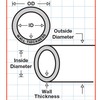
Every tubing dimension serves a purpose. OD determines fit, ID influences flow characteristics, and wall thickness impacts strength, pressure capability, and durability. Understanding the relationship between these dimensions helps ensure the right tubing is selected for the application.
(read more)
From handles and housings to specialized instrument assemblies, precision stainless steel tubing delivers the dimensional accuracy, corrosion resistance, and durability required in medical device manufacturing.
(read more)
Although they may look similar, tube and pipe serve different purposes. Learn how sizing, tolerances, and specifications set them apart.
(read more)
Have questions about stainless steel tubing? Explore answers to common questions about materials, dimensions, tolerances, applications, and manufacturing capabilities.
(read more)
Whether your project requires specific dimensions, tight tolerances, or specialized materials, our broad selection of hypodermic tubing options helps ensure the right fit for your application.
(read more)
The ideal assembly solution depends on application requirements, material compatibility, and performance goals. Learn how welding, threading, and bonding methods help create reliable stainless steel tubing assemblies for demanding applications.
(read more)
From flaring to swaging, precision end-forming helps create custom tubing solutions that improve assembly, functionality, and performance in demanding applications.
(read more)
Stainless steel tubing continues to be a top choice for engineers thanks to its exceptional corrosion resistance, strength, durability, and versatility. From harsh environments to precision applications, it delivers reliable performance, long service life, and excellent value across a wide range of industries.
(read more)
The right tubing profile can make all the difference. Custom shapes help engineers save space, improve efficiency, reduce assembly requirements, and optimize performance for demanding applications.
(read more)
Wall thickness influences pressure ratings, durability, bendability, and overall reliability. Learn how selecting the right wall can improve application performance.
(read more)
Quality starts with documentation. Learn how mill certifications, lot traceability, and quality controls help manufacturers meet regulatory and customer requirements.
(read more)
Stainless steel tubing is one of the most versatile metal alloy materials used in manufacturing and fabrication. The two common types of tubing are seamless and welded. Deciding between welded vs. seamless tubing primarily depends on the application requirements of the product.
(read more)
Design engineers as well as biomedical and laboratory researchers will find the 304 stainless steel tubing sample kit very useful for prototyping and testing new products and instruments.
(read more)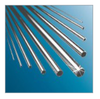
Tight tolerances in stainless steel tubing ensure precise fit, consistent quality, enhanced safety, efficient production and reliable performance — making a big difference in critical industries. ISO 9001 ISO 13485.
(read more)
From design concept to finished product
Eagle Stainless Tubing & Fabrication utilizes the latest technology to create unparalleled, state-of-the-art solutions for our customers. You'll be amazed at what we can create together!

Can’t I just order tubing without talking to someone?
We get it — but not all tubing fits every job! A short chat ensures you get exactly what you need, without surprises later.
Tight tolerances in stainless steel tubing ensure precise fit, consistent quality, enhanced safety, efficient production, and reliable performance—making a big difference in critical industries. ISO 9001 ISO 13485
(read more)
Corrosion and heat resistance are the top reasons for choosing stainless steel. When selecting the right grade for an application, it's crucial to consider factors like temperature and exposure to chemicals.
(read more)
- Bright (polished) finish for enhanced appearance.
- Pickled (matte) finish for improved performance.
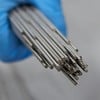
◆ Tensile Strength – Does your project require durability and high load capacity?
◆ Conductivity – Are you optimizing for electrical or thermal performance?
◆ Flexibility – Does the wire need to bend or move frequently?

This guide walks you through the top 10 things to know when ordering stainless steel tubing. From key considerations to expert tips.
(read more)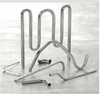
Precision bent components are ideal for uses in surgical devices, heat exchangers, instrumentation, and handling equipment.
(read more)
Seamless and welded tube is ordered to specifications that make the product versatile for general usage and capable of ready certification to more stringent requirements, ensuring adapability accross various industries.
(read more)
The many unique benefits of stainless steel make it a powerful candidate in materials selection.
(read more)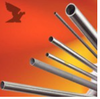
Hypodermic tubing refers to precise, small sizes used in many medical devices. These ultra-thin tubes are crucial for fluid delivery, laboratory instruments, and medical tools, offering versatility and high performance.
(read more)
Precision cutting of stainless steel tubing, free from burrs, is crucial for safety, efficiency, contamination prevention, and meeting quality standards across diverse applications.
(read more)
Selecting the best alloy for a metal tubing application can be a daunting task considering the wide variety of stainless steel and metal alloys available.
(read more)
Choosing between welded and seamless precision stainless steel tubing? Welded offers cost efficiency, while seamless provides a smoother, uninterrupted surface. Consider application needs for optimal performance.
(read more)
Corrosion resistance and heat resistance are the primary reason for specifying stainless steel. For these reasons, temperatures and chemicals are among issues to consider when determining the right grade for an application.
(read more)
The ideal surface finish depends on the application, not shine. High-purity systems may require electropolish, while many industrial environments work well with standard finishes.
(read more)
Bending tubing changes more than shape—it thins walls, alters flow, and affects pressure. In sensitive systems, even small shifts can impact performance, compliance, and long-term reliability. Details matter.
(read more)
Surface finish isn't just for looks—it’s key to performance. Engineers specify it for reasons like:
- Corrosion Resistance
- Ease of Cleaning
- Reduced Friction and Wear

Specializing in Swiss CNC Machining services, we deliver some of the most intricately formed stainless steel parts available in the industry.
(read more)
Boost product performance with precision cut tubing
(read more)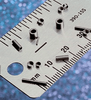
Precision cutting of stainless steel tubing, free from burrs, is crucial for safety, efficiency, contamination prevention, and meeting quality standards across diverse applications.
(read more)
- Specializing in Swiss CNC Machining services, we deliver some of the most intricately formed stainless steel parts available in the industry.

Eagle's bank of laser machining equipment enables extremely close-tolerance cutting, notching, etching and welding operations for a variety of applications.
(read more)
Combining all manufacturing disciplines, EAGLE has become the GO TO Supplier for Custom Fabricated Components
(read more)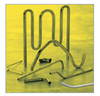
Precision bending involves more than achieving accurate angles. It also includes factors such a maintaining consistent wall thickness, ovality control and minimizing deformation. ISO 9001 and ISO 13485.
(read more)
Find out why an engineer would need to specify surface finish
(read more)
Eagle Stainless expertly fabricates precision bent components ideal for use in surgical devices, heat exchangers, instrumentation, handling equipment and more.
(read more)