
Resistance Linear Potentiometers
Description
Resistance linear potentiometers are devices used to measure and control electrical resistance. They consist of a resistive element and a sliding contact (wiper) that moves along the element, allowing for the adjustment of resistance. This adjustment is achieved by changing the position of the wiper along the resistive path, which alters the resistance value between the terminals.
Working Principle
The working principle of resistance linear potentiometers is based on the linear motion of the wiper along the resistive element. As the wiper moves, it picks off a voltage from the resistance element that is proportional to its position. This analog voltage output is absolute, meaning it provides a direct representation of the wiper's position without the need for recalibration after power interruptions. This feature makes them particularly useful for applications requiring real-time position tracking and precise control of resistance values.
Applications
Resistance linear potentiometers are commonly used in applications that require precise control of electrical parameters. Specific examples include:
- Audio Control: Used in audio equipment for volume, tone, and equalization adjustments.
- Motion Control: Employed in systems that require precise position feedback, such as in robotics or CNC machines.
- Displacement Transducers: Utilized in measuring linear displacement in various industrial applications.
Advantages over other Linear Potentiometers
Resistance linear potentiometers offer several advantages over other types of linear potentiometers:
- Real-time Output: They provide immediate feedback on position changes without lag, which is crucial for high-speed applications.
- Environmental Resilience: These potentiometers maintain performance even under extreme environmental conditions, ensuring reliability in harsh settings.
Limitations
Despite their advantages, resistance linear potentiometers have certain limitations:
- Wear and Tear: The physical contact between the wiper and the resistive element can lead to wear over time, potentially affecting accuracy and lifespan.
- Limited Resolution: The resolution is constrained by the physical construction of the resistive element and the wiper, which may not be suitable for applications requiring extremely fine adjustments.
Considerations
When selecting resistance linear potentiometers, several factors should be considered:
- Initial Costs: These devices can vary in price depending on their specifications and quality, impacting the initial investment.
- Operating Expense: Maintenance and potential replacement costs should be factored in due to wear and tear.
- Durability: Consider the environmental conditions in which the potentiometer will operate to ensure longevity and reliability.
- Accuracy: Evaluate the required accuracy for your application, as this will influence the choice of potentiometer.
- Replacement and Maintenance Costs: Regular maintenance may be necessary to ensure optimal performance, and replacement costs should be anticipated due to potential wear.
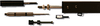
from BEI Duncan Electronics
Infinite resolution, within 13 mm repeatability [See More]
- Output: Resistance
- Linearity: 0.7500
- Measurement Range: 1.97
- Operating Temperature: -40 to 257
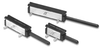
from BEI Duncan Electronics
Infinite resolution, for use with microprocessor-based systems [See More]
- Output: Resistance
- Operating Temperature: -40 to 275
- Measurement Range: 0.4000
- Linear Potentiometer Type: Conductive Plastic