
Current Linear Potentiometers
Description
Current linear potentiometers are devices that measure linear displacement. They consist of a resistive element and a wiper that moves along the element, providing a variable resistance output. This output is typically used to determine the position of the wiper along the resistive path, translating physical movement into an electrical signal.
Working Principle
Linear potentiometers operate by having a wiper move along a resistive strip, which changes the resistance between the wiper and the ends of the strip. This change in resistance is proportional to the displacement of the wiper, allowing the potentiometer to provide an output voltage that corresponds to the linear position. They are useful because they offer real-time, absolute position feedback without the need for recalibration after power loss, as the output voltage instantly returns to the correct value once power is restored .
Applications
Linear potentiometers are used in a variety of applications where precise position measurement is required. Specific examples include:
- Motion control systems: Used to provide feedback on the position of moving parts.
- Displacement transducers: Employed in systems that require accurate measurement of linear displacement.
- Analog computing: Utilized in function generation and other analog computing tasks .
Advantages over other Linear Potentiometers
One of the key advantages of current linear potentiometers is their ability to provide real-time position feedback without lag, even under extreme environmental conditions . This makes them particularly reliable in applications where immediate response is critical.
Limitations
Despite their advantages, linear potentiometers have limitations. They can be subject to wear and tear due to the physical contact between the wiper and the resistive element, which may affect their long-term durability and accuracy. Additionally, they may not be suitable for applications requiring digital output, as digital encoders can provide higher accuracy in such cases .
Considerations
When considering the use of linear potentiometers, several factors should be taken into account:
- Initial costs: These can vary depending on the materials used, such as special alloys or precious metals for the wiper .
- Operating expenses: Generally low, but maintenance costs may arise from wear and tear.
- Durability: While they are reliable, the physical contact mechanism can lead to degradation over time.
- Accuracy: They provide good accuracy for analog outputs, but digital applications may require alternative solutions.
- Replacement and maintenance costs: Regular maintenance may be needed to ensure continued accuracy and performance, especially in high-use environments.
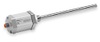
from Novotechnik U.S., Inc.
Designed for hydraulic and pneumatic applications, Novotechnik in-cylinder position sensors feature magetostrictive non-contacting technology for long life. [See More]
- Output: Voltage; Current
- Measurement Range: 1.97 to 167
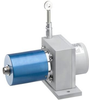
from Sensata Technologies
Body and cover - aluminum (RohS). Measuring cable – Stainless steel [See More]
- Output: Voltage; Current
- Operating Temperature: -4 to 176
- Measurement Range: 78.74

from Novotechnik U.S., Inc.
Some applications require a position sensor that returns ‘to zero ’ on its own. Novotechnik covers these applications with non-contacting and potentiometric sensors offering a wide variety of stroke lengths and other features. [See More]
- Output: Current
- Measurement Range: 0.3937

from Sensata Technologies
Body and cover - aluminum (RohS). Measuring cable – Stainless steel [See More]
- Output: Voltage; Current
- Operating Temperature: -4 to 176
- Measurement Range: 118

from Novotechnik U.S., Inc.
Some applications require a position sensor that returns ‘to zero ’ on its own. Novotechnik covers these applications with non-contacting and potentiometric sensors offering a wide variety of stroke lengths and other features. [See More]
- Output: Voltage; Current
- Measurement Range: 0.3937 to 0.9843
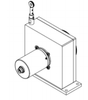
from Sensata Technologies
Body and cover - Aluminium (RohS) Measuring cable – Stainless stee [See More]
- Output: Voltage; Current
- Operating Temperature: -4 to 176
- Measurement Range: 236
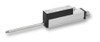
from Novotechnik U.S., Inc.
Some applications require a position sensor that returns ‘to zero ’ on its own. Novotechnik covers these applications with non-contacting and potentiometric sensors offering a wide variety of stroke lengths and other features. [See More]
- Output: Voltage; Current
- Measurement Range: 0.9843 to 3.94
from Sensata Technologies
Analog output draw-wire – measurement range 0 up to 15 000mm [See More]
- Output: Voltage; Current
- Operating Temperature: -4 to 176
- Measurement Range: 591
from Novotechnik U.S., Inc.
Novotechnik linear rod type position sensors are available in stroke lengths from 10 to 900 mm. They have high tolerance to adverse environmental conditions and provide long operating life, with various features, to meet the requirements of most any position sensor application. [See More]
- Output: Voltage; Current
- Measurement Range: 0.9843 to 7.87

from Sensata Technologies
Analog output draw-wire – measurement range 0 up to 20 000mm [See More]
- Output: Voltage; Current
- Operating Temperature: -4 to 176
- Measurement Range: 787

from Novotechnik U.S., Inc.
Novotechnik linear rod type position sensors are available in stroke lengths from 10 to 900 mm. They have high tolerance to adverse environmental conditions and provide long operating life, with various features, to meet the requirements of most any position sensor application. [See More]
- Output: Voltage; Current
- Measurement Range: 0.9843 to 5.91