
RoHS Backplanes
Description
RoHS backplanes are specialized circuit boards designed to support and connect various electronic components and subsystems. They are compliant with the Restriction of Hazardous Substances (RoHS) directive, which limits the use of specific hazardous materials in electronic and electrical equipment. These backplanes provide mechanical support, electrical connectivity, signal transmission, power distribution, and thermal management within electronic devices.
Working Principle
RoHS backplanes function by providing a complex circuitry network that connects different electronic components, enabling communication and power distribution across the device. They are designed to handle high-speed signal transmission and manage power distribution efficiently, ensuring stable and reliable operation of the electronic device. The backplanes also incorporate thermal management and electromagnetic interference (EMI) control to maintain device stability and reliability.
Applications
RoHS backplanes are used in various applications, including industrial control systems, where they integrate multiple communication interfaces and control functions for complex monitoring and control capabilities. They are also employed in server backplanes to facilitate high-speed data transmission and processing, and in military equipment, where they undergo rigorous testing to ensure reliability in harsh conditions.
Advantages over other Backplanes
RoHS backplanes offer enhanced stability due to the use of high-quality materials and advanced manufacturing techniques. They provide high-density routing capabilities, allowing for efficient signal transmission and processing within limited space. The modular design of these backplanes facilitates easy maintenance and repair, reducing downtime and costs. Additionally, their compliance with RoHS standards ensures they are environmentally friendly by limiting hazardous substances.
Limitations
One limitation of RoHS backplanes is the potential for high initial costs due to the use of advanced materials and manufacturing processes. Additionally, the complexity of their design may require specialized knowledge for installation and maintenance. The need for compliance with RoHS standards can also limit the choice of materials and components, potentially impacting performance in certain applications.
Considerations
When considering RoHS backplanes, it is important to evaluate the initial costs and operating expenses, as these can be higher compared to non-RoHS compliant backplanes. Durability and accuracy are generally high due to the quality of materials used, but regular maintenance may be required to ensure optimal performance. Replacement and maintenance costs should also be considered, as the complexity of the backplane design can impact the ease and cost of repairs.
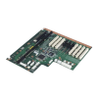
from DigiKey
Backplane 12 Channel CompactPCI ® Connector Spacing [See More]
- Certifications and Approvals: RoHS
- Bus / Standard: CompactPCI
- Board Function: Passive Backplane
from SIE Computing Solutions, Inc.
SIE Computing Solutions VPX Backplanes are designed to the latest VITA 46 and 48 standards. The 5-slot I/O PLUS ™ 3U VPX Full Mesh Backplane is designed for a wide array of VPX applications. The highly configurable VPX REDI backplane offers high-bandwidth in compact size and provides greater... [See More]
- Certifications and Approvals: RoHS
- Bus / Standard: Variety of VPX applications
- Board Function: Active Backplane
- Form Factor: 6U x 160mm (B-Size)

from Gefran
R-BUS(x) are the backplanes of the GILOGIK II system. They are organized at 16 bit, with geographic addressing and 80 Mbps data transfer band. They can be installed on a standard 35 mm DIN rod or screwed directly onto the plate [See More]
- Certifications and Approvals: RoHS; CE
- Bus / Standard: Parallel Bus
- Board Function: Passive Backplane
- Power Connectors: 3.3 volts