
11-Pin / Blade Relay Sockets
Description
11-Pin / Blade Relay Sockets are components used to establish electrical connections between relays and other circuit elements. They provide a secure and reliable interface for relays, allowing for easy installation and replacement without the need for soldering. These sockets typically feature multiple pins or blades that connect to corresponding terminals on a relay, ensuring a stable and efficient electrical connection.
Working Principle
Relay sockets, including the 11-pin variety, work by providing a physical interface for relays to connect with other components in a circuit. The pins or blades on the socket align with the relay's terminals, allowing electrical signals to pass through. This setup facilitates the relay's function of controlling high-power circuits with low-power signals. The sockets are designed to accommodate specific relay configurations, ensuring compatibility and optimal performance. By using relay sockets, engineers can easily replace or upgrade relays without disrupting the entire circuit, making them a practical choice for maintaining and modifying electrical systems.
Applications
11-Pin / Blade Relay Sockets are commonly used in various industrial and commercial applications where reliable relay connections are essential. Specific examples include:
- Industrial Automation Systems: These sockets are used to connect relays that control machinery and equipment in automated production lines.
- HVAC Systems: In heating, ventilation, and air conditioning systems, relay sockets facilitate the connection of relays that manage system components like compressors and fans.
- Automotive Electronics: Relay sockets are employed in vehicles to connect relays that control lighting, ignition systems, and other electronic components.
Advantages over other Relay Sockets
One of the primary advantages of 11-Pin / Blade Relay Sockets is their ability to accommodate a higher number of connections compared to sockets with fewer pins. This allows for more complex relay configurations and greater flexibility in circuit design. Additionally, the blade design provides a robust and secure connection, reducing the risk of disconnection due to vibration or movement, which is particularly beneficial in automotive and industrial environments.
Limitations
Despite their advantages, 11-Pin / Blade Relay Sockets have limitations. They may not be suitable for applications requiring minimal space due to their larger size compared to sockets with fewer pins. Additionally, the complexity of wiring and installation can increase with the number of pins, potentially leading to higher initial setup times and costs.
Considerations
When selecting 11-Pin / Blade Relay Sockets, several factors should be considered:
- Initial Costs: These sockets may have higher initial costs due to their complexity and the materials used in their construction.
- Operating Expense: While generally low, operating expenses can increase if frequent relay replacements are necessary.
- Durability: The robust design of blade sockets typically offers good durability, but environmental factors such as humidity and temperature should be considered to ensure longevity.
- Accuracy: The precision of the connection can affect the overall performance of the relay system, making it crucial to choose sockets that match the relay specifications.
- Replacement and Maintenance Costs: While the sockets facilitate easy relay replacement, the cost of maintaining a large number of connections can add up over time, especially in complex systems.
from Excel Cell Electronic USA Corp.
Retaining clip available [See More]
- Number of Pins/Blades: 11-Pin/Blade
- Terminal Type: Screw
- Mounting Style: DIN
- Socket Receptacle: Blade/Lug Socket

from Amphenol PCD
Amphenol Pcd Relay Sockets are manufactured to MIL-PRF-12883 specifications, plus specialized requirements, and are supplied in a broad range of military standard and special configurations and styles for 2 through 25 amp operations. Relay Sockets feature state of the art ultrasonically bonded... [See More]
- Number of Pins/Blades: 5-Pin/Blade; 7-Pin/Blade; 8-Pin/Blade; 10-Pin/Blade; 11-Pin/Blade; 14-Pin/Blade; 16-Pin/Blade
- Terminal Type: Solder
- Mounting Style: PCB (optional feature); Other (optional feature); Mounting Track
- Number of Poles: 1 to 6
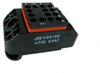
from Amphenol PCD
Amphenol Pcd's Quick Mount relay sockets snap mount into standard aircraft panel cutouts and eliminates all socket-to-bulkhead mounting hardware. This simplifies the installation and dramatically reducing weight and installation cost. Sockets meet the applicable performance and dimensional... [See More]
- Number of Pins/Blades: 5-Pin/Blade; 7-Pin/Blade; 8-Pin/Blade; 10-Pin/Blade; 11-Pin/Blade; 14-Pin/Blade; 16-Pin/Blade
- Terminal Type: Quick Connect/ Disconnect Terminals
- Mounting Style: Panel; Other; Snap Mount
- Number of Poles: 1 to 4