
CardBus Technology PCMCIA Cards and Accessories
Last Updated: April 1, 2025
Description
CardBus Technology PCMCIA cards are designed to handle 32 bits of data and operate at a frequency of 33 MHz. These cards are an evolution of the original PCMCIA standard, which handled only 16 bits of data. CardBus cards are used to expand the capabilities of computers by adding additional functionalities such as memory, storage, and network connectivity.
Working Principle
CardBus technology works by providing a 32-bit bus interface that allows for faster data transfer rates compared to the older 16-bit PCMCIA standard. This is achieved through a 33 MHz clock speed, which enhances the overall performance of the card. The increased data width and speed make CardBus cards particularly useful for applications that require high data throughput, such as network communications and data storage.
Applications
CardBus Technology PCMCIA cards are used in a variety of applications. For example, they can be used to add high storage capacity to notebook computers and other mobile computing systems. They are also used in networking applications, allowing host computers to connect to local area networks (LANs) or wireless LANs. Additionally, CardBus cards can be used as modem/fax cards, enabling computers to transmit data over telephone lines.
Advantages over other PCMCIA Cards and Accessories
CardBus cards offer several advantages over the original PCMCIA cards. The primary advantage is their ability to handle 32 bits of data, which allows for faster data transfer rates. This makes them more suitable for applications that require high-speed data processing. Additionally, the 33 MHz operating frequency of CardBus cards provides a significant performance boost over the 16-bit, lower-frequency PCMCIA cards.
Limitations
One limitation of CardBus Technology PCMCIA cards is that they require a compatible slot in the host device, which may not be available in all older computers. Additionally, while they offer improved performance over older PCMCIA cards, they may not match the speed and capabilities of newer technologies such as USB or PCI Express.
Considerations
When considering the use of CardBus Technology PCMCIA cards, it is important to evaluate the initial costs and operating expenses. While they offer enhanced performance, the cost of upgrading older systems to support CardBus technology should be considered. Durability and maintenance costs are generally low, but users should ensure that the cards are compatible with their existing systems to avoid unnecessary expenses.
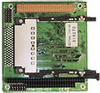
from VersaLogic Corporation
PC/104-Plus interface module with 1 built-in PCMCIA card slot, stackable [See More]
- Technology: PC Card Standard 95; CardBus
- Card Form Factor: Type I card; Type II card; Type III Card
- PCMCIA Product: Bus Interface / Adapter / Controller
- Operating Temperature: -4 to 158

from Data Device Corporation (DDC)
The ARINC 429 DD-42912M3-300 and DD-42924M3-300 are two versions of a high density, Type II PCMCIA card for interfacing with an ARINC 429 data bus. The DD-42912M3-300 version features one ARINC transmit channel, two ARINC receive channels, and two discrete outputs; while the DD-42924M3-300 contains... [See More]
- Technology: CardBus
- Card Form Factor: Type II card
- PCMCIA Product: Bus Interface / Adapter / Controller
- Operating Temperature: 32 to 131