
Circular Variable Filters Optical Filters
Description
Circular Variable Filters (CVFs) are optical devices designed to selectively filter specific wavelengths of light from a broad spectrum. They achieve this by allowing only certain wavelengths to pass through while blocking others, thus enabling precise control over the spectral composition of the transmitted light. These filters are characterized by their ability to provide high spectral resolution and facilitate quick switching between different wavelengths.
Working Principle
Circular Variable Filters operate by utilizing a varying film thickness across their surface, which determines the wavelength of peak transmittance. As light passes through the filter, different segments of the filter isolate particular wavelengths based on the thickness of the film at each point. This design allows for real-time inspection and efficient wavelength selection, making them useful for applications requiring medium-resolution spectral measurements. The ability to quickly switch between wavelengths enhances their utility in dynamic environments where rapid adjustments are necessary.
Applications
Circular Variable Filters are employed in a variety of settings, including industrial, field testing, and laboratory applications. They are particularly useful in scenarios where white light or laser wavelength filtering is required. For instance, in laboratory settings, they can be used as monochromators to conduct medium-resolution spectral radiation measurements. In industrial applications, they facilitate real-time inspection by allowing users to easily switch between filtered wavelengths.
Advantages over other Optical Filters
One of the primary advantages of Circular Variable Filters over other optical filters is their ability to provide high spectral resolution with a relatively simple design. This simplicity allows for quick wavelength switching, which is not as easily achievable with other types of filters. Additionally, their design enables real-time inspection and efficient filtering of specific wavelengths, which can be more challenging with fixed-wavelength filters.
Limitations
Despite their advantages, Circular Variable Filters have limitations. The range of the electromagnetic spectrum they can filter is a critical factor, and their performance may be constrained by the specific wavelength range they are designed to handle. Additionally, the outer and inner diameters of the filter can limit the settings in which they can be effectively used.
Considerations
When considering the use of Circular Variable Filters, several factors should be taken into account. Initial costs can vary depending on the specific design and capabilities of the filter. Operating expenses may include maintenance and potential replacement costs, particularly if the filter is used in demanding environments. Durability and accuracy are also important considerations, as these factors can impact the long-term performance and reliability of the filter. Users should evaluate these aspects in relation to their specific application needs to ensure optimal performance and cost-effectiveness.
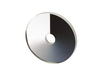
from Newport MKS
The 50Q04AV.2 is a circular variable metallic neutral density filter, made of UV grade fused silica, 127 mm in diameter, surface flatness of ≤1 λ/2, and coated for an OD range of 0.05-2.0. Our circular variable neutral density filters are designed to simplify attenuation and beam... [See More]
- Filter Type: Circular Variable Filters; Neutral Density Filters
- Thickness: 9.53
- Filter Diameter, Side Length, or Rectangular Length: 33
- Surface Quality: 30-10 scratch-dig
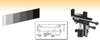
from Thorlabs, Inc.
At Thorlabs, we constantly reinforce our desire to serve at the pleasure of our customers. From this comes our desire to be connected to our industry in a way that far exceeds what would typically be expected of a vendor. Thorlabs lives this core principle by seeking to enhance, at every turn, the... [See More]
- Filter Type: Circular Variable Filters; Neutral Density Filters
- Filter Shape: Circular; Rectangular
- Application: Infrared; Visible; Ultraviolet
- Filter Diameter, Side Length, or Rectangular Length: 12.7 to 100
from Edmund Optics Inc.
These neutral density filters are continuously variable over 270 ° of the filter. Circular variable filters provide linear attenuation of incident light by rotating the filter. Designed to be spectrally flat from 400 to 700nm, they provide excellent attenuation for spectrometers and other... [See More]
- Filter Type: Circular Variable Filters
- Thickness: 1.52
- Application: Infrared
- Surface Quality: 60-40 Scratch / Dig