
Diaphragm Hydraulic Accumulators
Last Updated: April 1, 2025
Description
Diaphragm hydraulic accumulators are devices designed to store energy in the form of fluid under pressure. They utilize a flexible diaphragm to separate the gas and fluid sections within the accumulator, allowing for efficient energy storage and release as needed by the hydraulic system.
Working Principle
Diaphragm hydraulic accumulators operate by using a flexible diaphragm to separate a gas section from a fluid section. When hydraulic fluid enters the accumulator, it compresses the gas on the other side of the diaphragm. This compression stores energy in the form of potential energy. When the system requires additional fluid power, the compressed gas expands, pushing the stored fluid back into the hydraulic system. This ability to store and release energy quickly makes diaphragm accumulators useful for improving hydraulic efficiency and maintaining system pressure stability.
Applications
Specific applications for diaphragm hydraulic accumulators include their use in hydraulic systems that require rapid response times and energy storage capabilities. They are often employed in systems where maintaining consistent pressure is critical, such as in industrial machinery, automotive braking systems, and renewable energy systems like wind turbines.
Advantages over other Hydraulic Accumulators
Diaphragm accumulators offer several advantages over other types of hydraulic accumulators, such as bladder and piston accumulators. They are particularly effective in systems that require quick response times and are less prone to gas permeation issues compared to bladder accumulators. Additionally, diaphragm accumulators are generally more compact and can be more cost-effective in certain applications.
Limitations
One limitation of diaphragm hydraulic accumulators is their sensitivity to temperature changes, which can affect the performance of the diaphragm material. They may also have a limited lifespan compared to other types of accumulators due to wear and tear on the diaphragm itself. Additionally, they may not be suitable for applications requiring very high pressures or large volumes of fluid storage.
Considerations
When considering diaphragm hydraulic accumulators, it is important to evaluate initial costs, which can vary depending on the materials used and the specific design requirements. Operating expenses may be lower compared to other types of accumulators due to their efficiency and compact size. However, maintenance costs should be considered, as the diaphragm may require periodic inspection and replacement to ensure optimal performance. Durability and accuracy are also key factors, as the diaphragm must maintain its integrity to effectively separate the gas and fluid sections.
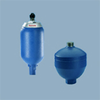
from Bosch Rexroth Corporation
Rexroth hydraulic accumulators save energy and improve manufacturing efficiency by using the accumulator as a storage device to store hydraulic pump output flow when system demand is low and supplement output when demand is high. Our hydraulic accumulators are used to: Store power for intermittent... [See More]
- Technology Type: Bladder; Diaphragm
- Operating Pressure: 5076 to 6000
- Capacity: 57.75 to 3051

from IBT Industrial Solutions
IBT Industrial Solutions is the expert in hydraulics products and hydraulic solutions. Our experience in fluid power and our wide array of hydraulics products will lead you to the best hydraulics solution for your business. We provide solutions to companies in various industries that rely on mobile... [See More]
- Technology Type: Piston; Diaphragm
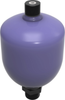
from EPE Process Filters & Accumulators Pvt., Ltd.
A hydro-pneumatic accumulator is a device used specifically for storage of liquid under pressure. As liquids, for all practical purposes, are incompressible, this objective is achieved by utilizing the compressibility of gases. A flexible rubber separator i.e., diaphragm is fitted into the... [See More]
- Technology Type: Diaphragm
- Operating Pressure: 580 to 5076
- Capacity: 4.58 to 305
- Housing Material: Steel; Stainless Steel