
Portable Nondestructive Testing (NDT) Conductivity and Resistivity Meters
Last Updated: April 1, 2025
Description
Portable Nondestructive Testing (NDT) Conductivity and Resistivity Meters are handheld devices designed to measure the electrical conductivity and resistivity of materials without causing any damage to the test subject. These meters are used to detect flaws, measure thickness, or assess corrosion in various materials by providing precise conductivity and resistivity readings.
Working Principle
These meters typically operate using the eddy current method, as outlined in . This method involves generating an alternating magnetic field using a probe, which induces eddy currents in the conductive material being tested. The interaction between these eddy currents and the material's properties allows the meter to determine its conductivity and resistivity. The phase-sensitive measurement signal evaluation enables a contact-free determination of electrical conductivity, which is particularly useful for identifying material types, such as alloys, even after surface treatments like anodizing. Temperature compensation is often integrated to ensure accurate readings, as temperature variations can affect conductivity measurements.
Applications
Portable NDT Conductivity and Resistivity Meters are widely used in various industries for specific applications. For example, they are employed in the aerospace industry to inspect aircraft components for material uniformity and detect potential corrosion. In the manufacturing sector, these meters help in quality control by verifying the conductivity of metal parts, ensuring they meet specified standards. Additionally, they are used in the maintenance of electrical equipment, such as testing the conductivity of cable joints and switch contacts, as mentioned in .
Advantages over other Nondestructive Testing (NDT) Conductivity and Resistivity Meters
One of the primary advantages of portable meters is their convenience and ease of use in field applications. Unlike bench or rack-mounted units, portable meters allow for on-site testing without the need for transporting samples to a laboratory setting. This mobility is particularly beneficial in large-scale operations, such as inspecting extensive pipelines or large aircraft structures, where transporting samples is impractical.
Limitations
A notable limitation of portable NDT meters is their dependency on the eddy current method, which may not be suitable for all materials or thicknesses. As indicated in , the penetration depth of eddy currents is determined by the measurement frequency, which can limit the minimum permissible thickness of the specimen. Additionally, environmental factors such as temperature can affect the accuracy of readings, necessitating the use of temperature compensation features.
Considerations
When selecting a portable NDT Conductivity and Resistivity Meter, several factors should be considered. Initial costs can vary significantly based on the device's features and capabilities, such as the number of channels or probes and the inclusion of digital controls or real-time imaging capabilities, as noted in . Operating expenses may include the cost of calibration and maintenance, which are essential for ensuring long-term accuracy and reliability. Durability is another critical factor, especially for field-use devices that may be exposed to harsh environmental conditions. Lastly, accuracy is paramount, as it determines the reliability of the measurements, which is crucial for applications requiring high precision.

from PCE Instruments / PCE Americas Inc.
PCE-COM 20 Material Tester for Metals. Large measuring range up to 112% IACS or 65 MS/m with lift-off and temperature compensation, memory, PC-compatible software, factory calibration certificate and 60 kHz operating frequency. PCE-COM 20 is a portable handheld non-destructive material tester for... [See More]
- Form Factor: Portable / Handheld / Mobile
- Accuracy: 0.5000 to 1
- Measuring Range: 3.00E6 to 6.50E8
- Applications: Assessment of Strength Differences in Heat-treated or Hardened Materials, the Authenticity Testing of Coin Alloys

from Evident Scientific
The OmniScan ® iX is an industrial ultrasonic flaw detector system designed for the high-speed testing of critical industrial components. The compact OmniScan iX is housed in a rugged benchtop casing and is also available in a rack-mount version or with a swivel-arm assembly for easy integration... [See More]
- Form Factor: Portable / Handheld / Mobile
from RDM Industrial Products, Inc.
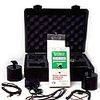
Humidity and temperature affect resistivity so they must be tested. The Ohm-Stat ® RT-1000 tests resisitivity, humidity and temperature of all conductive, antistatic and static dissipative surfaces for electrical resistivity/resistance according to the EOS/ESD CECC, ANSI, ASTM, UL, NFPA,... [See More]
- Form Factor: Portable / Handheld / Mobile

from M.A.E. Apparecchiature Elettroniche srl
CTS45 is a probe for measuring the conductivity in laboratory on samples , length: 45 cm, that offers the possibility to perform a practical and fast measurement of the thermal conductivity (or thermal resistivity) of the medium in which it is inserted at a high accuracy level. It works in... [See More]
- Form Factor: Portable / Handheld / Mobile
- Applications: Ground Samples, Foodstuff, Paints

from Fischer Technology, Inc.
SIGMASCOPE SMP350 is a compact handheld device for determining the electrical conductivity of non-ferrous metals such as aluminum or copper. The measured conductivity further enables you to draw conclusions about the hardness and strength of heat-treated materials. Evidence of heat damage and... [See More]
- Form Factor: Portable / Handheld / Mobile
- Measuring Range: 5.00E6 to 6.50E8