
Textiles Surface Area and Pore Size Analyzers
Last Updated: April 1, 2025
Description
Textiles Surface Area and Pore Size Analyzers are specialized instruments designed to measure various characteristics of textile materials, including pore distribution, pore volume, specific surface area, and total surface area. These analyzers provide critical data on the frequency and size of pores within a textile sample, as well as the surface area available for interactions with other substances.
Working Principle
The working principle of these analyzers involves the physical adsorption of a gas onto the surface of a solid textile sample. The sample is first pretreated to remove any contaminants, typically through a combination of heat, vacuum, and/or flowing gas. It is then cooled to cryogenic temperatures under vacuum conditions. An adsorptive gas, often nitrogen, is introduced in controlled increments. The pressure within the analyzer is allowed to equilibrate after each dose, and the quantity of gas adsorbed is calculated. This process generates an adsorption isotherm, which is used to determine the amount of gas required to form a monolayer over the surface of the textile and its pores. This data allows for the calculation of the surface area and pore size distribution, providing valuable insights into the material's properties.
Applications
Textiles Surface Area and Pore Size Analyzers are used in a variety of applications, particularly in industries where the porosity and surface characteristics of textiles are critical. For example, in the medical field, these analyzers can be used to evaluate materials for blood fractionation membranes. In water reclamation, they assist in assessing textiles used for purification and desalination processes. Additionally, they are valuable in the biochemical industry for bioseparation and bioreactor applications, where precise control over pore size and distribution is essential for efficient operation.
Advantages over other Surface Area and Pore Size Analyzers
One of the key advantages of using these analyzers for textiles is their ability to provide detailed and accurate measurements of pore size distribution and surface area, which are critical for applications requiring precise material specifications. The use of cryogenic temperatures and controlled gas adsorption allows for high precision in measuring even small pores, which might be challenging for other types of analyzers.
Limitations
A notable limitation of these analyzers is the potential for frequent fouling, especially when analyzing materials with complex or irregular pore structures. Additionally, the initial capital expense for acquiring these sophisticated instruments can be significant, which may be a barrier for smaller operations or those with limited budgets.
Considerations
When considering the use of Textiles Surface Area and Pore Size Analyzers, it is important to evaluate the initial costs, which can be high due to the advanced technology and precision involved. Operating expenses should also be considered, as the need for cryogenic temperatures and controlled environments can increase costs. Durability and maintenance are crucial factors, as regular calibration and potential repairs can impact long-term usability and accuracy. Ensuring that the analyzer is well-maintained and operated by trained personnel can help mitigate these concerns and maximize the instrument's lifespan and performance.
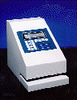
from Gurley Precision Instruments
Our flagship instrument. The Model 4340 combines the abilities of our textile, standard and high pressure Densometers, S-P-S Testers as well as our programmable digital timers and provides a reading in seconds, thus reducing the time required to test a material. By utilizing state-of-the-art mass... [See More]
- Test Media: Paper; Textiles
- Methods, Technology & Standards: Mass flow and servo-regulator technology, automatic test feature, auto-drive mechanism
- Properties Analyzed: Pore Size or Densometry
- Display & Special Features: Digital; Process Line Mounted for Continuous Monitoring

from Gurley Precision Instruments
GENUINE GURLEYTM Cobb Sizing Testers have been manufactured by Gurley for over a half-century and represent an economical and practical means of determining liquid absorptiveness or resilience of treated and untreated papers, boards, fabrics and other sheet materials. The complete kit consists of... [See More]
- Test Media: Paper; Textiles
- Methods, Technology & Standards: Roller method
- Properties Analyzed: Pore Volume or Porosimetry
- Display & Special Features: Benchtop or Laboratory

from Gurley Precision Instruments
Densometers are the accepted standard for measuring the porosity of materials such as papers, wovens, plastics and membranes. All Densometers measure the time required for a given volume and of air (25cc to 400cc) to flow through a standard area of material being tested under light uniform pressure. [See More]
- Test Media: Paper; Textiles
- Display & Special Features: Digital; Process Line Mounted for Continuous Monitoring
- Properties Analyzed: Pore Size or Densometry

from Quantachrome Instruments
Water sorption behavior plays an important role in the development and use of many common and advanced materials. Some examples include: Stability of pharmaceutical excipients and drug actives. Drying and storage of grains. Texture and shelf life of food products. PEM fuel cell components. Mortar,... [See More]
- Test Media: Adhesives/Sealants; Ceramics; Concrete/Mortar; Food / Beverage; Powders; Textiles
- Display & Special Features: Benchtop or Laboratory
- Properties Analyzed: Pore Volume or Porosimetry

from Quantachrome Instruments
The Porometer 3G micro is the capillary flow porometer with small-to-medium pore size capability, and customizable flow rate options. The standard pressure capability of up to 100 psi / 7 bar allows for pore size distributions in the range of 0.09 µm up to >90 µm to be measured easily... [See More]
- Test Media: Ceramics; Foam / Porous Materials; Paper; Powders; Textiles; Membranes, Sintered Metals
- Pore Diameter Range: 600 to 900000
- Properties Analyzed: Pore Volume or Porosimetry
- Display & Special Features: Benchtop or Laboratory; SPC Software or Capability