
Surface Area - Specific Surface Area and Pore Size Analyzers
Last Updated: April 1, 2025
Description
Surface area and pore size analyzers are specialized instruments used to measure various characteristics of solid materials. These analyzers determine factors such as pore distribution, pore volume, specific surface area, and total surface area. They are essential for analyzing the physical properties of materials, particularly in powdered form, by assessing the surface area available for adsorption.
Working Principle
Surface area and pore size analyzers operate by measuring the adsorption of gas molecules onto the surface of a solid sample. The process begins with the pretreatment of the solid sample, which involves removing adsorbed contaminants through heat, vacuum, or flowing gas. The sample is then cooled to cryogenic temperatures under vacuum conditions. An adsorptive gas, typically nitrogen, is introduced in controlled increments. The pressure within the analyzer is allowed to equilibrate after each dose, and the quantity of gas adsorbed is calculated. This process generates an adsorption isotherm, which helps determine the amount of gas required to form a monolayer over the solid's surface and pores. By knowing the area covered by each adsorbed gas molecule, the analyzer calculates the surface area.
Applications
Surface area and pore size analyzers are used in various industries for specific applications. For example, in the pharmaceutical industry, they help in characterizing the surface properties of active pharmaceutical ingredients (APIs) to ensure proper dissolution rates. In the field of catalysis, these analyzers are crucial for determining the surface area of catalysts, which directly affects their activity and efficiency. Additionally, in materials science, they are used to study the porosity and surface characteristics of novel materials like metal-organic frameworks (MOFs) and zeolites.
Advantages over other Surface Area and Pore Size Analyzers
Modern surface area and pore size analyzers offer several advantages, including the ability to provide timely results for both quality control and research and development needs. They are available in various configurations, from sophisticated multipurpose units to midrange instruments designed for high throughput and reliable service. This versatility allows for tailored solutions depending on the specific requirements of the analysis, whether it be for occasional use or continuous production control.
Limitations
One limitation of surface area and pore size analyzers is their reliance on the assumption that the adsorbed gas forms a monolayer on the surface. This assumption may not always hold true for all materials, potentially leading to inaccuracies in the calculated surface area. Additionally, the need for cryogenic temperatures and vacuum conditions can make the operation of these analyzers complex and resource-intensive.
Considerations
When considering the use of surface area and pore size analyzers, several factors should be taken into account. Initial costs can vary significantly depending on the sophistication and capabilities of the instrument. Operating expenses may include the cost of consumables such as gases and the energy required for maintaining cryogenic temperatures. Durability and accuracy are crucial, as these instruments must provide reliable data over time. Maintenance and replacement costs should also be considered, as regular calibration and servicing are necessary to ensure optimal performance.

from Micromeritics
High Performance in a Compact Footprint. Accurate and precise surface area and porosimetry measurements are essential to the determination of the effectiveness and quality of a wide variety of materials. The Micromeritics ASAP 2020 integrates multiple gas sorption techniques into a single,... [See More]
- Properties Analyzed: Pore Volume or Porosimetry; Specific Surface Area
- Methods, Technology & Standards: Gas Sorption Technique
- Test Media: Adhesives/Sealants; Ceramics; Chemicals; Food / Beverage; Metals; Powders; Catalyst
- Display & Special Features: Benchtop or Laboratory; PC Interface / Networkable

from Micromeritics
Micromeritics ASAP ® 2420 Accelerated Surface Area and Porosimetry System uses the gas sorption technique to generate high-quality data for applications that require high performance/high sample throughput. Standard features include six independently operated analysis ports and a programmable... [See More]
- Properties Analyzed: Pore Volume or Porosimetry; Specific Surface Area
- Methods, Technology & Standards: Gas Sorption Technique
- Test Media: Adhesives/Sealants; Ceramics; Chemicals; Food / Beverage; Geological (Rock, Strata, etc.); Metals; Powders; Catalyst
- Display & Special Features: Benchtop or Laboratory; PC Interface / Networkable

from Micromeritics
Micromeritics ’ AutoChem 2950 HP Chemisorption Analyzer is an automated high-pressure catalyst characterization system that is capable of preparing and analyzing samples at elevated pressures up to 1000 psia and at temperatures from -100 to 1100 °C. The instrument can perform a variety of... [See More]
- Properties Analyzed: Pore Volume or Porosimetry; Specific Surface Area
- Display & Special Features: Benchtop or Laboratory; PC Interface / Networkable
- Test Media: Fuel / Fuel Materials; Partial Oxidation, Catalytic Cracking, Catalytic Reforming, Isomerization, Hydrocracking, Fischer-Tropsch Synthesis

from Micromeritics
The ChemiSorb 2720 and ChemiSorb 2750 can be equipped to perform chemical and physical adsorption tests that are central to the development, testing, and production of catalysts. They employ the dynamic (flowing gas) technique of analysis by which the quantity of gas taken up by the sample or... [See More]
- Properties Analyzed: Specific Surface Area; Total Surface Area
- Total Surface Area Range: 0.0200 to 200
- Specific Surface Area Range: 0.0200 to ?
- Test Media: Chemicals; Metals; Catalyst

from Micromeritics
The ASAP 2020 Plus Chemisorption option [ermits you to obtain valuable information about the physical and chemical properties of your catalyst, catalyst support, adsorbents, and other materials. It's unique design provides a high level of system cleanliness to permit low-pressure checmisorption... [See More]
- Properties Analyzed: Pore Volume or Porosimetry; Specific Surface Area
- Test Media: Adhesives/Sealants; Ceramics; Food / Beverage; Fuel / Fuel Materials; Powders; Catalyst
- Pore Diameter Range: 3.5 to 30
- Methods, Technology & Standards: Multiple Gas Sorbtion Techniques
from Micromeritics
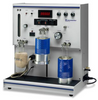
The Flowsorb III 2305 / 2310 provides single-point and multipoint BET surface area measurements with speed, accuracy, and reliability. Samples having surface areas from 0.01 m2/g to over 1,000 m2/g are easily accommodated. The. FlowSorb III measures surface area using the flowing gas method, which... [See More]
- Properties Analyzed: Specific Surface Area; Total Surface Area
- Total Surface Area Range: 0.1000 to 280
- Specific Surface Area Range: 0.0100 to ?
- Test Media: Foam / Porous Materials; Powders

from Micromeritics
Micromeritics ’ Gemini VII 2390 Series of surface area analyzers rapidly and reliably produces accurate and repeatable surface area and porosity results. Their low cost, speed, simplicity of use, reliability, and ruggedness have earned the Gemini a place in laboratories worldwide as an... [See More]
- Properties Analyzed: Specific Surface Area; Total Surface Area
- Methods, Technology & Standards: Flowing Gas Method
- Test Media: Adhesives/Sealants; Ceramics; Chemicals; Food / Beverage; Fuel / Fuel Materials; Foam / Porous Materials; Powders; Catalyst
- Display & Special Features: Benchtop or Laboratory; Digital; PC Interface / Networkable; SPC Software or Capability

from Micromeritics
The ASAP 2460 Surface Area and Porosity Analyzer incorporates a unique expandable system designed for high-performance and high sample throughput. The base ASAP 2460 is a two-port master control unit. For more throughput, additional two-port units can be connected to the master unit expanding the... [See More]
- Properties Analyzed: Pore Volume or Porosimetry; Specific Surface Area
- Methods, Technology & Standards: Gas Sorption Technique
- Test Media: Adhesives/Sealants; Ceramics; Chemicals; Food / Beverage; Geological (Rock, Strata, etc.); Metals; Powders; Catalyst
- Display & Special Features: Benchtop or Laboratory; PC Interface / Networkable

from Micromeritics
The Tristar ® II 3020 provides high-quality surface area and porosity measurements on solid materials by using the technique of gas adsorption. The TriStar II is a fully automated, three-station analyzer capable of increasing the speed and efficiency of quality control analyses, with the... [See More]
- Properties Analyzed: Pore Volume or Porosimetry; Specific Surface Area; Total Surface Area
- Methods, Technology & Standards: Flowing Gas Method
- Test Media: Adhesives/Sealants; Ceramics; Food / Beverage; Foam / Porous Materials; Geological (Rock, Strata, etc.); Powders; Catalyst
- Display & Special Features: PC Interface / Networkable; SPC Software or Capability

from Micromeritics
Micromeritics' TriStar II PLUS is a state-of-the-art instrument suited for use in both quality control and research .environments. Intended for laboratories that require high throughput and the highest quality data, it contains all the capabilities of the TriStar II with additional hardware and... [See More]
- Properties Analyzed: Pore Volume or Porosimetry; Specific Surface Area; Total Surface Area
- Methods, Technology & Standards: Flowing Gas Method
- Test Media: Adhesives/Sealants; Ceramics; Food / Beverage; Foam / Porous Materials; Geological (Rock, Strata, etc.); Powders; Catalyst
- Display & Special Features: Benchtop or Laboratory; PC Interface / Networkable; SPC Software or Capability