
Pore Size / Densometry Surface Area and Pore Size Analyzers
Last Updated: April 1, 2025
Description
Pore size and densometry surface area analyzers are specialized instruments used to measure various characteristics of solid materials. These analyzers assess factors such as pore distribution, pore volume, specific surface area, and total surface area. They are designed to provide detailed insights into the physical properties of materials by analyzing the frequency, size, and volume of pores within a sample, as well as the surface area available for adsorption.
Working Principle
The working principle of surface area and pore size analyzers involves the physical adsorption of a gas onto the surface of a solid sample. The sample is first pretreated to remove contaminants, typically through heat, vacuum, or flowing gas. It is then cooled to cryogenic temperatures under vacuum conditions. An adsorptive gas, often nitrogen, is introduced in controlled increments. The pressure within the analyzer is allowed to equilibrate after each dose, and the quantity of gas adsorbed is calculated. This process defines an adsorption isotherm, which is used to determine the quantity of gas required to form a monolayer over the surface of the solid and its pores. By knowing the area covered by each adsorbed gas molecule, the analyzer calculates the surface area .
Applications
Surface area and pore size analyzers are used in a variety of applications, including the characterization of catalysts, pharmaceuticals, and materials used in filtration and adsorption processes. For example, in the pharmaceutical industry, these analyzers help in understanding the surface properties of drug particles, which can influence dissolution rates and bioavailability. In the field of catalysis, they are used to optimize the surface area of catalysts to enhance reaction rates and efficiency.
Advantages over other Surface Area and Pore Size Analyzers
One advantage of using surface area and pore size analyzers is their ability to provide detailed and accurate measurements of pore distribution and surface area, which are critical for applications requiring precise material characterization. Unlike methods such as mercury intrusion, which can be invasive and potentially damage the sample, gas adsorption techniques used in these analyzers are non-destructive and provide reliable data for a wide range of pore sizes .
Limitations
A limitation of some pore size analysis methods, such as mercury intrusion, is their inability to measure small pores accurately. Additionally, the process can be irreversible and may cause damage to the sample, leading to discrepancies between the measured and actual values .
Considerations
When selecting a pore size and densometry surface area analyzer, several factors should be considered. Initial costs can vary significantly depending on the complexity and capabilities of the instrument. Operating expenses may include the cost of consumables such as gases and maintenance of vacuum systems. Durability and accuracy are crucial for ensuring reliable results, and regular calibration and maintenance are necessary to maintain performance. Replacement and maintenance costs should also be factored into the overall cost of ownership, as these can impact the long-term viability of the instrument.
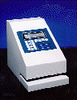
from Gurley Precision Instruments
Our flagship instrument. The Model 4340 combines the abilities of our textile, standard and high pressure Densometers, S-P-S Testers as well as our programmable digital timers and provides a reading in seconds, thus reducing the time required to test a material. By utilizing state-of-the-art mass... [See More]
- Properties Analyzed: Pore Size or Densometry
- Methods, Technology & Standards: Mass flow and servo-regulator technology, automatic test feature, auto-drive mechanism
- Test Media: Paper; Textiles
- Display & Special Features: Digital; Process Line Mounted for Continuous Monitoring

from Gurley Precision Instruments
Densometers are the accepted standard for measuring the porosity of materials such as papers, wovens, plastics and membranes. All Densometers measure the time required for a given volume and of air (25cc to 400cc) to flow through a standard area of material being tested under light uniform pressure. [See More]
- Properties Analyzed: Pore Size or Densometry
- Display & Special Features: Digital; Process Line Mounted for Continuous Monitoring
- Test Media: Paper; Textiles
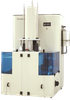
from Quantachrome Instruments
The PoreMaster ® GT Series —. fully automated, high-performance mercury porosimeters that offer two high-pressure and two low-pressure analysis ports to meet the pore size measurement needs of the busiest laboratories. In addition to "two samples in a single loading, " (patented)... [See More]
- Properties Analyzed: Pore Size or Densometry; Pore Volume or Porosimetry
- Test Media: Powders; Powders, Bulk Solids
- Pore Diameter Range: 36 to 106600
- Display & Special Features: Benchtop or Laboratory; PC Interface / Networkable; SPC Software or Capability

from Micromeritics
he mercury porosimetry analysis technique is based on the intrusion of mercury into a porous structure under stringently controlled pressures. Besides offering speed, accuracy, and a wide measurement range, mercury porosimetry permits you to calculate numerous sample properties such as pore size... [See More]
- Properties Analyzed: Pore Size or Densometry
- Test Media: Building & Construction Materials; Ceramics; Chemicals; Concrete/Mortar; Food / Beverage; Foam / Porous Materials; Geological (Rock, Strata, etc.); Metals; Powders; Catalyst
- Pore Diameter Range: 30 to 1.10E7
- Methods, Technology & Standards: Mercury Porosimetry

from Micromeritics
Micromeritics' AutoPore IV 9500 Series characterizes a material ’s porosity by applying various levels of pressure to a sample immersed in mercury. The pressure required to intrude mercury into the sample ’s pores is inversely proportional to the size of the pores. This is called mercury... [See More]
- Properties Analyzed: Pore Size or Densometry
- Test Media: Building & Construction Materials; Ceramics; Chemicals; Concrete/Mortar; Food / Beverage; Foam / Porous Materials; Geological (Rock, Strata, etc.); Metals; Powders; Catalyst
- Pore Diameter Range: 50 to 3.60E6
- Methods, Technology & Standards: Mercury Porosimetry