
Thermal Fusing Dataline and DC Signal Surge Suppressors
Last Updated: April 1, 2025
Description
Thermal Fusing Dataline and DC Signal Surge Suppressors are devices designed to protect communication and data transmission lines from voltage spikes and surges. These suppressors ensure the integrity and reliability of data signals by preventing damage to sensitive electronic components caused by unexpected electrical surges.
Working Principle
These surge suppressors operate by detecting overvoltage conditions and diverting excess electrical energy away from the protected lines. They typically use components such as gas discharge tubes, metal oxide varistors, or thyristors to clamp the voltage to a safe level. This process helps maintain the normal operation of data and communication systems by preventing disruptions and potential damage from high voltage events like lightning strikes or power surges.
Applications
Thermal Fusing Dataline and DC Signal Surge Suppressors are commonly used in telecommunications systems, including 4G/5G radio access network equipment, to protect against surges that can occur in high-speed telecom applications. They are also employed in protecting analog line cards and other communication infrastructure components that are susceptible to voltage spikes.
Advantages over other Dataline and DC Signal Surge Suppressors
One of the key advantages of these suppressors is their ability to provide robust protection without the need for additional components such as line feed resistors and PTCs, as seen in some designs like the Littelfuse’s “SC” rated SIDACtor devices. This can simplify the design and reduce the overall component count in a system, potentially lowering costs and improving reliability.
Limitations
A potential limitation of these suppressors is their dependency on specific components like gas discharge tubes or metal oxide varistors, which may have finite lifespans and could require replacement after repeated surge events. Additionally, the effectiveness of the suppressor can be influenced by the specific characteristics of the surge, such as its duration and amplitude.
Considerations
When selecting Thermal Fusing Dataline and DC Signal Surge Suppressors, it is important to consider factors such as initial costs, which can vary based on the complexity and specifications of the device. Operating expenses may include periodic maintenance and replacement of components that have degraded over time. Durability and accuracy are critical, as these devices must reliably protect against surges without introducing significant signal distortion. Replacement and maintenance costs should also be factored into the overall cost of ownership, ensuring that the suppressors provide a cost-effective solution over their operational lifespan.
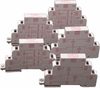
from ASCO Power Technologies
Data and I/O are often overlooked as sources of problems for automation processes. Many times damaging transient can come in through the "back door" and disrupt a control system or damage a critical sensor because most industrial control hardware does not come with transient protection, it has to be... [See More]
- Features: On-board Thermal Fusing
- Technology: Gas Tubes; Hybrid; Tanzorbs, Inductors, and Resistors
- Application: Data Acquisition; Network Applications
- Mounting: DIN Rail

from Surge Suppression Incorporated
"Touch Friendly" Terminal Strip Connected Data Transmission Line Protection - UL497B Listed [See More]
- Features: Integral Grounding Wire; On-board Thermal Fusing
- Technology: Hybrid; Up to 100Mbs
- Application: Data Acquisition; Network Applications
- Mounting: DIN Rail (optional feature); Device Mount; In-line or Integrally Attached; "Touch Friendly" Enclosure

from Surge Suppression Incorporated
Coax Type Protection Series - UL497B Listed [See More]
- Features: Integral Grounding Wire; On-board Thermal Fusing
- Technology: Hybrid
- Application: Data Acquisition; Network Applications; Audio & Video Applications
- Mounting: Device Mount; In-line or Integrally Attached; "BNC" Type Connector In/Out

from Surge Suppression Incorporated
Compact DIN Rail mountable [See More]
- Features: Integral Grounding Wire; On-board Thermal Fusing
- Technology: Hybrid; Up to 2Mbs
- Application: Data Acquisition; Network Applications
- Mounting: DIN Rail; Device Mount; In-line or Integrally Attached

from Surge Suppression Incorporated
Conduit Style 4-20mA Current Loop Protection Series - UL497B Listed [See More]
- Features: Integral Grounding Wire; On-board Thermal Fusing
- Technology: Hybrid
- Application: Data Acquisition; Network Applications
- Mounting: Device Mount; In-line or Integrally Attached; 3/4to1/2" Conduit, Wires In/Out Opp Ends
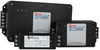
from Surge Suppression Incorporated
Individual Circuit Protection Series 2 [See More]
- Features: Integral Grounding Wire; On-board Thermal Fusing; Simple visual indicators (e.g. LEDs)
- Technology: Hybrid
- Application: Audio & Video Applications; Computer Rooms
- Mounting: DIN Rail (optional feature); Device Mount; In-line or Integrally Attached

from Surge Suppression Incorporated
Security System Protection Products - UL497B Listed [See More]
- Features: Integral Grounding Wire; On-board Thermal Fusing
- Technology: Hybrid
- Application: Data Acquisition; Network Applications; Audio & Video Applications
- Mounting: DIN Rail (optional feature); Device Mount; In-line or Integrally Attached; 1 BNC Pair In/Out, 4 Data, 2 Power