
Automatic Thermal Spray Equipment
Description
Automatic Thermal Spray Equipment is designed to apply coatings to surfaces by melting a consumable material and propelling it onto a substrate. This equipment automates the thermal spray process, ensuring consistent and uniform application of coatings, which can enhance the surface properties of the treated materials.
Working Principle
Automatic Thermal Spray Equipment operates by using various techniques to melt a consumable material, such as a wire, rod, or powder, and then propelling the molten droplets onto a substrate. Techniques like arc spraying, flame spraying, and plasma spraying are employed, each utilizing different heat sources and methods to achieve the desired coating. The automation of this process allows for precise control over the deposition rate and coating thickness, making it useful for achieving specific surface characteristics and improving the durability and performance of the coated materials.
Applications
Automatic Thermal Spray Equipment is used in a variety of applications, including the coating of large steel structures like bridges and TV towers for atmospheric corrosion resistance. It is also employed in the aerospace industry for coating turbine blades and other components to enhance wear resistance and thermal protection.
Advantages over other Thermal Spray Equipment
One of the primary advantages of automatic thermal spray equipment is its ability to provide consistent and uniform coatings with high precision. For instance, arc spraying, which is a common method used in automatic systems, offers the highest deposition rate among thermal spray processes and requires less power, making it more economical and efficient for large-scale applications. Additionally, automation reduces the need for manual intervention, minimizing human error and increasing production efficiency.
Limitations
Despite its advantages, automatic thermal spray equipment has limitations. For example, arc spraying can only be used to deposit conductive materials and produces a significant amount of fume and dust during the coating process. The coatings produced may also have higher porosity and oxide levels compared to other methods like plasma or HVOF spraying, which can affect the overall quality and performance of the coating.
Considerations
When considering the use of automatic thermal spray equipment, several factors should be taken into account. Initial costs can be high due to the complexity and sophistication of the equipment. Operating expenses may also be significant, particularly in terms of energy consumption and maintenance. Durability and accuracy are generally high, but regular maintenance is required to ensure optimal performance and longevity of the equipment. Replacement and maintenance costs should be factored into the overall cost-benefit analysis when deciding to implement this technology.
from Saint-Gobain Innovative Materials
SNMI plasma spray and PTA High Energy equipment, from process to success, are designed to receive additional modules and encompass new applications. The development of a very friendly software program allows the user to get to know the machine straightaway. SNMI wires, powders, and exclusive... [See More]
- Automation / Control: Automatic
- Equipment Type: Complete System
- Type: Plasma Spray
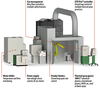
from Progressive Surface
Progressive Surface ™s next-generation Computer Integrated Thermal Spray (CITS) system is here. CITS Pro „ ¢ is the most advanced and flexible closed-loop thermal spray system available. We use the Procise Process ® to configure each CITS Pro „ ¢ system... [See More]
- Automation / Control: Automatic
- Equipment Type: Complete System
- Type: Plasma Spray; HVOF; Electric Arc; Wire Flame Spray