
Portable Laboratory Homogenizers
Last Updated: February 12, 2025
Description
Portable laboratory homogenizers are devices designed to blend, mix, or emulsify samples in a laboratory setting. They are compact and easy to transport, making them ideal for use in various locations within a lab or in the field. These homogenizers are equipped with user-friendly interfaces, which may include analog or digital displays, allowing for precise control over the homogenization process.
Working Principle
Portable laboratory homogenizers operate by using mechanical forces to break down and mix sample materials. They typically employ rotor-stator technology, where a rapidly rotating rotor creates a high-shear environment that efficiently disrupts and homogenizes the sample. This process is crucial for ensuring uniformity in sample preparation, which is essential for accurate and reliable experimental results. The versatility of these devices allows them to handle a wide range of materials, making them useful for various laboratory applications.
Applications
Portable laboratory homogenizers are used in numerous specific applications. They are particularly effective in the homogenization of high-moisture, high-fat, or fibrous products. These devices are also employed in processes such as emulsification, extraction, and mixing. For example, they can be used in the preparation of emulsions in cosmetic formulations or the extraction of compounds from plant materials in pharmaceutical research.
Advantages over other Laboratory Homogenizers
One of the primary advantages of portable laboratory homogenizers is their mobility, which allows for flexibility in sample processing locations. Unlike larger, stationary homogenizers, portable models can be easily moved and used in different lab environments or even in field settings. This portability does not compromise their performance, as they are capable of delivering similar homogenization quality to their larger counterparts.
Limitations
Despite their advantages, portable laboratory homogenizers have limitations. They may not be suitable for processing very large sample volumes due to their smaller size and capacity. Additionally, the power output of portable models might be lower compared to larger, stationary homogenizers, which could affect their efficiency in processing particularly tough or viscous samples.
Considerations
When selecting a portable laboratory homogenizer, several factors should be considered. Initial costs can vary depending on the model and features, so it's important to balance budget constraints with the required performance specifications. Operating expenses, including energy consumption and potential wear-and-tear, should also be evaluated. Durability is a key consideration, as portable devices may be subject to more frequent handling and transport. Accuracy in homogenization is crucial for reliable results, so choosing a model with precise control options is recommended. Finally, consider the costs associated with replacement parts and maintenance to ensure long-term usability and cost-effectiveness.
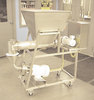
from ARDE Barinco, Inc.
Dispersion of difficult fine powders into liquids is the strength of the ARDE Dispershear. Only the Dispershear from ARDE Barinco lets you control the feed rate of solids as well as the flow rate of liquids. The result is a remarkably efficient system that produces smooth, uniform dispersions with... [See More]
- Mounting: Portable
- Media Type: Powder or Granular

from ARDE Barinco, Inc.
Double Helixx mixers from ARDE Barinco are built around two separate mixing shafts with a unique open helix design. The tools are intermeshed, and counter-rotate upon each other to mix, stir, knead and disperse high-viscosity materials. The helical blades create a positive folding action that... [See More]
- Mounting: Portable
- Motor Power: 0.75
- Capacity (volumetric): 0.6684 to 1.6
from Quadro Engineering Corp.
Higher product yield due to the intensive wetting of the powders [See More]
- Mounting: Portable
- Media Type: Liquids; Liquid with Suspended Solids; Powder or Granular

from Qsonica, LLC
Q125 Sonicator. The Q125 is a microprocessor-based, programmable ultrasonic processor. Features include pulse mode and a digital display of both wattage and joules. The unit is effective for standard cell disruption, DNA/RNA shearing, homogenization and many other applications. The Q125 is ideal for... [See More]
- Mounting: Handheld; Portable; Benchtop
- Capacity (volumetric): 7.06E-6 to 0.0018
- Media Type: Liquids; Liquid with Suspended Solids; Powder or Granular
- Mixer Type: Ultrasonic
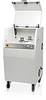
from Fritsch GmbH - Milling and Sizing
Thanks to free selection of the grinding parameters, the PULVERISETTE 4 classic line is the ideal Planetary Mill for mechanical activation and alloying. The main areas of application lie in materials research and naturally anywhere that an effective, innovative Laboratory Planetary Mill is required. [See More]
- Mounting: Portable
- Capacity (volumetric): 1.77E-5 to 0.0159
- Media Type: Powder or Granular

from Cole-Parmer
Portable LabGEN 7b homogenizer [See More]
- Mounting: Portable
- Motor Speed: 35000
- Capacity (volumetric): 0.0011

from Qsonica, LLC
Q55 Sonicator. The new Q55 is a compact and cost-effective ultrasonic processor that will occupy less bench space than any unit on the market. This model is effective for standard cell disruption and many other small volume applications. Probes are available in three different sizes. Features:... [See More]
- Mounting: Handheld; Portable; Benchtop
- Capacity (volumetric): 7.06E-6 to 0.0018
- Media Type: Liquids; Liquid with Suspended Solids; Powder or Granular
- Mixer Type: Ultrasonic