
Integral Control Panel Dehumidifiers
Last Updated: February 12, 2025
Description
Integral Control Panel Dehumidifiers are specialized devices designed to reduce and maintain the level of humidity in the air within a specific environment. These dehumidifiers are integrated into control panels, providing a compact and efficient solution for managing humidity levels in various industrial and technical settings.
Working Principle
Integral Control Panel Dehumidifiers operate by drawing in moist air and passing it over a cooling coil. This process cools the air to a temperature where the water vapor condenses into liquid water, which is then collected and removed. The dehumidified air is reheated to room temperature and circulated back into the environment. This mechanism is crucial for preventing condensation, corrosion, and other humidity-related issues in sensitive environments, making these dehumidifiers highly useful in maintaining optimal conditions for equipment and processes.
Applications
Integral Control Panel Dehumidifiers are commonly used in environments where precise humidity control is essential. Specific examples include:
- Dry Air Storage: Ensuring that stored materials remain dry and free from moisture damage.
- Humidity Control in Non-Heated Storage Halls: Preventing condensation and corrosion in large storage areas.
- Protection of Inoperative Machines: Maintaining dry conditions to prevent rust and corrosion in machinery that is not in use.
Advantages over other Dehumidifiers
One of the primary advantages of Integral Control Panel Dehumidifiers is their compact design, which allows them to be integrated directly into control panels. This integration saves space and provides a streamlined solution for humidity control. Additionally, these dehumidifiers often come with advanced features such as microprocessor control and variable blower configurations, offering precise and efficient humidity management compared to standalone units.
Limitations
A potential limitation of Integral Control Panel Dehumidifiers is their capacity, which may be lower compared to larger, standalone dehumidifiers. This could limit their effectiveness in very large or highly humid environments. Additionally, the integration into control panels may require specific installation and maintenance procedures, which could be more complex than those for standalone units.
Considerations
When considering the use of Integral Control Panel Dehumidifiers, several factors should be taken into account:
- Initial Costs: The integration and advanced features may result in higher initial costs compared to basic dehumidifiers.
- Operating Expense: Energy consumption should be evaluated to ensure cost-effective operation.
- Durability and Maintenance: Regular maintenance is essential to ensure long-term durability and performance. Replacement parts and service availability should also be considered.
- Accuracy: The ability to maintain precise humidity levels is crucial, especially in environments with strict humidity requirements.
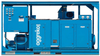
from Aggreko
5000 cfm Desiccant Dehumidifier. Aggreko custom manufactures desiccant dehumidifiers capable of 200 to 15,000 cfm, and moisture removal up to 969 gallons per day. Capable of reaching lower dew points than refrigerated systems, Aggreko systems include fridge-drying packages available to 30,000 cfm. [See More]
- Features: Integral Control Panel
- Air Capacity: 5000
- Removal Technique: Solid Rotor
- Desiccant Reactivation: Electric

from Munters DH
Outside air often represents the greatest moisture load to a building. That is why experts agree pre-teating makeup air with a dedicated outside air system (DOAS) is the most efficient and effective approach at managing it. Munters' award winning DryCool ™ Standard System removes more moisture... [See More]
- Features: Integral Control Panel; Control Sensor; Integral Cooling; Microprocessor Control; NEMA Rated; Process Air Filter; UL Listed; Variable Blower Orientation; Weather Tight
- Air Capacity: 2000 to 16000
- Removal Technique: Solid Rotor
- Desiccant Reactivation: Electric (optional feature); Gas Fired (optional feature); Hot Water
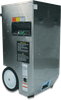
from Aggreko
600 cfm Desiccant Dehumidifier. High humidity levels can be rough on your business, causing condensation and corrosion to your critical operations. When critical processes are threatened due to power or temperature interruptions, trust Aggreko experts to help you recover quickly. Features. Desiccant... [See More]
- Features: Integral Control Panel; Portable
- Air Capacity: 600
- Removal Technique: Solid Rotor
- Desiccant Reactivation: Electric

from Munters DH
Munters HC series are off-the-shelf desiccant dehumidifiers that combine state-of-the-art desiccant technology with dependability and long operating life for humidity control at virtually any temperature. Munters HC series industrial dehumidifier units are often used to maintain low humidity levels... [See More]
- Features: Integral Control Panel; Control Sensor
- Air Capacity: 75 to 150
- Removal Technique: Solid Rotor
- Moisture Removal: 3.9
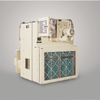
from Munters DH
Munters HCD series desiccant dehumidifiers are designed to efficiently dehumidify to low moisture levels. Process airflows are available form 300 to 12000 CFM. Unit casing is manufactured of fully welded, strain hardened aluminum to ensure zero air leakage. The electrical control system meets UL and... [See More]
- Features: Integral Control Panel; Modular; Microprocessor Control; NEMA Rated; Weather Tight
- Air Capacity: 600 to 2250
- Removal Technique: Solid Rotor
- Moisture Removal: 30
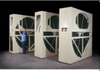
from Munters DH
Munters HCE series dehumidifiers are designed to efficiently dehumidify across a broad range of moisture levels. HCE series are available in nominal airflows of 15,000 to over 40,000 CFM. Features: - Unit casing is manufactured of fully welded, strain hardened aluminum to ensure zero air leakage. -... [See More]
- Features: Integral Control Panel; Modular; NEMA Rated; Weather Tight
- Air Capacity: 9000 to 40000
- Removal Technique: Solid Rotor
- Moisture Removal: 1060