
Transistor-Transistor Logic (TTL) Logic Encoders
Description
Transistor-Transistor Logic (TTL) Logic Encoders are integrated circuits that generate coded outputs from numeric input lines. They are designed to convert specific input signals into a coded output format, such as binary code, binary coded decimal (BCD), or octal-to-binary. These encoders are part of the TTL logic family, which uses transistors as digital switches to perform logical operations.
Working Principle
TTL Logic Encoders operate by using transistors to switch and control the flow of electrical signals. The input signals, which can be obtained from various measuring systems, are processed by the encoder to produce a specific coded output. This process involves the interruption of light beams on a phototransistor, converting the input code into electronic signals. These signals are then amplified and converted into the desired output format. TTL encoders are useful because they provide a reliable and efficient means of translating multiple input signals into a standardized output, which is essential for digital communication and processing.
Applications
TTL Logic Encoders are used in a variety of applications where signal conversion is necessary. Specific examples include:
- Digital communication systems where data needs to be encoded into a binary format for transmission.
- Computer systems for converting keyboard inputs into a format that can be processed by the CPU.
- Industrial automation systems where sensor inputs are encoded for monitoring and control purposes.
Advantages over other Logic Encoders
TTL Logic Encoders offer several advantages over other types of logic encoders:
- Speed: TTL encoders typically have faster switching times compared to CMOS encoders, making them suitable for high-speed applications.
- Noise Immunity: TTL technology provides better noise immunity, which is crucial in environments with significant electrical interference.
- Compatibility: TTL encoders are compatible with a wide range of other TTL devices, facilitating integration into existing systems.
Limitations
Despite their advantages, TTL Logic Encoders have some limitations:
- Power Consumption: TTL encoders generally consume more power than CMOS encoders, which can be a disadvantage in battery-powered or energy-sensitive applications.
- Heat Generation: The higher power consumption can lead to increased heat generation, necessitating additional cooling measures in some cases.
- Voltage Levels: TTL encoders operate at fixed voltage levels, which may not be compatible with all modern low-voltage systems.
Considerations
When selecting TTL Logic Encoders, several factors should be considered:
- Initial Costs: TTL encoders are generally cost-effective, but the total cost will depend on the specific requirements of the application, such as the number of input and output lines.
- Operating Expense: The higher power consumption of TTL encoders can lead to increased operating expenses over time.
- Durability: TTL encoders are robust and durable, making them suitable for use in harsh environments.
- Accuracy: They provide accurate signal conversion, which is essential for precise digital processing.
- Replacement and Maintenance Costs: TTL encoders are widely available and relatively easy to replace, keeping maintenance costs low. However, the need for additional cooling in high-power applications can increase maintenance requirements.

from Rochester Electronics
Encoder, F/FAST Series, 8-Bit, TTL, PDSO16 [See More]
- Logic Family: TTL
- Package Type: SOP; SOP16
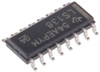
from RS Components, Ltd.
Texas Instruments SN74LS138D Decoder [See More]
- Logic Family: TTL
- Package Type: SOIC; Soic
- Supply Voltage: 5.25 v
- Number of Pins: 16

from Rochester Electronics
Encoder, 74148 Series, 8-Bit, Inverted Output, TTL, PDIP16 [See More]
- Logic Family: TTL
- Package Type: DIP; PDIP; PDIP16
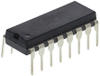
from RS Components, Ltd.
Texas Instruments SN74LS42N Decoder [See More]
- Logic Family: TTL
- Package Type: DIP; Pdip
- Supply Voltage: 5.25 v
- Number of Pins: 16

from Rochester Electronics
Encoder, TTL/H/L Series, 4-Bit, TTL, PDIP14 [See More]
- Logic Family: TTL
- Package Type: DIP; DIP14
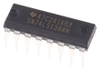
from RS Components, Ltd.
Texas Instruments SN74LS139AN Decoder [See More]
- Logic Family: TTL
- Package Type: DIP; Pdip
-
Supply Voltage: 5.25 v
5.25 v

from Rochester Electronics
Encoder, TTL/H/L Series, 8-Bit, Inverted Output, TTL, CDFP16 [See More]
- Logic Family: TTL
- Package Type: FL16

from Lansdale Semiconductor, Inc.
The 5400/7400 series of transistor-transistor logic consists of medium speed TTL integrated circuits. This high noise immunity family was designed for general digital logic applications requiring clock frequencies to 30MHz and switching speeds in the 12-15 ns range under moderate capacitive loading. [See More]
- Logic Family: TTL
- Supply Voltage: 7 V
- Input Lines: 8
- Features: Priority Encoder